
California ALPR Cameras Raise Privacy Concerns as State Leads Nation in License Plate Readers
California ALPR Cameras are now more widespread than in any other U.S. state, fueling renewed concerns that extensive vehicle tracking could undermine personal privacy and create a statewide surveillance network.
According to the open-source mapping project DeFlock, California has installed more than 16,000 automated license plate readers (ALPRs) manufactured by Flock Safety. That represents more than 10% of the roughly 117,000 Flock cameras deployed nationwide. California has the highest number of installations among all states, followed by Florida (7,169), Georgia (7,046), and Illinois (5,822), according to a report by the California Post.
California ALPR Cameras Concentrated in Southern California
The California Post reported on July 21 that the cameras are heavily concentrated in densely populated areas such as Los Angeles and Orange counties.
Measured by the number of ALPR cameras installed per 1,000 miles of roads—including highways, city streets, and local roads—Orange County recorded 184 cameras, while Los Angeles County had 143, making them among the most heavily monitored areas in Southern California.
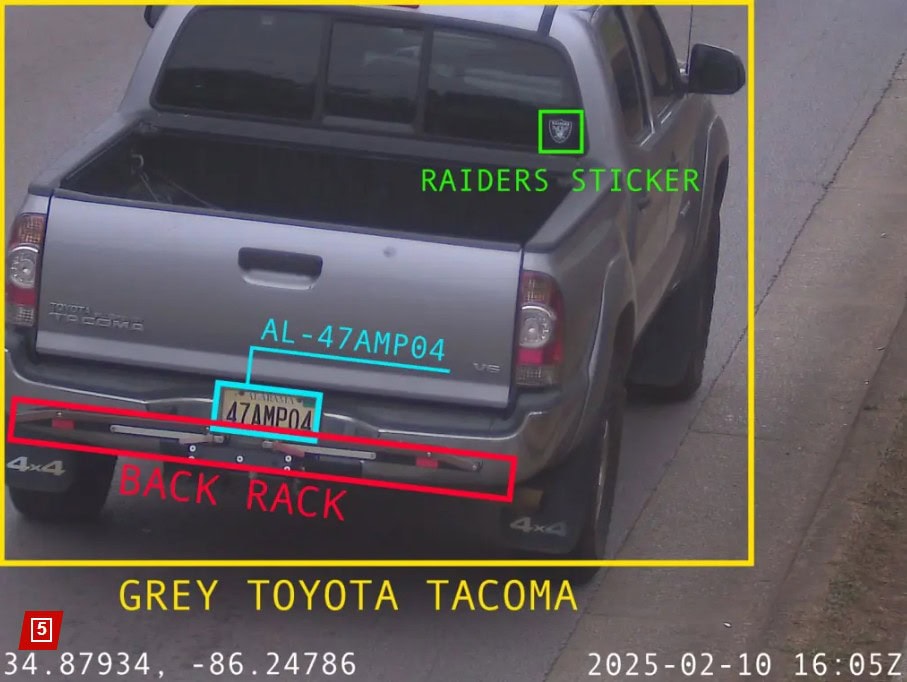
ALPR systems are typically mounted on streetlights, utility poles, or roadside infrastructure. They capture license plates of passing vehicles while also recording information such as the vehicle’s make, model, color, distinguishing features, and the exact time and location of each sighting. The information is then stored in a searchable database, allowing investigators to trace a vehicle’s travel history.
Law Enforcement Cites Public Safety Benefits
Authorities argue that ALPR technology is a valuable investigative tool that helps recover stolen vehicles, locate missing persons, and identify criminal suspects more efficiently.
However, privacy advocates warn that the continuous collection of location data creates a vast surveillance system capable of tracking the daily movements of millions of drivers. Civil liberties groups have also expressed concern that the data could potentially be accessed by federal immigration authorities or misused by law enforcement agencies.
Flock Safety has rejected those criticisms, stating that its technology is designed solely to improve public safety—not to conduct mass surveillance or enforce immigration laws. The company also says its cameras capture only license plates and cannot access information inside vehicles or on mobile phones.
LAPD Ends Contract Over Data Privacy Questions
The debate intensified after the Los Angeles Police Department (LAPD) recently terminated its contract with Flock Safety, citing unresolved concerns over privacy protections and data-sharing policies.
The department had previously managed and operated 138 fixed Flock license plate readers throughout Los Angeles. The Los Angeles Police Commission is also reviewing what information the cameras collect, how long it is retained, and with whom it may be shared, keeping the privacy controversy in the spotlight.
Georgia Case Highlights Potential Misuse
Recent incidents in Georgia have further amplified concerns over the misuse of ALPR technology.
Earlier this month, the Georgia Bureau of Investigation (GBI) announced the arrests of five Albany police officers accused of improperly accessing license plate reader data for personal reasons unrelated to official investigations. All five officers were dismissed from their positions.
Prosecutors charged them with violating their oath of office and unlawfully accessing license plate databases. Individual officers face between one and 11 criminal counts, according to investigators.
As the nationwide expansion of California ALPR Cameras and similar surveillance systems continues, the debate over balancing public safety with individual privacy is expected to intensify.