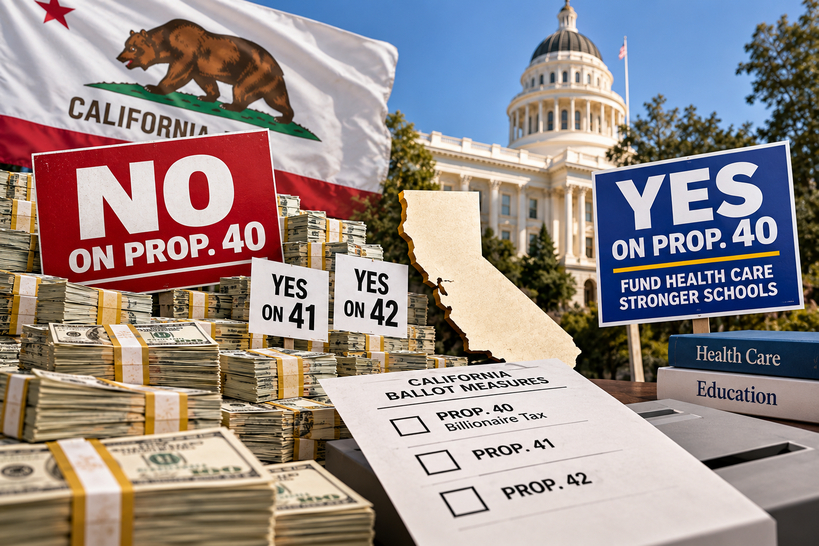
The California billionaire tax ballot measure, set for a vote this November, has ignited a massive political spending war that has now surpassed $200 million in total funding.
The Funding Gap: Billionaires vs. Labor Unions
Analysis of campaign finance reports filed with the state reveals a significant financial divide. Opponents of the tax, along with supporters of measures intended to invalidate it, have raised a staggering $187 million. In stark contrast, proponents of the measure have secured only $31.9 million.
Proposition 40, known as the ‘billionaire tax,’ proposes a 5% one-time tax on ultra-high-net-worth individuals to fund healthcare and education services. However, deep-pocketed donors are fighting back. Building a Better California, a group supported by Google co-founder Sergey Brin, has reportedly received $102 million from the tech mogul to stop the initiative. Additionally, Ripple Labs co-founder Chris Larsen and his company have contributed at least $22 million to the opposition efforts.
The Battle of Ballot Initiatives
The opposition campaign is not just fighting Proposition 40; it is actively backing Propositions 41 and 42. These counter-measures are designed to restrict new state taxes and prevent the taxation of retirement accounts and personal property. If either of these measures passes with more votes than Proposition 40, the billionaire tax would be effectively nullified.
On the other side, the SEIU-UHW and its political committee have provided the bulk of the funding for the pro-tax campaign. However, much of this $31 million has already been exhausted in the signature-gathering process, leaving the campaign with limited cash reserves. Susan Jimenez, Chief of Staff for SEIU-UHW, maintains that California residents need better access to emergency rooms and essential medical services rather than further tax breaks for the ultra-wealthy.