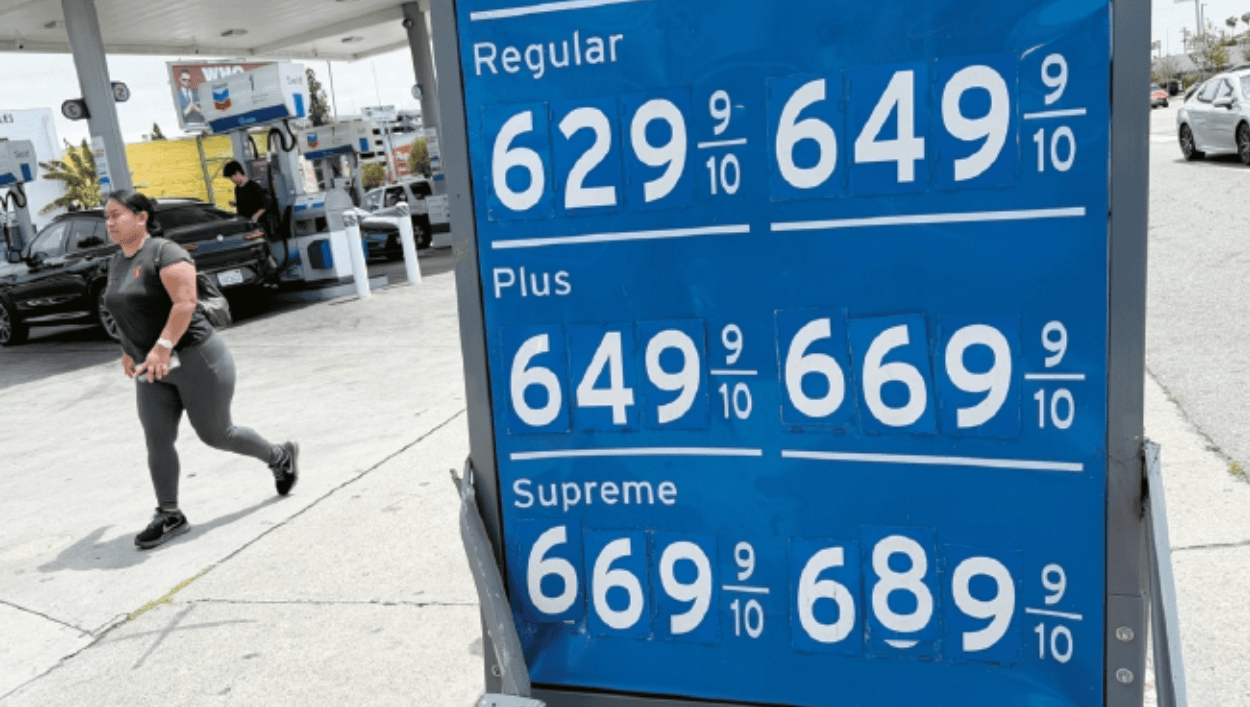
California gas prices over $6 per gallon are rapidly transforming how residents move across the state. As the burden of fuel costs becomes unsustainable for many, a distinct shift is occurring: ride-sharing usage is declining, while reliance on trains, subways, and autonomous robotaxis is surging.
Gas Price Surge Hits New Records
According to the American Automobile Association (AAA), the average price of gas in Los Angeles County reached $6.183 per gallon as of May 4, marking 12 consecutive days of increases. This represents the highest level since October 2023, with prices climbing 15.5 cents in just one month.
The Crisis for Ride-Share Drivers
The fuel price shock has hit ride-share drivers the hardest. Profitability has plummeted to the point where many drivers are reducing their hours or leaving the industry entirely. Despite some support measures from platforms, many in the field report that the numbers simply no longer add up. “I used to make $400 in three hours, but now I struggle to make $200 even after working 12 hours,” said John Mejia, a Lyft driver. “Since the spike in California gas prices over $6, the number of people quitting the industry has definitely grown.” Drivers are also increasingly avoiding peak traffic hours or declining low-profit calls to save on fuel. This reduction in driver supply has led to longer wait times and higher fares for passengers, creating a downward spiral for the ride-sharing market.
A Return to Public Transit and Innovation
In contrast, public transportation is seeing a significant rebound. According to the LA Times, Southern California rail ridership has increased as commuters seek alternatives to expensive driving.
-
LA Metro: Recorded 6.3 million riders in March, an 8.6% increase year-over-year.
-
BART (San Francisco): Saw 5.4 million riders, a 20% jump compared to the previous year.
Beyond trains, the vacuum left by ride-sharing is being filled by emerging technology. Autonomous robotaxi usage in California has increased fivefold over the past 19 months, now exceeding 1 million trips per month.
Structural Changes in Work and Commuting
The “fuel shock” is also revitalizing the remote work trend. A recent survey revealed that 78% of workers have increased their remote work days or prefer flexible schedules due to high fuel costs, while 66% expressed a desire to shorten their overall commute distance. Experts suggest this isn’t just a temporary reaction. “This shift signals a structural transformation,” analysts noted. “The convergence of energy prices and evolving transit policies is fundamentally reshaping the urban mobility system.”