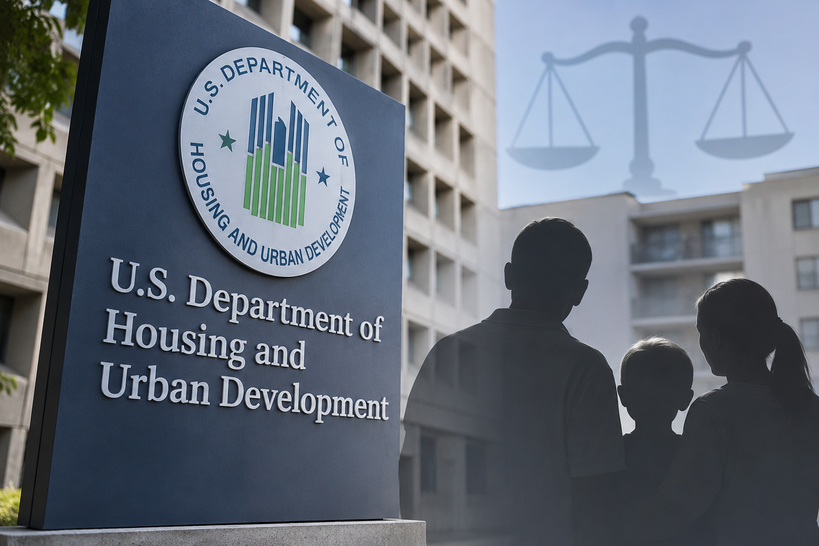
State and local governments, including California, have put the brakes on the federal government’s new public housing immigration status restriction regulations.
The California Attorney General’s Office announced on the 23rd that it filed a lawsuit in a Massachusetts federal court alongside attorneys general from about 20 states nationwide, demanding a halt to the implementation of the new rules.
On this day, the City of LA, the Housing Authority of the City of LA (HACLA), and the Los Angeles County Development Authority (LACDA) also joined separate lawsuits. Previously, on the 16th, non-profit legal support organizations such as Public Counsel had filed a lawsuit.
HUD announced final regulations on the 12th strengthening eligibility requirements for public housing and Section 8 rental assistance programs.
The new rules in principle abolish the previous method of granting subsidies in proportion to the number of family members with eligible immigration status. Set to take effect on the 14th of next month, families with US citizen children could face the risk of eviction depending on their parents’ immigration status.
Plaintiffs argued that the new regulations exceed the legal authority granted to HUD by the federal Congress. They also pointed out that it could worsen low-income housing instability and homelessness issues.
California Attorney General Rob Bonta pointed out in a statement that day that tens of thousands of California residents will face eviction risks due to the new rules. According to the Attorney General’s Office, more than 7,000 households in California alone are expected to be affected by the new rules.
Attorney General Bonta stated, “With many families already struggling to afford basic living expenses, a regulation that forces both citizens and non-citizens out of their homes and worsens the housing crisis is simply not needed in our economy right now.”
Meanwhile, HUD Secretary Scott Turner stated in a statement sent to the LA Times, “This regulation ends the abuse of taxpayer funds,” adding, “Through this measure, up to $218 million in subsidies will be redistributed to those with eligible status.”