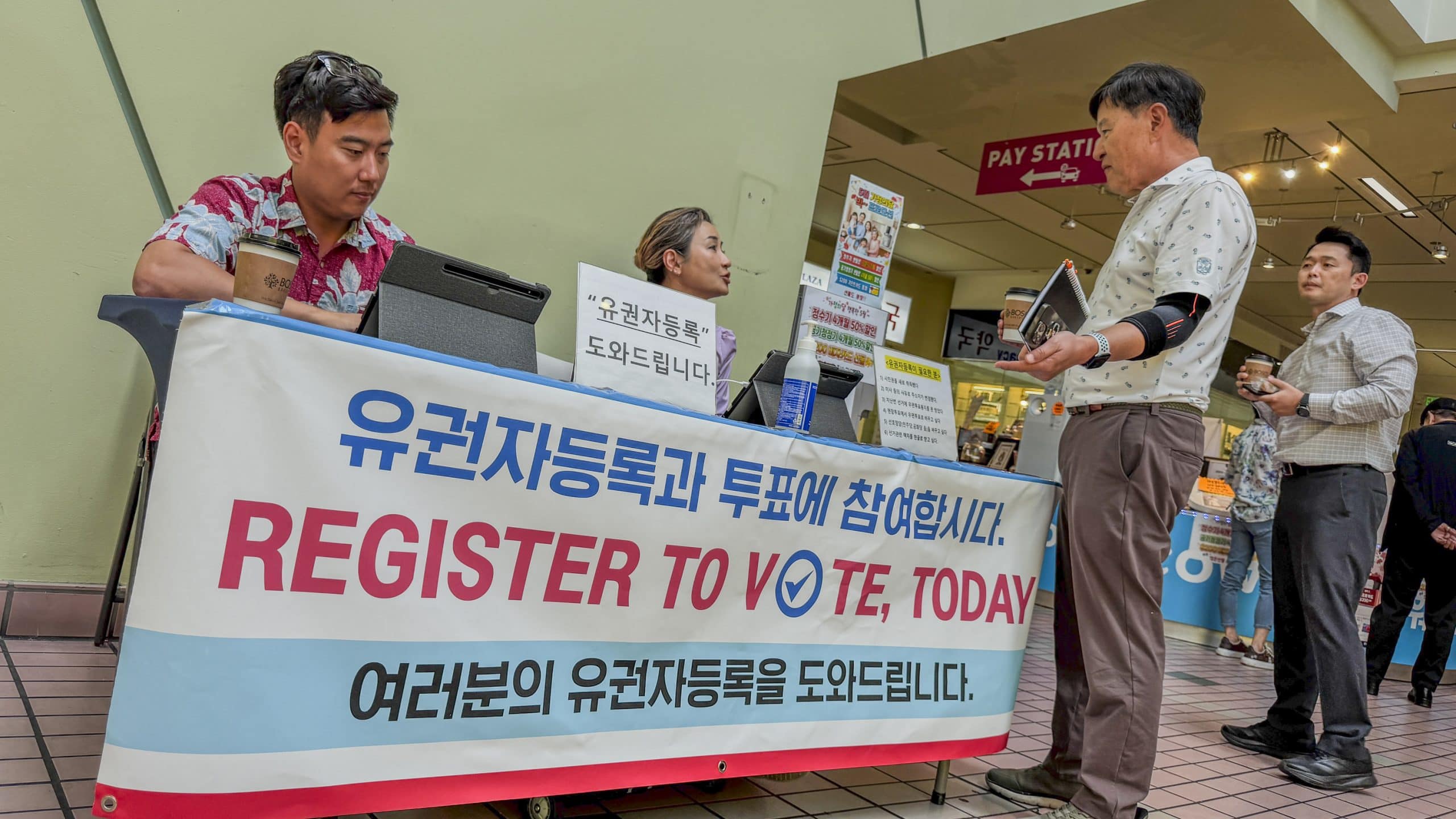
California youth voter preregistration rates remain surprisingly low despite the state’s efforts to encourage early political engagement over the past ten years. According to a report released on the 11th by the non-profit Center for Civic Design, only 11.62% of 16-year-olds in California have completed their preregistration. This translates to more than 900,000 eligible teenagers who have yet to participate in the program. In Los Angeles County, the state’s most populous region, the registration rate sits at a mere 10.12%, falling below the state average.
Low Participation Among Korean-American Youth
Engagement is also notably stagnant within the Korean-American community. Representatives from local organizations, such as PAVA World and the Korean American Coalition (KAC), report that while they actively host registration drives in locations like Koreatown Plaza, the participants are almost exclusively seniors or adults in their 40s. “We have seen virtually zero participation from teenagers,” a KAC spokesperson noted, highlighting a significant generational gap in civic involvement.
Understanding the Preregistration System
Implemented in 2016, the California preregistration system allows residents aged 16 and 17 to register in advance so they are automatically enrolled as official voters upon turning 18. While the number of registrations peaked at 163,407 in January 2020, the figures plummeted to 112,780 by February 2021. As of April this year, the total stands at 119,135, failing to recover to pre-pandemic levels.
Obstacles to Improving California Youth Voter Preregistration
Experts point toward a lack of institutional support and funding as the primary causes for these stagnant numbers. While advocates push for more aggressive outreach, Governor Gavin Newsom twice vetoed Assembly Bill 2724, which would have mandated high schools to assist students with the process. Newsom argued that schools already possess the capacity to fulfill the bill’s objectives without additional mandates.
However, Mindy Romero, Director of the Center for Inclusive Democracy at USC, argues that simply offering the option is not enough. “Schools are not effectively teaching the preregistration system, and resources remain scarce,” Romero explained.
The Long-term Impact on Civic Representation
The concern among sociologists is that a lack of early engagement leads to lower turnout in adulthood. In the 2024 general election, the turnout for Californians aged 18–24 was 42.5%, significantly lower than the overall average of 62%. Laura Brill, head of the Center for Civic Design, warned that if California youth voter preregistration continues to lag, the voices of young citizens will remain underrepresented in the legislative process, causing politicians to overlook the specific interests of the younger generation.