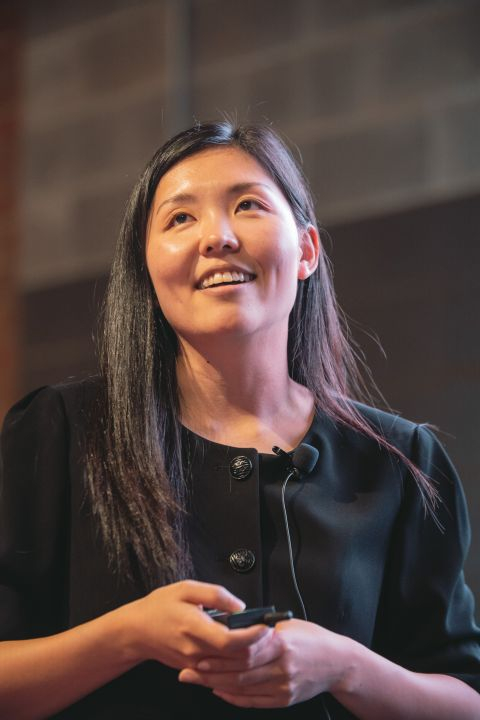
When navigating academic and professional paths, students often unintentionally narrow their own choices. At the upcoming 9th Atlanta College Expo (ACE), neuroscientist Dr. Nuri Jung will deliver a keynote titled “My Brain, My Future,” encouraging students to broaden their horizons, avoid black-and-white thinking, and embrace the reality that nothing in life is purely all good or all bad.
From Neuroscience Breakthrough to Career Pivots
Dr. Jung’s journey is a testament to resilience and adaptability. In April 2022, just a year before her doctoral dissertation defense, she survived a severe accident when an SUV weighing over 2,700 kilograms crushed her legs. This grueling rehabilitation period became a major turning point, leading her to pivot and found Goals Unhindered, a consulting and corporate coaching firm that helps businesses make data-driven decisions.
Alongside her entrepreneurial pursuits, she has achieved remarkable recognition in neuroscience. In April of last year, as part of a collaborative research team from Emory University and the Georgia Institute of Technology, she published a study in the international journal Nature demonstrating how Alzheimer’s-related impairments in inhibitory neurons reduce memory capacity. Honored for these academic contributions, she was recently named one of Emory University’s “40 Under 40” alumni.
Key Advice for Students Facing Career Uncertainty
Scheduled to speak on January 9 at Peachtree Ridge High School, Dr. Jung hopes students will realize they have far more control over designing their unique journeys than they might think. Reflecting on her own transition from studying basic science to leading a business consultancy, she emphasizes that career paths do not need to be linear, especially in an era accelerated by artificial intelligence.
For students still searching for their direction, Dr. Jung advises letting go of the pressure to figure everything out immediately. Instead of focusing solely on job titles, she recommends listing personal preferences, such as the desire for stable income, flexible schedules, or dynamic day-to-day tasks. By testing ideas with low stakes and viewing mistakes simply as valuable data rather than permanent failures, young adults can build confidence and find a fulfilling path forward.