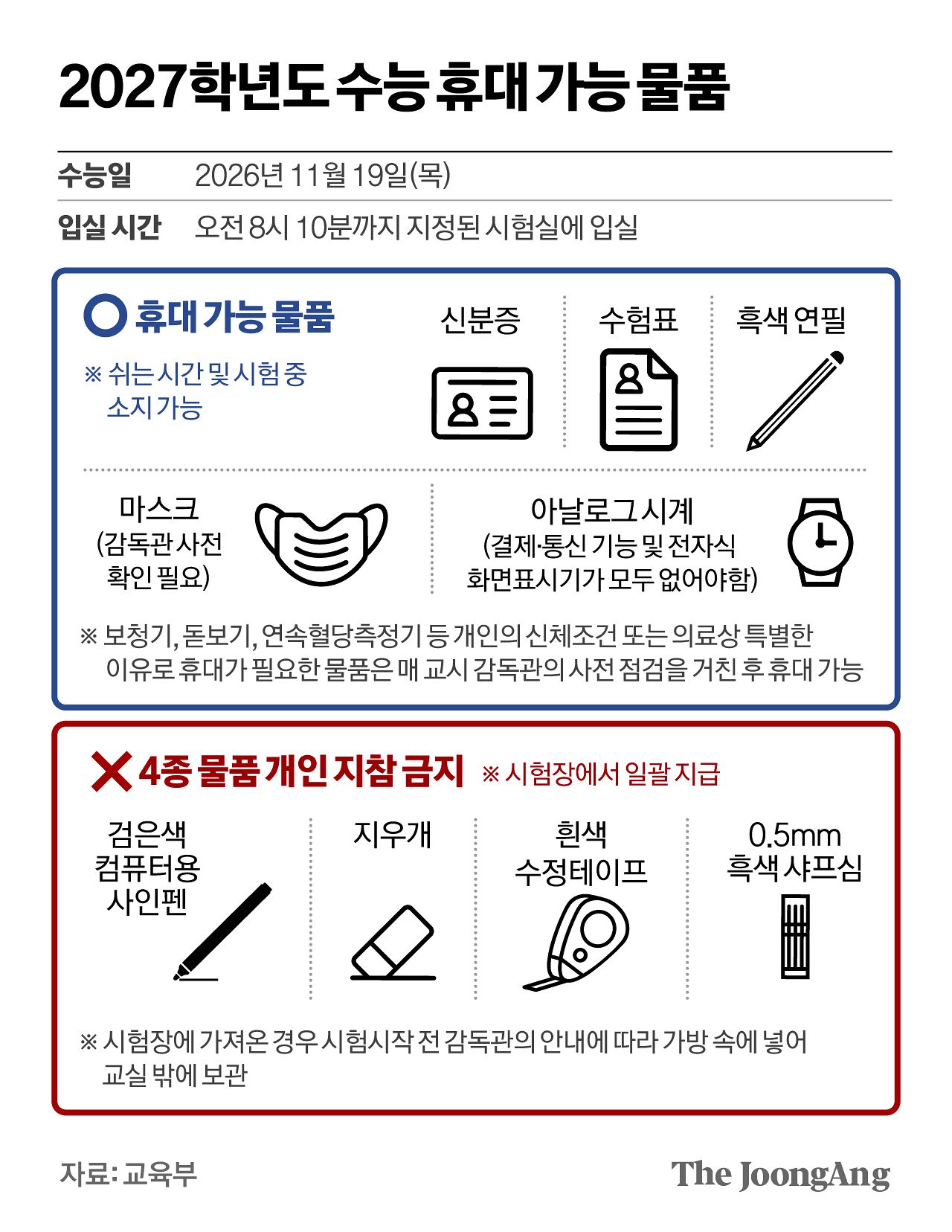
Strict new CSAT rules for South Korea’s college entrance exam limit allowed writing instruments to black pencils only, as computer-sign pens, correction tape, erasers, mechanical pencils, and lead will be provided at testing sites. This measure aims to prevent cheating involving micro-cameras hidden inside stationery. Additionally, to track unauthorized mobile phones during exam hours, emergency text alerts will be sent to all citizens twice. The government announced plans to immediately implement a reward of up to 100 million won for reporting cheating starting from this exam.
Just a day before the CSAT, the Ministry of Education urgently announced changes to test-taker guidelines. Unlike previous years, items such as sign pens and erasers are restricted, leaving only black pencils to prevent high-tech cheating devices disguised as everyday items. Furthermore, emergency text alerts will now be sent twice instead of the previously planned single broadcast. An alert will go off at 8:30 a.m. before the exam starts, followed by a second unannounced alert. The mandatory public safety emergency alerts will trigger on all powered-on mobile phones at maximum volume for 10.5 seconds. President Lee Jae-myung previously instructed authorities to review this matter during an emergency CSAT inspection meeting and suggested extending test times for students whose exams were disrupted by alarming phones.
The sudden implementation of these measures has sparked confusion among students, parents, and teachers alike. Students visiting test venues expressed anxiety about undergoing constant inspections, while parents worried that multiple emergency alerts could negatively impact students’ psychological states and scores. Meanwhile, schools scrambled to secure camera-blocking button stickers requested by educational guidelines. With guidelines differing sharply from previous years, school officials and teachers voiced concerns over potential confusion and the lack of clear on-site protocols to handle student complaints.