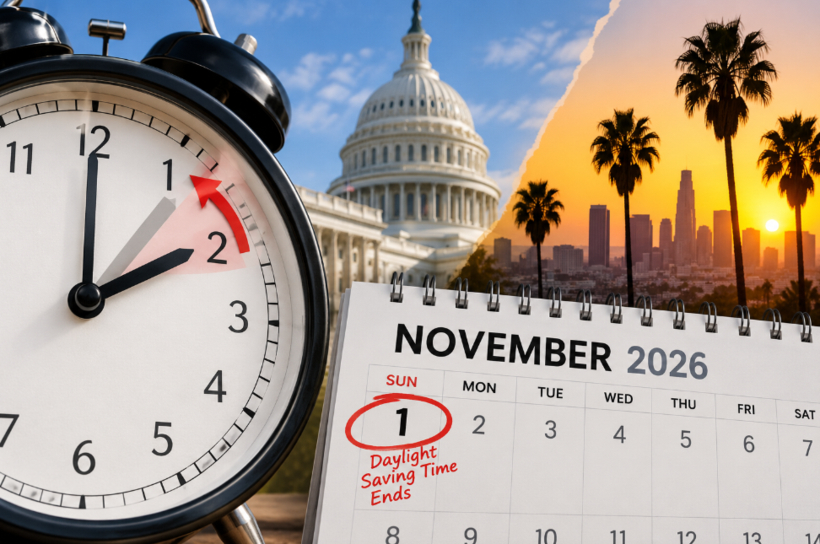
As the bill to maintain Daylight Saving Time year-round remains stalled in the U.S. Senate, it appears inevitable that clocks will have to be turned back by one hour as scheduled this year.
The U.S. House of Representatives passed the ‘Sunshine Protection Act,’ which keeps daylight saving time year-round, last July.
However, the processing of the bill is being delayed as some Republican lawmakers raise safety concerns.
Sen. Steve Daines (R-Mont.) voiced his opposition, stating, “Keeping daylight saving time year-round would cause the sun not to rise until 9:30 a.m. in the winter in western regions, forcing children to catch school buses in the dark,” adding that “it is not a system suited for our region.
”
Previously, President Donald Trump expressed support for the bill, but Senate Republican Whip John Thune noted that securing the necessary 60 votes would not be easy.
In particular, as the Senate went into recess last month ahead of the midterm elections, the prospects for passing the bill within the year have become unclear. The Senate is scheduled to resume its legislative schedule the week of November 9.
This year’s daylight saving time ends at 2 a.m. on November 1. Since daylight saving time ends before the Senate returns, most regions, including California, are expected to turn their clocks back to 1 a.m. as planned.
The bill can still be processed after the Senate returns, but its passage within the year remains uncertain as the current congressional session is scheduled to end in mid-to-late December.
Meanwhile, daylight saving time is scheduled to begin again on March 14 of next year.