A 38-year-old man stepped into the clinic examination room. Once an ordinary office worker, he had recently been pushed out of his company under the pretext that his abilities were no longer what they used to be.
He had been a veteran with nearly a decade of experience in the same field. However, from a certain point on, his work pace dropped noticeably. Even spending the entire morning on a task yielded no progress. Client names slipped his mind instantly, and he often sat blankly through meetings. The closer deadlines got, the more anxious he grew, leaving him completely exhausted by the time he left work.
“He thought it was because he couldn’t sleep since he was raising a young child. He figured it was burnout.”
Yet, his mistakes continued to mount. Eventually, he was fired. Astonishingly, he headed straight back to the office the very next day. Upon returning home, he dialed his workplace thirty or forty times. He seemed utterly incapable of accepting reality.
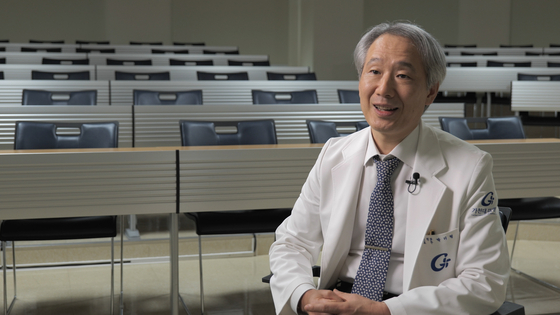
That was around the time he visited Professor Park Ki-hyung (57) of the Department of Neurology at Gachon University Gil Medical Center. The test result was ‘frontotemporal dementia.’ It was a disease where the frontal lobes collapse, causing patients to lose their judgment and impulse control. Recalling that moment, Professor Park paused briefly before speaking quietly.
“I still remember it. The baby was really young, and it was an age when he desperately needed to be earning money.”
Is this an isolated case? Not at all. ‘Early-onset dementia,’ which strikes before the age of 65, accounts for about 10% of all dementia cases. Patients share a common thread: they initially mistook it for other conditions like depression, stress, or burnout. Meanwhile, their brains were quietly breaking down.
Today’s 〈News Pairing〉 covers the shocking end-stages of early-onset dementia witnessed by Professor Park Ki-hyung and the most effective prevention methods. We also examined symptoms completely distinct from geriatric dementia. Professor Park’s single dietary principle practiced for 20 years, the supplements he recommends, and recent diagnostic and treatment trends are all included.
「
Memory Intact Yet Dementia: Easily Missed Symptoms
」
Q : People commonly think of dementia as a disease of the elderly, so I had no idea there were so many patients in their 40s and 50s.
There are far more than you might think. It is actually a common occurrence in the clinic. Their jobs and educational backgrounds vary widely, including a theology graduate student aiming to become a pastor, an active-duty nurse, an interior designer, a lawyer, a doctor, a teacher, and general office workers.
Q : Does early-onset dementia progress differently than geriatric dementia?
The most heartbreaking part is that early-onset dementia has a much worse prognosis than geriatric dementia. While geriatric dementia often progresses slowly over 10 years or more, younger patients are different. In many cases, they reach a stage within 4 to 5 years where they cannot even recognize their own family members. When this happens during prime economic activity years, it destroys not just the patient, but the entire household.
Q : I heard that the symptoms aren’t simply ‘memory decline’ and that they are hard to notice easily. What are the symptoms of early-onset dementia?
Yes. While geriatric dementia involves declining memory, early-onset dementia does not. 25% of patients have normal memory. They don’t even experience forgetfulness. Instead, they lose their way, their judgment becomes clouded, and their job performance plummets. As a result, patients fall into depression and experience wide emotional swings, often blaming themselves. Consequently, they frequently visit psychiatry departments first, thinking it is ‘burnout’ or ‘depression.’
Q : Is it actually possible to prevent dementia?
(Continued)
“The one thing doctors hate the most is earphones.”
Are the earphones young people constantly wear triggering young dementia? Why did Professor Park detest earphones? Furthermore, ‘this food,’ which most people consume at least once a week, is something Korea’s top authority on dementia hasn’t touched in 20 years.
What was that devilish food? Even a master physician who claims expensive nutritional supplements are useless acknowledged ‘this’ as having the sole dementia-preventing effect. Discover how to prevent dementia as explained by South Korea’s top dementia authority via the link below.
https://www.joongang.co.kr/article/25436260
▶ 더중플 구독하면 모든 기사를 볼 수 있어요
“2030, 늙어서 돌연사한다” 심장 의사가 마라톤 경고한 이유
https://www.joongang.co.kr/article/25478730
“암 3번 재발에도 살았다” 두 의사가 본 장기 생존자 공통점
https://www.joongang.co.kr/article/25477266
정신과 진단명에도 없다…주차장서 30분 죽치는 ‘중년남 병’
https://www.joongang.co.kr/article/25475307
“주량 늘었다 좋아마라” 간 의사가 고백한 ‘인천역 반라 사건’
https://www.joongang.co.kr/article/25473214