Just three months after excluding completed electric vehicles from domestic production tax credit targets, the South Korean government has placed the issue back under review. This policy shift comes amid growing concerns that nearly 4 of every 10 electric vehicles sold in South Korea are now Chinese-made, which could undermine the country’s domestic production foundation.
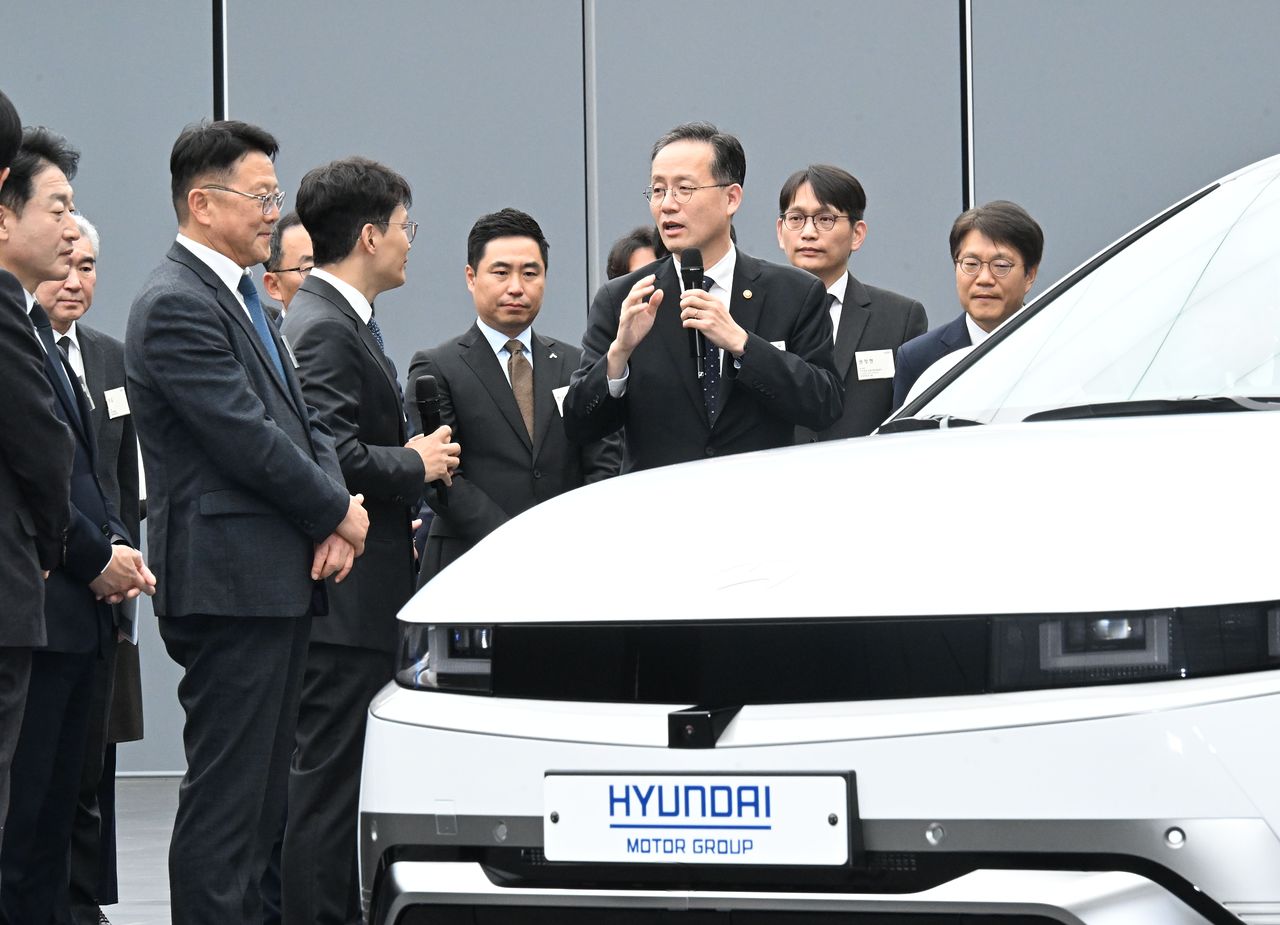
Deputy Prime Minister and Minister of Economy and Finance Lee Hyung-il visited the Hyundai Motor-Kia Technical Center in Hwaseong, Gyeonggi Province, on the 2nd to hold a meeting with automotive industry representatives. Responding to requests from companies to introduce a electric vehicle tax credit production system, Deputy Prime Minister Lee stated, “The government will actively participate in the National Assembly’s deliberation process and discuss the matter in depth.”
The domestic production tax credit is a system that reduces taxes based on the performance of producing and selling strategic industrial products within the country. President Lee Jae-myung also visited Hyundai Motor’s Asan plant in February of last year, when he was party leader, and proposed its introduction for producing EVs such as the Ioniq 6 and 9.
In August, the government included six major sectors—including semiconductors and secondary batteries—in the tax amendment bill targeting tax credits, but excluded electric vehicles. The decision at the time was based on prioritizing support for core parts and materials with vulnerable production bases while indirectly boosting finished car competitiveness through secondary battery support.
However, the situation changed as the aggressive push of Chinese-made vehicles intensified. According to the Korea Mobility Industries Association (KAMA), the proportion of Chinese-made vehicles (112,968 units) among newly registered electric vehicles (296,801 units) from January to September reached 38.1%, up 6.5 percentage points from the same period last year. For electric passenger cars, Chinese-made vehicles accounted for 43.5% while domestic cars made up 48.7%, marking the first time the domestic share dropped below 50%. This result coincides with increased sales of Tesla and BYD vehicles produced at plants in Shanghai, China.
South Korea’s lower trade barriers compared to major nations also had an impact. The United States imposes a 127.5% tariff on Chinese electric passenger cars, while the European Union levies an additional 17% to 35.3% tariff on top of its 10% base tariff. Conversely, South Korea has no additional tariffs beyond the 8% base tariff. Although the government revised procurement subsidy guidelines starting in July this year to evaluate after-sales service and domestic supply chain contributions—thereby excluding BYD from subsidy eligibility—subsidies are still being distributed for Tesla vehicles manufactured in China.
The automotive industry argues that purchase subsidies and battery tax credits alone are difficult to rely on for protecting domestic production foundations. Cho Chul, a special research professor at the Korea Institute for Growth Strategies, noted, “If domestic electric vehicle production decreases, battery demand will also drop, rendering the tax credit meaningless,” adding that, “If the current situation persists, one or two domestic plants could face closures as the transition to electric vehicles becomes absolute.”>
The government’s stance has also evolved. During an economic pending issues meeting with related ministries on the 25th of last month, Deputy Prime Minister Lee discussed institutional supplementation, and this time he directly listened to on-site opinions. A government official noted, “There are concerns that missing the timing for support could happen due to the rapid growth of Chinese-made electric vehicles.”>
Legislation to introduce the electric vehicle production tax credit is also being pushed in the National Assembly. Nineteen ruling and opposition lawmakers—including Democratic Party lawmaker Lee Un-ju, Yoon Ho-deuk, and People Power Party lawmaker Yoon Han-hong—have each proposed related bills. Lawmaker Lee Un-ju stated, “The weakening of the electric vehicle production foundation could also impact the battery, steel, robotics, and autonomous driving industries.”>
Nevertheless, the Ministry of Economy and Finance maintains that the introduction of the electric vehicle production tax credit has not yet been finalized. Variables such as trade friction remain. A ministry official stated, “Our current stance is to actively participate in the National Assembly’s discussions.” The National Assembly’s Strategy and Finance Committee initiated deliberations on the tax law revision bill on the same day.