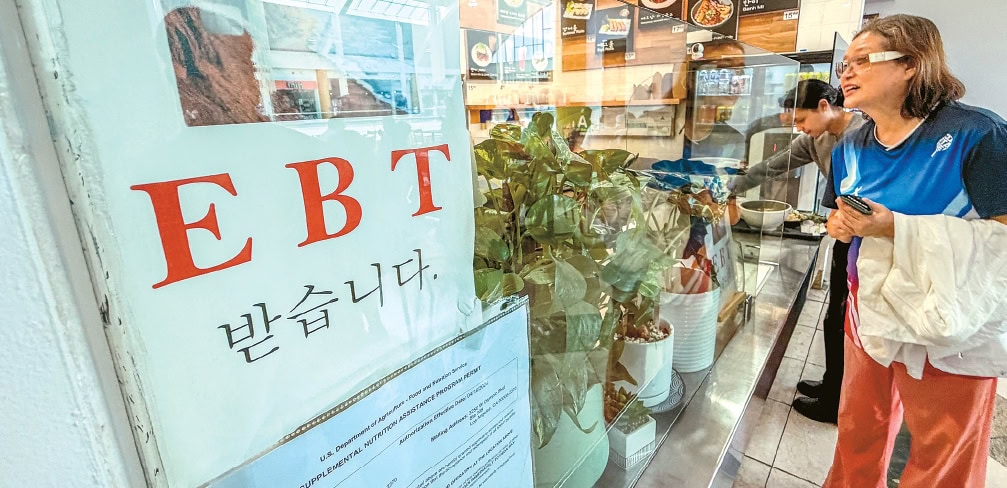
The federal government is investigating California SNAP recipient records as part of a broader effort to detect fraud and prevent benefits from going to ineligible individuals.
The review is raising concerns that low-income families could become more reluctant to seek food assistance at a time when high grocery prices continue to strain household budgets.
The U.S. Department of Agriculture’s Office of Inspector General recently issued subpoenas ordering California, Michigan, Illinois and New York to submit all personal records related to eligibility for the Supplemental Nutrition Assistance Program, known as CalFresh in California.
The inspector general’s office said the subpoenas were intended to prevent fraud within the SNAP program.
Officials said the requests targeted states ranked among the 10 largest in the nation by SNAP spending.
Texas, Florida, Ohio, Georgia, North Carolina and Pennsylvania have reportedly already submitted their recipient data to the federal government.
California operates one of the largest SNAP programs in the country.
During the 2024-25 fiscal year, the state spent more than $12.5 billion to provide food assistance to approximately 5.5 million residents.
USDA Inspector General Jon Walk said the investigation is intended to provide a clear assessment of state SNAP records and ensure that benefits are not improperly paid to people who do not qualify.
The move is consistent with the Trump administration’s broader effort to reduce fraud and abuse in federal assistance programs.
The administration has repeatedly said federal benefits should not be provided to undocumented immigrants or others who fail to meet eligibility requirements.
California and other Democratic-led states, however, have strongly opposed large-scale investigations and tighter SNAP eligibility standards.
State officials and advocacy groups argue that the measures could penalize public-benefit recipients and directly harm low-income households.
An immigrant rights advocate warned that the investigation could discourage eligible families from participating in the program amid broader concerns about immigration consequences and restrictions on public assistance.
“With fears that receiving public benefits could affect green card applications and other difficult conditions already facing immigrant families, a sweeping review like this could have a chilling effect,” the advocate said.
“If benefit reductions, stricter administrative requirements and recipient-list investigations happen at the same time, low-income families may be unable to receive food assistance when they need it.”
Congress significantly expanded SNAP work requirements last year.
Under the revised rules, recipients must work at least 20 hours per week or 80 hours per month.
Those who fail to meet the requirement may receive benefits for no more than three months during a three-year period.
An estimated 660,000 people in California are expected to be affected by the expanded work requirements.
The number of SNAP recipients in the state has already begun to decline.
According to an analysis by the Center on Budget and Policy Priorities, California’s SNAP enrollment has fallen 5.5% since last summer.