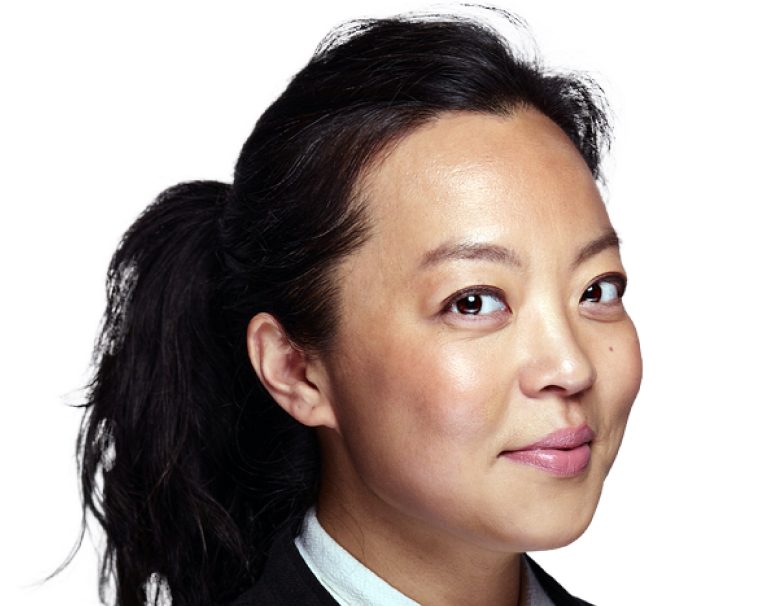
Wisconsin state Rep. Francesca Hong, a Democratic Socialists of America member who emerged as one of the most closely watched candidates in the Democratic Party’s progressive surge, narrowly lost the Democratic primary for governor but vowed that her political movement would continue.
“I know we don’t have the final results right now, but what I do know is we are ready to keep fighting,” Hong told supporters late on election night. “We have built something that will change politics forever.”
With 99% of results reported, Milwaukee County Executive David Crowley defeated Hong by just 3,796 votes, or roughly half a percentage point. Crowley received 39.8% of the vote, compared with Hong’s 39.3%.
The razor-thin result has fueled competing interpretations within the Democratic Party. One view is that voters ultimately became concerned that Hong’s democratic socialist positions could make it harder for Democrats to win a November general election in closely divided Wisconsin. Another is that coming within a fraction of a percentage point of the nomination demonstrates the strength of the grassroots progressive movement that rallied behind her.
The result was particularly striking because Hong had entered the final weeks of the campaign with a commanding lead in public polling.
A State Navigate survey conducted July 23-26 showed Hong at 44%, compared with 15% for Crowley. A Marquette Law School poll released July 29 put Hong at 38%, former Lt. Gov. Mandela Barnes at 16% and Crowley at just 7%.
Hong ultimately won about the same share of the vote that Marquette had measured. It was Crowley’s extraordinary late surge that the polls failed to capture.
Marquette poll director Charles Franklin noted after the election that Hong’s 39.3% showing was virtually identical to her final poll number of 38%. The dramatic miss came on Crowley, whose support jumped from 7% in the final survey to nearly 40% on Election Day. A large share of late-deciding voters — including older and more moderate Democrats — appears to have consolidated behind him.
Crowley’s dramatic comeback
Crowley’s victory was all the more remarkable because he had briefly suspended his campaign before jumping back into the race after Lt. Gov. Sara Rodriguez dropped out.
His comeback accelerated after outgoing Democratic Gov. Tony Evers endorsed him, helping Crowley portray himself as the candidate most capable of defeating the Republican nominee in November. In Marquette’s final survey, 36% of Democratic primary voters said Evers’ endorsement made them more likely to support Crowley.
Other establishment Democrats also rallied around Crowley as the primary approached.
Hong, by contrast, did not receive endorsements from two of the nation’s most prominent democratic socialist figures, Sen. Bernie Sanders and Rep. Alexandria Ocasio-Cortez.
At the same time, old statements and social media posts by Hong resurfaced during the closing weeks of the campaign.
She had previously advocated defunding and ultimately abolishing police, expressed support for abolishing Immigration and Customs Enforcement and posted in 2020 that Americans should “Cancel Thanksgiving,” calling the holiday a celebration of colonialism. During the campaign, Hong said some of her views had evolved and later described Thanksgiving as a holiday she loves.
The controversy reinforced arguments from Crowley and other Democrats that Hong could face difficulties appealing to swing voters in a state where statewide elections are frequently decided by narrow margins.
Loss does not mean the socialist movement is fading
Hong’s defeat, however, hardly amounted to a rejection of the party’s left wing.
The Associated Press noted that a democratic socialist coming so close to winning the gubernatorial nomination in one of the nation’s most important battleground states sent a clear signal about the dissatisfaction and frustration among Democratic voters.
The Spectator similarly argued that Hong’s defeat should not be interpreted as a return to the Democratic establishment’s preferred politics.
Instead, it said successful Democratic candidates may increasingly need to bridge the divide between the party’s hard-left and more moderate progressive wings. The publication contrasted Hong with Michigan Democratic Senate nominee Abdul El-Sayed, whose politics are progressive but who was able to attract support from Sanders and Ocasio-Cortez.
Hong’s near victory underscored just how much influence the Democratic socialist movement has accumulated even beyond heavily Democratic cities.
Republicans spent millions highlighting Hong
Ironically, some of the largest outside spending surrounding Hong’s candidacy came from Republicans.
The Republican Governors Association spent nearly $3.6 million through its Right Direction Wisconsin PAC on advertisements formally opposing Hong. But the ads prominently highlighted her opposition to President Donald Trump’s immigration policies and her calls to return Democrats to their progressive roots.
Democrats argued that the strategy was designed to raise Hong’s profile among primary voters because Republicans viewed her as the easier candidate to defeat in November. The AP similarly reported that Republicans believed Hong would present a more favorable general-election matchup.
The unusual spending reflected the stakes Republicans attached to the Democratic primary — and their calculation that Hong’s progressive record could be turned against her in a statewide general election.
Despite losing, Hong’s performance demonstrated that the political constituency behind her is far from marginal.
She came within roughly 3,800 votes of becoming the Democratic nominee for governor of one of America’s most politically competitive states.
Crowley must now find a way to bring those voters into his coalition.
He will face Republican U.S. Rep. Tom Tiffany, who has the endorsement of President Donald Trump, in the Nov. 3 general election.