Garden Grove Chemical Tank Crisis Sparks Lawsuits and Investigation
Garden Grove chemical tank warnings had allegedly been ignored for years before the recent crisis involving GKN Aerospace triggered mass evacuations, lawsuits, and an expanding investigation by local authorities.
Concerns surrounding the chemical tank incident in Orange County continue to grow as residents, experts, and prosecutors question whether the company failed to properly prepare for a well-known industrial hazard involving highly reactive chemicals.
According to a May 27 report by the Los Angeles Times, studies and industry warnings have repeatedly cautioned for years that chemicals such as methyl methacrylate (MMA) can trigger dangerous chain reactions under heat and pressure, potentially leading to catastrophic explosions.
Researchers citing data from the U.S. Chemical Safety and Hazard Investigation Board (CSB) found that roughly 15% of uncontrolled chemical incidents in the United States between 1980 and 2001 involved “thermal runaway” reactions. In such cases, chemicals rapidly self-heat and explode after cooling systems fail or shut down.
Experts believe a similar process may have contributed to the Garden Grove incident, where temperatures inside an MMA storage tank reportedly rose after a malfunction in the cooling system.
Garden Grove Chemical Tank Incident Triggered Mass Evacuations
Authorities feared the possibility of a BLEVE, or boiling liquid expanding vapor explosion, during the incident. A BLEVE occurs when pressurized liquid rapidly vaporizes, creating a massive fireball and shockwave.
As a precaution, evacuation orders were issued for approximately 50,000 residents across six cities, including Garden Grove, Anaheim, and Buena Park.
Public anger has also intensified.
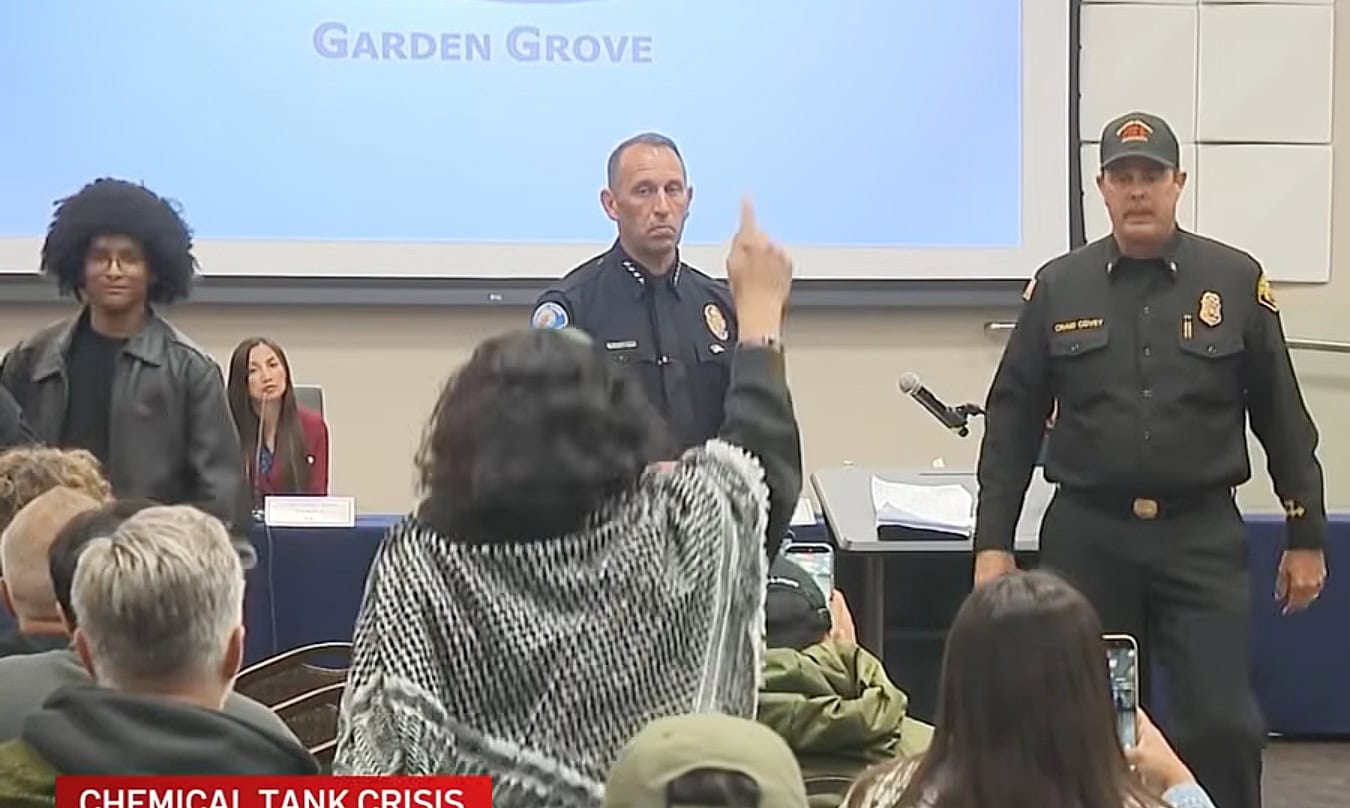
More than 200 residents attended a public hearing at Garden Grove City Hall on May 26, according to KTLA. Residents questioned how such a hazardous facility could operate within one mile of schools and residential neighborhoods. Some also demanded inspections of similar facilities in the area.
The meeting reportedly lasted for several hours without producing a clear action plan. Protesters both inside and outside the venue called for the plant to be shut down.
Investigation and Lawsuits Expand
The Orange County District Attorney’s Office has launched an investigation into GKN Aerospace. According to NBC4, investigators are also examining allegations of price gouging and improper solicitation activities by some attorneys following the evacuation.
Orange County District Attorney Todd Spitzer criticized the company’s safety measures, stating that the industry widely understands the chemical must be kept below 50 degrees Fahrenheit for safe storage.
“It is difficult to understand how there was no backup system when a cooling system failure could create such danger,” Spitzer said.
Authorities have issued preservation orders for company documents and records while also opening a public hotline for whistleblowers.
Civil litigation is expanding rapidly as well.
The Orange County Register reported that at least seven lawsuits had been filed in Orange County Superior Court as of May 26, along with an additional federal lawsuit. The initial number of plaintiffs has already reached approximately 70.
The lawsuits allege negligence and safety failures by GKN Aerospace, claiming damages related to forced evacuations, business losses, fears of chemical exposure, and declining property values.
Although the Orange County Fire Authority lifted all evacuation orders late May 26, officials said safety operations remain ongoing near the damaged tank. Authorities stated there is currently no direct threat to residents, but a roughly 300-foot zone around the tank still poses potential risks of fire or chemical release.