Hyundai Motor Group Metaplant America (HMGMA), Part 2
A vehicle’s journey does not end when it rolls off the assembly line. At Hyundai Motor Group Metaplant America (HMGMA), the final step before delivery lies beyond the factory floor—on a compact but demanding test track where machines give way to human judgment.
During a media tour held on April 23, completed vehicles streamed out of the production line and headed toward what looked like a small proving ground. There, more than 20 units of the Hyundai IONIQ 5 and IONIQ 9 were lined up behind a yellow line, awaiting their final inspection.
This was the last checkpoint before shipment.
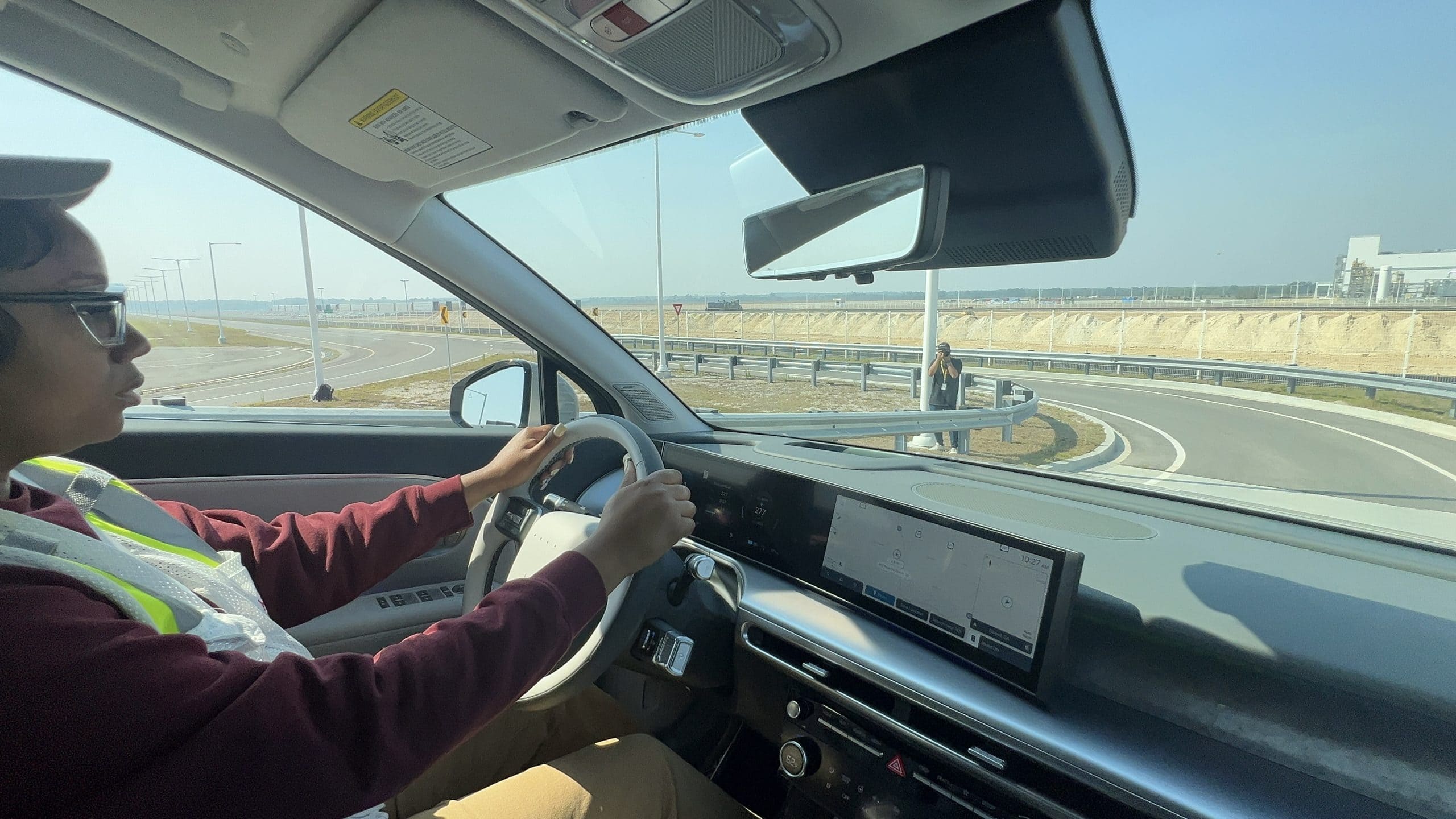
A senior official overseeing quality control explained that “aside from BSR (Buzz, Squeak, Rattle), about 95% of vehicles show no issues.” BSR refers to even the faintest noises or vibrations—meaning the inspection goes beyond visible defects to capture subtle sensory imperfections that drivers might feel or hear.
Each day, around 15 to 17 inspectors are assigned to the track, with each individual responsible for evaluating 20 to 25 vehicles. While the numbers may suggest repetitive work, the reality is far from routine. The moment a vehicle enters the track, a tightly structured, high-intensity inspection begins.
Media participants were invited to ride along with inspectors, experiencing the process firsthand.
The inspection starts with basic, real-world functionality. Inspectors quickly verify whether the digital key operates properly, and whether systems such as infotainment, radio, climate control, and wipers function as intended.
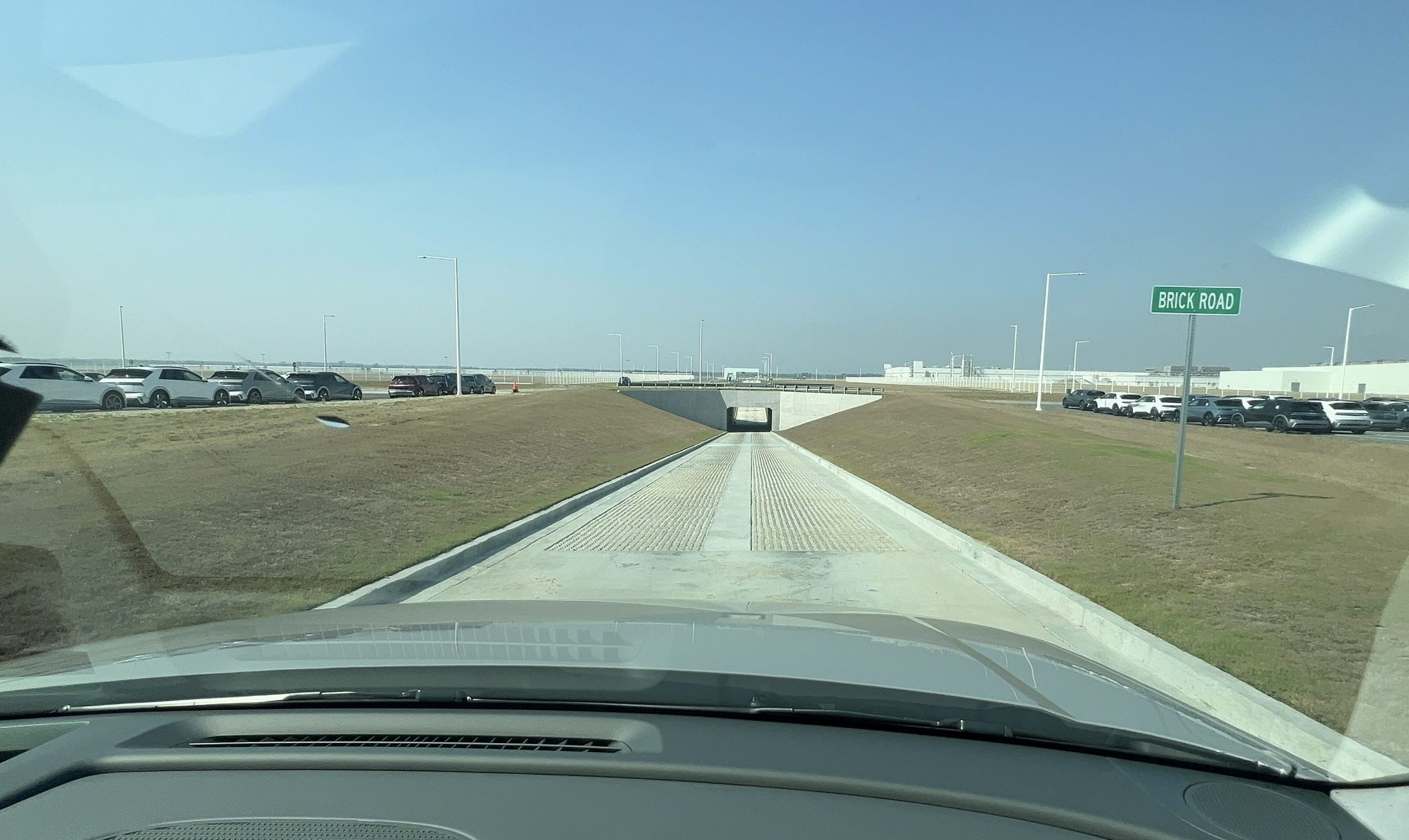
From there, the vehicle moves onto uneven surfaces designed to expose weaknesses in build quality. Driving over deliberately rough terrain, inspectors listen closely for any abnormal noise or vibration—no matter how small.
The course itself is far from simple. Vehicles must navigate tight S-curves and gravel sections that test fundamental driving stability. Inside a tunnel, inspectors sound the horn to evaluate acoustic performance, followed by a straight-line segment where emergency braking is tested to assess accident avoidance capability.
On a circular loop, the steering wheel is turned fully to check whether it returns naturally to center, ensuring smooth steering feedback. The course then climbs a steep incline, where inspectors bring the vehicle to a stop before restarting to evaluate auto-hold functionality and braking stability. On the downhill stretch that follows, systems such as adaptive cruise control and lane-keeping assist are tested in sequence under acceleration.
Although each run takes only a short time, the number of validation points is extensive. Only after completing every stage does a vehicle receive final approval for delivery.
If the factory represents the automated creation of a vehicle—powered by robotics, AI, and real-time data—this test track represents the human completion of it. It is where not only visible flaws but also the subtle nuances of driving feel are filtered out.
“The vehicles shipped from HMGMA must go through this entire process,” said one on-site inspector. “It takes months of training to develop the ability to detect everything from noise to driving stability. This is skilled work that relies on human judgment.”
Following the quality inspection experience, participants were given the opportunity to test the performance of these vehicles themselves—this time beyond the paved track.
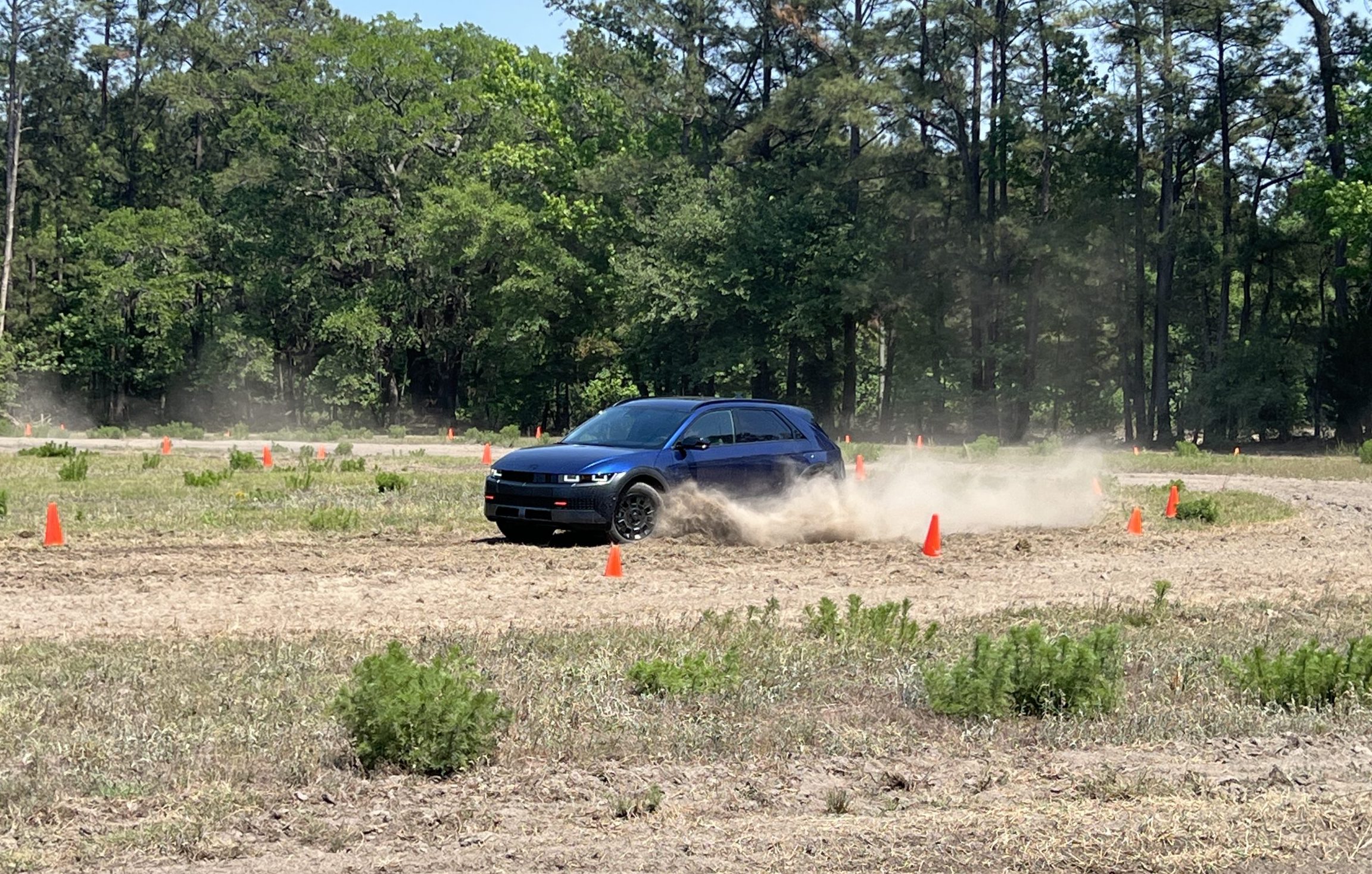
At a dedicated off-road course, the terrain shifted from grassy hills and wooded paths to dusty dirt trails resembling a short rally stage. The Hyundai IONIQ 5 XRT, an off-road-focused variant with increased ground clearance, was deployed for the session.
Set to Sand Mode, the vehicle tackled sharp corners and U-shaped turns, with certain sections intentionally designed to induce slip. Despite momentary loss of traction on loose surfaces, the vehicle quickly regained stability—demonstrating the responsiveness of its electronic control systems.
Participants completed three timed laps, repeatedly confirming the stability and composure of vehicles that had already passed through HMGMA’s meticulous inspection process.
What stood out most was the continuity between production and performance. At HMGMA, a car is not considered complete when it is built—it is only complete after it has been tested, driven, and felt.
BY HOONSIK WOO [woo.hoonsik@koreadaily.com]