
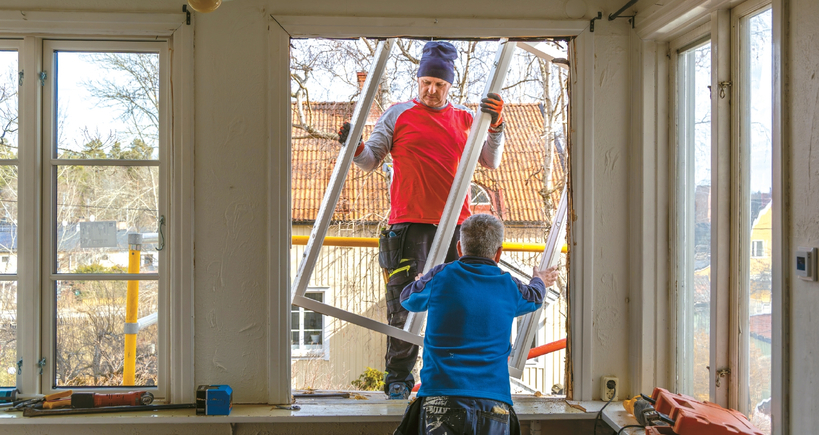
Every year, 350,000 to 400,000 homes disappear from the market due to aging, demolition, and weather disasters, exacerbating the ongoing housing shortage crisis. If this rate of decline continues over the next decade, an estimated 3.5 to 4 million housing units could be wiped out. This staggering loss matches the estimated total deficit of homes nationwide.
Experts emphasize that solving the housing crisis requires not only expanding new home construction but also implementing urgent policies to repair and manage existing properties. Older homes, particularly those inhabited by low-income families, face a high risk of disappearing from the market because owners struggle to afford basic maintenance. Furthermore, these properties cannot easily be replaced through new construction alone.
Lawmakers from both the Democratic and Republican parties have recently urged action, pointing out that mounting repair costs are choking off the supply of existing homes. U.S. Senators John Fetterman (D-PA) and Cynthia Lummis (R-WY), along with Representative Nikema Williams (D-GA), recently sent a letter to the Department of Housing and Urban Development, urging the swift implementation of a new federal home repair assistance program. The lawmakers noted that many elderly homeowners delay selling their current properties to downsize simply because they cannot afford the necessary renovation costs.
An impending generational handover of homeownership is another critical factor. According to Realtor.com’s generational housing inheritance report, about 13.9 million homes currently owned by Baby Boomers and the Silent Generation are expected to hit the market by 2036. Whether these homes will successfully alleviate the housing crunch depends largely on their current maintenance state.
Homes do not deteriorate overnight. Because major components like roofs, plumbing, and electrical systems degrade gradually over many years, continuous financial investment is required to keep them habitable. If owners lack the financial means or the will to maintain them, properties fall into disrepair, ultimately getting demolished or vanishing from the market.
The Urban Institute, a nonpartisan economic policy research organization, estimates that about 0.21% of 1-to-4-unit homes become uninhabitable each year due to aging and other factors. Narrowing the scope to homes built before 2000, this rate rises to approximately 0.25%.
According to Urban Institute researchers, homeowners spent approximately $825 billion on home renovations between 2021 and 2023. This accounts for roughly 1% of the total real estate value of all owner-occupied homes. The core issue is that homeowners vary dramatically in their economic capacity to afford these repairs. Harvard University data shows that among households owning homes built before 1960, the top 20% of earners spent an average of $12,700 on home improvements and repairs in 2023. In contrast, the average spending for the bottom 20% of earners was a mere $3,400.
Low-income households also depend more heavily on older housing. In 2023, about 25% of all homeowners lived in properties built before 1960. For homeowners in the bottom 20% income bracket, this figure jumped to 29%. Because older homes typically carry lower market values, they represent a larger share of housing for low-income families.
The disparity in repair spending directly translates to actual housing conditions. As of 2023, more than 22% of owner-occupied homes built before 1960 exhibited structural defects, a rate more than double that of homes constructed after 2000.
The Federal Reserve Bank of Philadelphia estimated that repairing all currently occupied homes in the United States would require $198.4 billion. Notably, low-income households accounted for a disproportionately high share of this total repair demand.
While the need for home repairs accumulates, securing affordable housing has become increasingly difficult. According to Harvard University, properties priced within the purchasing power of households earning $75,000 or less dropped by 60% in March of this year compared to 2019. Harvard researchers pointed to this trend as clear evidence that the United States is failing to properly maintain its existing housing stock.
Researchers stress that the cumulative cost of delayed repairs across millions of households imposes a massive burden on family finances, community assets, and public health, yet these losses largely remain hidden from public view.
The federal government has begun laying legal groundwork to address this home repair crisis. Passed into law in July, the “Pathways to 21st Century Homes Act” authorizes a federal pilot program through 2031 to provide repair grants and loans to eligible homeowners and landlords. The goal of the legislation is to preserve existing housing, stimulate property sales, and expand opportunities for new buyers to move into established neighborhoods. Crucially, it aims to prevent affordable housing from disappearing entirely.
Data tracked by the Department of Housing and Urban Development between 2015 and 2017 shows that rental units with monthly rents below $500 were about four times more likely to disappear from the market than units renting for $1,500 or more. Low-income families suffer the hardest blow when such units vanish.
Another reason to preserve affordable existing housing is that once these homes are lost, they are nearly impossible to replace through new construction. According to the Urban Institute, the share of homes valued under $200,000 plummeted from 39% in 2016 to just 13% in 2025. Researchers analyzed that surging land prices, construction expenses, and financing costs have made it nearly impossible for builders to profitably supply smaller, lower-cost homes.
According to the National Association of Home Builders, only 23% of new homes sold in June of this year were priced under $300,000. This means that when an affordable older home is demolished or becomes uninhabitable, it cannot easily be replaced by a new home in the same price bracket. Even if a new house is built on the plot of a demolished low-cost home, surging land and construction costs mean the final price will price out low-income families.
Experts conclude that relying solely on new housing supply has severe limitations when it comes to solving the housing shortage. Policymakers must pair expanded new construction with robust support for the repair and preservation of aging homes.