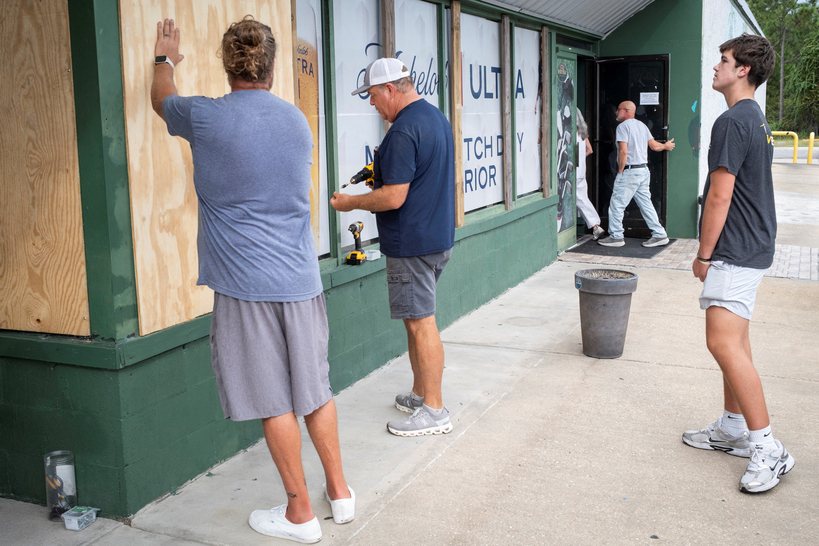
Residents in Florida’s Perdido Key board up windows in preparation for the landfall of Hurricane Isaias. As Hurricane Isaias intensifies into a powerful Category 3 storm and approaches the U.S. Gulf Coast, authorities in Georgia have entered a full-scale emergency response mode.
Severe Weather Warnings and Storm Surges
The National Weather Service (NWS) classified Isaias as a Category 3 hurricane, forecasting that weather conditions will rapidly deteriorate as it makes landfall near the coasts of Alabama and Florida around midnight. The National Hurricane Center (NHC) expects the hurricane to make landfall on the northern Gulf Coast late Friday or early Saturday. Maximum sustained winds have reached 120 mph with stronger gusts, while hurricane-force winds extend up to 30 miles from the center and tropical storm-force winds reach up to 185 miles. Storm surge warnings are in effect from the mouth of the Mississippi River to Steinhatchee, Florida, with expected rainfall ranging from 4 to 10 inches, and up to 15 inches in some areas.
Georgia Declares State of Emergency
Georgia Governor Brian Kemp declared a state of emergency across the entire state in anticipation of severe weather, including heavy rain and strong winds. The National Weather Service warned of heavy rain, flash flooding, strong winds, and tornado risks across most of Georgia, including Metro Atlanta, from Friday evening through Sunday morning. The Georgia Emergency Operations Center activated to coordinate disaster response across state, federal, and local agencies. The Georgia Department of Transportation (GDOT) deployed 24-hour emergency response crews, and road construction projects like the I-285 work in Smyrna were canceled to ensure public safety.
Travel Disruptions and Flight Cancellations
The hurricane’s impact led to numerous flight cancellations, with more than 40 flights canceled at Hartsfield-Jackson Atlanta International Airport, mostly affecting routes to the Florida Panhandle and Mississippi. Airlines like Delta issued travel waivers allowing passengers traveling through affected airports to change itineraries without penalty. Authorities urge residents to secure outdoor items, fill vehicle gas tanks, prepare emergency supplies for at least three days, and operate generators strictly outdoors to prevent carbon monoxide poisoning.