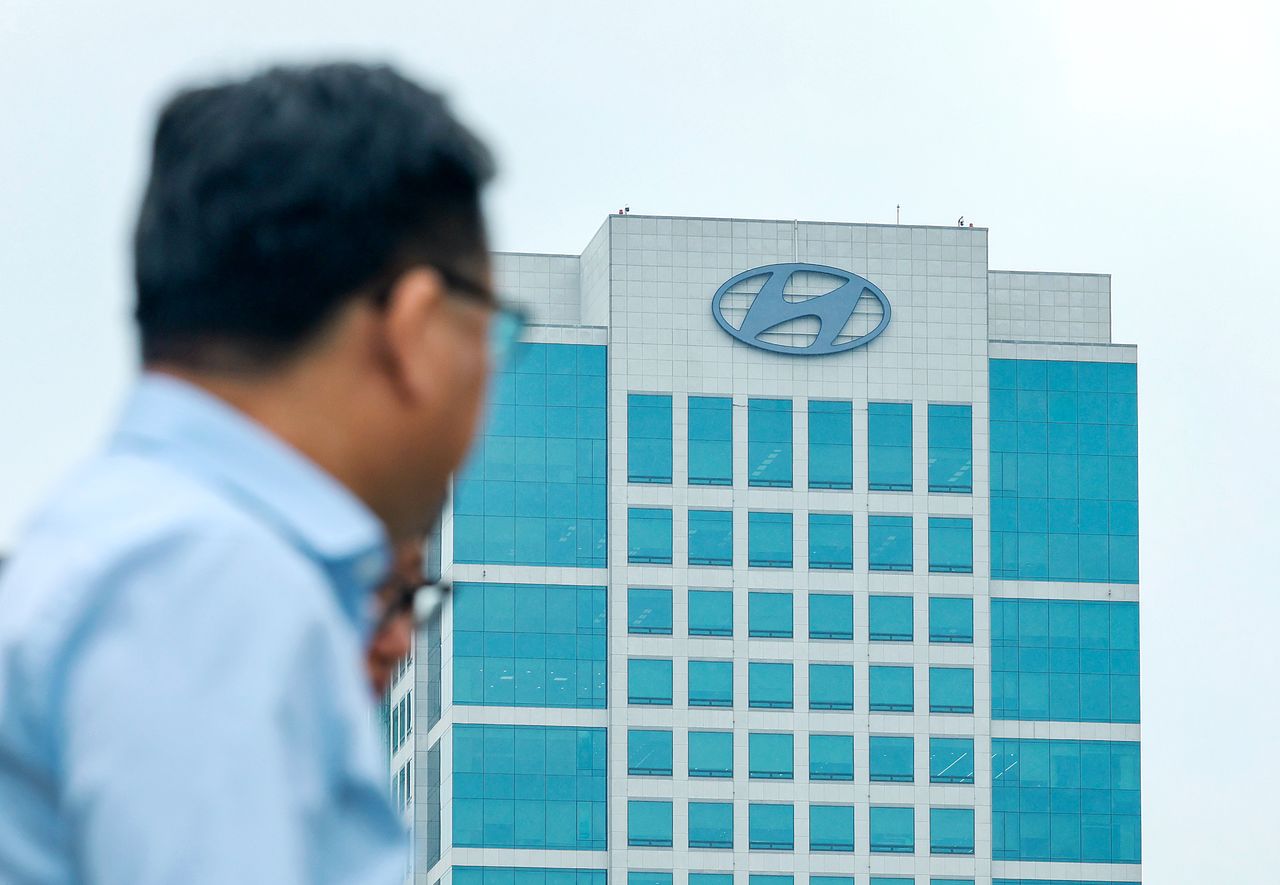
Hyundai Motor and its labor union have reached a tentative agreement on wage negotiations 111 days after their initial meeting. Despite significant friction, including the union staging a full-scale strike for the first time in 10 years, both sides ultimately managed to draw up an agreement.
On August 25, Hyundai Motor announced that during the 17th round of negotiations running from the previous day, they reached a tentative agreement featuring a 100,000 won increase in the monthly base salary (including seniority pay), performance-based bonuses of 400% of the base salary plus 12.7 million won, 15 company shares, 500,000 won in welfare points, and a 200,000 won increase in vacation allowances (effective starting 2027). The union estimates that this negotiation will result in a wage increase effect of 40.84 million won per member this year. The wage negotiations will be finalized if it passes the union members’ vote on the 31st.
The union had initially demanded 30% of last year’s net profit to be distributed as performance bonuses, but a simple calculation of this year’s agreement estimates it to be around 15% of operating profit. Additionally, the bonus increase, which was a key issue in this year’s negotiations, will be re-discussed in next year’s collective bargaining, and the extension of the retirement age will be implemented without expanding the wage peak system once the law is revised. However, the reinstatement of union members previously dismissed for illegal acts, as requested by the union, was not accepted, and the implementation of a full monthly salary system will be discussed in the medium to long term.
The labor and management also agreed to newly hire 500 technical (production) workers, including 200 in the second half of next year and 300 in 2028. Furthermore, all 10 cases of provisional attachment of damages totaling 21.17 billion won filed by management against the union’s illegal activities will be lifted.
Hyundai Motor’s wage negotiations faced rough sailing from the start, as expectations across industries rose following semiconductor giants like Samsung Electronics and SK hynix agreeing to record-breaking performance bonuses. In addition, after the Hyundai Motor Group announced plans earlier this year to deploy Boston Dynamics’ humanoid robot ‘Atlas’ on the production line, the union strongly protested, claiming they would ‘refuse to deploy production lines without agreement.’
However, through negotiations, Hyundai Motor’s labor and management formed a consensus on the necessity of introducing technologies such as physical artificial intelligence (AI) and robotics to secure future competitiveness. Accordingly, they decided to transparently share the progress related to new businesses and new technologies to jointly respond to the future industrial transition.
The negotiation process left scars, including Hyundai Motor’s union launching a full strike for the first time in 10 years. Industry insiders estimate that the union’s total 60-hour strike caused production disruptions of about 55,200 units and sales losses exceeding 2.3 trillion won for Hyundai Motor.
As Hyundai Motor, the ‘big brother’ of the Hyundai Motor Group, led the wage agreement, attention is now turning to Kia’s negotiations. Kia’s union has announced partial strikes of 2 to 4 hours per shift from the 26th to the 28th. Kia’s labor and management have stated that they could suspend the partial strike depending on the progress of the negotiations. Kia’s union is demanding a 149,600 won increase in the monthly base salary, performance bonuses amounting to 30% of last year’s operating profit, the implementation of a 4.5-day workweek, and the extension of the retirement age.
A Hyundai Motor official stated, “We apologize for causing concern to numerous stakeholders, including shareholders, customers, and parts suppliers, due to the prolonged negotiation friction and strikes.”