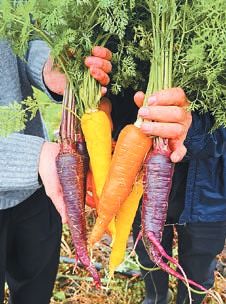
Good cooking begins with quality ingredients. Depending on where, by whom, and how an ingredient is grown, its flavor changes entirely. This is why chefs pay close attention to the origin and production process of their ingredients. The Jeju carrots featured in this culinary journey highlight the unique agricultural environment of Korea’s southernmost island.
The Unique Advantage of Jeju’s Volcanic Ash Soil
In late November, amid unpredictable weather with sudden drops in temperature and heavy downpours, a visit to an organic carrot farm in Seongsan-eup, Seogwipo-si, revealed vibrant fields. Pulling the green leafy tops yielded carrots covered in rich black soil, releasing an earthy aroma mixed with herbaceous, green notes. Winter is the prime season for Jeju carrots, which begin harvesting in late autumn and develop their signature sweetness through the colder months.
The secret behind these exceptional vegetables lies in the soil. Formed from layers of volcanic ash, the local volcanic soil features fine, soft particles capable of retaining moisture for extended periods. Because carrots require deep soil to grow straight and long before thickening, this thick topsoil provides an ideal environment for cultivation.
Exploring Orange, Yellow, and Purple Varieties
Local farmers cultivate three distinct carrot varieties: orange, yellow, and purple. Each color brings unique nutritional profiles and flavor profiles. Orange carrots are rich in beta-carotene, yellow carrots contain lutein, and purple varieties are packed with anthocyanins. Among these, the yellow carrots stand out for their refreshing flavor, while purple carrots offer a deeper, robust taste. Notably, the leaves of the yellow carrot release a bright, lemon-like scent that opens up fresh culinary possibilities.
Culinary Innovation and Direct Farm Partnerships
Top chefs utilizing these organic carrots in fine dining emphasize their delicate texture, high moisture content, and low bitterness. Slow-cooking the carrots in butter allows every part of the vegetable to be repurposed—using scraps for purees, peels for jams, and fresh roots for salads. Direct partnerships between restaurants and Jeju farmers ensure that quality and flavor remain the driving forces behind these exceptional winter crops.