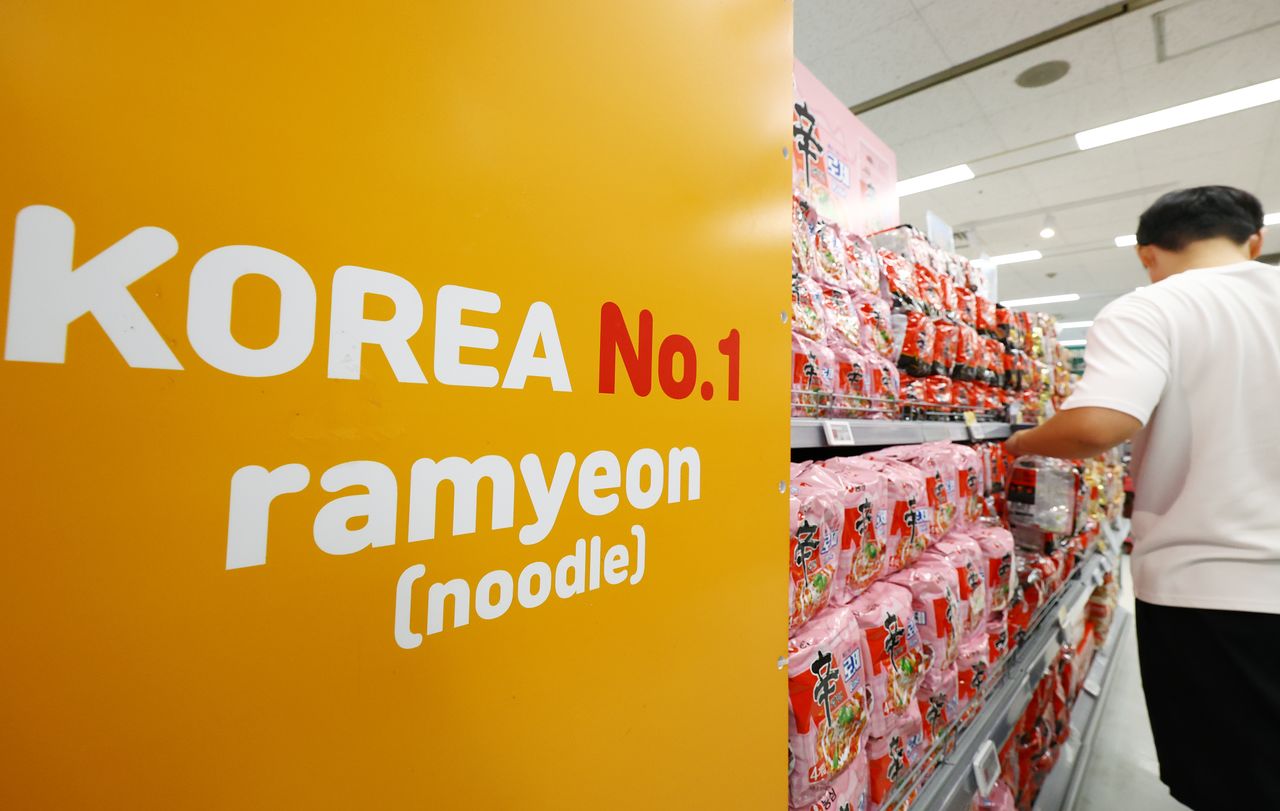
Exports of domestic cosmetics, food, and biotech products have experienced exponential growth, increasing more than fourfold over the past decade. With the export market successfully expanding from a heavy reliance on China and Hong Kong to the United States and Europe, small and medium-sized enterprises (SMEs) are rapidly emerging as a new growth engine for South Korea’s economy.
According to the ’10-Year Trend Analysis of K-Consumer Goods Exports’ released by the Korea Chamber of Commerce and Industry (KCCI), the export volume of seven major food, beauty, and biotech items reached $15.59 billion during the first eight months of this year. This represents a 4.2-fold increase compared to the same period in 2016 ($3.74 billion), significantly outpacing the 2.2-fold growth rate of South Korea’s total national exports over the same timeframe.
Diversification into US and European Markets
Geographically, exports to the United States saw a dramatic 11.9-fold surge, rising from $230 million to $2.74 billion. Meanwhile, European exports grew 11-fold from $490 million to $5.36 billion. Conversely, growth in China and Hong Kong remained sluggish, recording only a 1.2-fold increase.
The most striking market diversification occurred within the K-beauty sector. While 74.2% of total exports in 2016 were concentrated in China and Hong Kong, this year’s shares for China-Hong Kong, the United States, and Europe have evened out to around 20% each. As US and European shipments jumped 15.3-fold and 43.9-fold respectively, heavy dependence on a single market was successfully mitigated.
SME Dominance and Future Strategies
During the first eight months of this year, SMEs accounted for 93.1% of K-food and 91.3% of K-beauty exports. The growth of SMEs in the beauty sector was particularly remarkable, with their cosmetics export volume climbing 4.5-fold from $1.38 billion in 2016 to $6.18 billion this year. In contrast, the K-biotech sector was heavily dominated by large corporations, which accounted for 72.8% of exports.
The KCCI emphasized the need for customized strategies that account for country-specific product certifications, distribution networks, and trade environments to sustain this export momentum. Experts noted that continued support for SME logistics and early-stage market penetration is essential to transform this foundation into a lasting growth engine.