[Lim Hee-yun’s Music SCENE] K-pop Between Virtual and Reality
One out of every four new idols appearing in the K-pop scene this year is not human. They dance well, look great, sing well… and this is not a ‘superhuman’ modifier. It literally means they are non-human. According to the author’s direct investigation, out of 55 idol-type singers (including groups and soloists) who debuted in South Korea from January to October 2026, 23.6%—amounting to 13 teams or soloists—were virtual idols. Therefore, 2026 is likely to become a watershed year for the virtualisation of K-pop. The popularity of AI singers is also at an unprecedented level. Look at the music charts right now. They compete at the top with human singers like Rescene, Cortis, and Soyeon. With acrobat-like knife-group dances and perfect fan services, is the future of K-pop virtual idols becoming artificial humanization? What do these trends mean? Will humans exist in the future of K-pop?
As of October 14, Melon Top 100. Soyeon’s ‘I Will Resign’ ranked 1st, Rescene’s ‘LOVE ATTACK’ 2nd, followed by Momeuru’s ‘Did You Become the Adult You Dreamed Of?’ at 3rd. Momeuru stated in the album introduction that “the vocals of this album were generated through Suno AI technology.” Released in June, this song created a sensation outside of Melon first. It topped the YouTube music chart and even reversed course on Melon, climbing to 18th on the 2nd. And in just ten days, it became not a one-time syndrome, but a reality that ‘lingers’ on the chart. As of the 14th, it ranked 4th on the Melon daily chart, 12th on the weekly chart, and 1st on the ‘Likes Surge Top 100’.
AI-generated music first hit big on YouTube. Since shorts, advertising content, and VTubers (virtual YouTubers) invaded early on, it’s a platform where consumers are less unfamiliar with the virtual and AI, whether they like it or not. Now, countless cafes nationwide play AI-generated music playlists instead of human-sung pop or K-pop. However, it hasn’t been long since AI infiltrated traditional music charts, which were considered the stronghold of ‘human singers.’
When Chosun Hip-hop’s ‘Forest of the Mind’ broke through the barrier of the Melon Top 100 last month, the music industry considered it a ‘shock.’ Yet, just a month later, Momeuru has settled into the Melon Top 5, a territory hard for even human singers to approach. It is earth-shattering and unstoppable.
‘Forest of the Mind’ (Chosun Hip-hop), which first broke the barrier of the Melon Top 100, is a healing song with a breathy, half-sound, half-air vocal style. The second-person vocalist singing, “Rest your tired mind / Catch your breath here,” resembles ChatGPT, which matches your mood no matter what you say. But ‘Did You Become the Adult You Dreamed Of?’ (Momeuru) is on a completely different level. “Even on sometimes collapsing dawn nights / Barely, barely enduring / The small jagged me / Can I call myself an adult?” is definitely the first-person perspective of a human living a grueling life. Unlike the calm Chosun Hip-hop, the vocals passionately vent emptiness and sorrow by shifting between chest and head voice toward the chorus. While both songs share the harmonic technique of using a major third chord to elevate emotion, Momeuru brews the emotion deeply like a rock ballad by Hyukoh, Car the Garden, or Oewan. It is a genuinely sad sound made by someone who is genuinely sad.
If the movie world has ‘Assassins,’ the music world right now has Momeuru as a battlefield of star ratings. Some give a 1-star rating saying, “It’s disgusting that it’s AI,” while others give 5 stars saying, “I really didn’t know I would be comforted by AI.” Momeuru’s average Melon rating is on the lower side at 3.1 out of 5. However, the number of likes has surpassed 32,000. It is poised to surpass the 36,000 likes of ATEEZ’s ‘BAD’, this year’s biggest shorts sensation and ‘North-Dae-Gun’ syndrome, in just a few days.
Music Industry Backlash Leads to Suspended Copyright Registration for AI-Utilized Songs
For a ‘warning shot,’ its destructive power is at an all-time high. Is the AI music invasion of the human realm now just a matter of time? On the 6th (local time), the U.S. District Court for the Southern District of New York sentenced music producer Michael Smith to 1 year and 6 months in prison. The criminal proceeds ordered for forfeiture by the court amounted to about $8.09 million (10.8 billion won). According to the court, Smith used AI to create songs from 2017 to 2024, attached fake artist names, and distributed them to streaming platforms. He generated billions of total streams by automatically playing these songs with about 10,000 bot accounts. It was a figure surpassing pop star Taylor Swift. Of course, Smith’s case was communications fraud via abusing, but what is happening on Korea’s Melon is all the more surprising because it is an actual phenomenon.
How far are regulations keeping pace? Domestically, the Korea Music Copyright Association announced last August that it would introduce a policy allowing copyright trust registration for songs partially utilizing AI, but suspended the plan due to internal backlash from the music industry. However, the utilization of AI within the music industry has long since become a constant rather than a variable. Instead of telling an AI, “Make music expressing my depressed mood on my commute,” creators generate multiple pieces of music using highly detailed prompts including genre, tempo, and rhythm, followed by detailed editing and polishing. Industry consensus is that K-pop, which originally created music through digital and virtual methods rather than actual instrument performances, is even more active in utilizing AI.
A mid-sized record producer, Mr. A, hinted, “When I heard a demo song by a Korean-American composer living abroad and contacted them, I learned they used AI significantly for composition and arrangement. I hesitated for a moment, but decided to contract with them because consistently writing good songs in any way is an extraordinary ability.” Incumbent singer Mr. B said, “I was shocked by the vocal and expressive power after recently listening to Momeuru’s song, and I’ve fallen into serious contemplation about what the true competitiveness of human singers will be aside from singing well.”
Ultimately, to varying degrees, there is no way to stop AI from entering the fields of music creation and performance. To be precise, it has already failed. While some cases like Momeuru and Chosun Hip-hop use ‘made with AI’ as a promotional strategy, countless songs believed to be human-made are coming to the market with some degree of AI assistance. Medium to long-term, barring malicious communication fraud like America’s Michael Smith, copyright should be opened for AI creation as well. (Does writer C (me), who utilizes Claude instead of Naver, Google, or the National Assembly Library reading room for information searches—the core task of knowledge workers—have to share part of the script fee received for writing this article with Anthropic, or give up the script fee itself?)
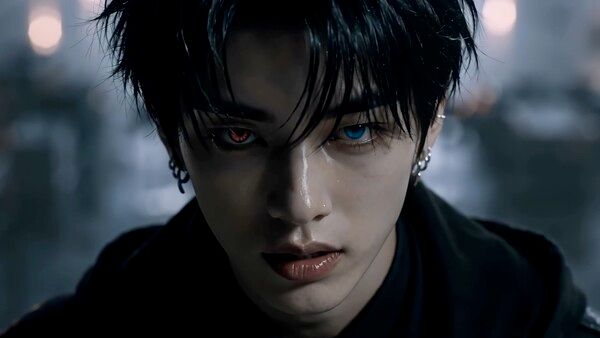
Virtual singers are another issue. Several backgrounds contributed to one in four idols debuting this year being virtual. First is the substantive and massive success of the virtual group PLAVE. Debuting in 2023, they sold over 1 million copies of a single album in 2025 and held a concert at Gocheok Sky Dome. This year, they sold out Incheon Munhak Stadium and are embarking on a world tour including an auditorium performance in Pasadena, California in November. Faced with proven success, venture capitalists as well as the music industry are moving. According to the industry, several virtual singer production companies received billions of won in VC investment this year.
Virtual Group PLAVE’s Massive Success Since 2023 Debut
From a production standpoint, virtual singers offer high ‘cost-effectiveness’ and low ‘risk.’ Many teens and twenty-somethings today, who have built bonds with cartoon characters and VTubers through small screens on their mobile phones since childhood, are ready to be just as enthusiastic about virtual singers as human ones. The practical production reality—where it has become difficult to create hits without massive marketing budgets to generate virality, coupled with a sharp decline in domestic trainee resources—also plays a part. A mid-sized record label executive, Mr. D, said, “In particular, the number of male trainees has plummeted over the past few years. Beautiful and talented kids now tend to favor jobs like YouTubers and influencers, which offer high daily freedom and wealth and fame surpassing celebrities, over idols whose careers require ‘grind your years away, and even if you succeed, it’s uncomfortable.’”
Quite paradoxically, behind the future ‘dehumanization’ of K-pop lies the past ‘inhumanity’ of K-pop. Isn’t the world of K-pop celebrities one where they must become impossible ‘hexagonal humans’ who move wildly like beasts on stage, yet remain infinitely gentle and obedient to unspecified fans when they step down? What if virtuality is the true ideal of K-pop that was postponed due to a lack of technology (since the cyber singer Adam)?
Sleeq, an AI singer who debuted in July, established her entire worldview as a ‘future entity created by AI.’ While feeling confused about the fact that she is an AI, she comes to the human realm through fans set as ‘summoners’ and gradually matures as an artist. The production company explains that AI is heavily utilized not only in music and music video production, but also in analyzing posts uploaded by fans to determine activity directions.
There is also hope for humans. In an era of living with robots, humans will yearn for humans forever. The emotional resonance of “They came out of a human womb just like me, yet how pretty, gentle, and talented they are…” has a comparative advantage over manufactured ‘AI finished products.’ However, what about future virtual singers combined with advanced AI? By operating stories comparable to human narratives and empathy skills surpassing body temperature, they will ultimately claim a certain share of the music industry. Collaboration or war? The future has already begun.
Lim Hee-yun is a pop music critic and music consultant. He has lectured at Hive and the Seoul Center for Culture and Arts Education, and provided commentary on Korean culture to the New York Times and the BBC. He is a selection committee member for the Korean Music Awards and an operational advisory committee member for the National Gugak Center.