
Despite external uncertainties, including the Iran war and high oil prices, the fundamentals of the U.S. economy remain solid, according to Citadel founder and CEO Ken Griffin.
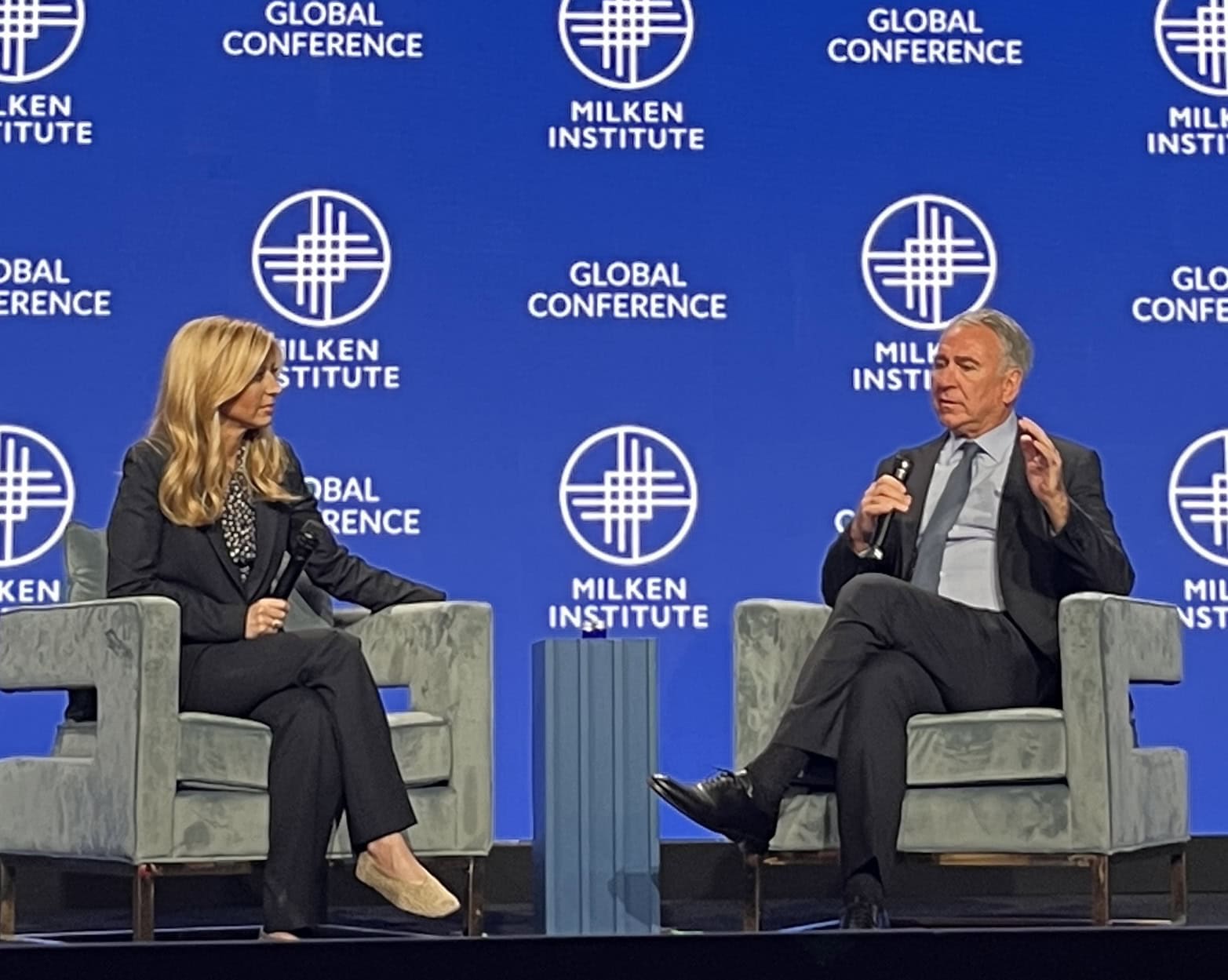
Speaking at the Milken Global Conference in Beverly Hills on May 5, Griffin said the U.S. economy continues to show strong resilience even in the face of outside shocks.
“The durability of the U.S. economy remains strong despite external shocks,” Griffin said.
However, he warned that developing countries heavily dependent on energy imports could face severe pressure, and that prolonged energy disruptions could eventually lead to a broader global economic slowdown.
Griffin said the U.S. economy is far stronger than it was in the past.
“The size of the economy itself has grown, and its ability to absorb higher energy prices is at one of the strongest levels in history,” he said. “Oil prices have risen because of the war, but the overall U.S. economy is largely protected.”
He pointed to the “shale revolution” as a key reason for that resilience. Advances in hydraulic fracturing have pushed the United States closer to energy independence, reducing its vulnerability to geopolitical shocks.
But Griffin said that level of resilience does not apply equally around the world.
“For developing countries that rely heavily on energy imports, supply disruptions can quickly translate into economic shocks,” he said. “Countries such as Pakistan or Bangladesh could be seriously affected if they face limits on energy supply.”
If the situation persists, he warned, it could develop into a global recession. Should disruptions continue for more than six to nine months, the U.S. would also find it difficult to avoid the impact, he said.
On inflation, Griffin called for a more structural approach.
“The more fundamental problem is not short-term price increases, but the decline in purchasing power that has accumulated over the past several years,” he said.
He argued that the solution lies in deregulation and productivity growth.
“If artificial intelligence and technology improve corporate efficiency, those benefits will ultimately flow to consumers and workers,” Griffin said. “Productivity growth leads to prosperity.”
During the session, Griffin also criticized progressive policy agendas.
He suggested that Citadel could shift its planned redevelopment project at 350 Park Avenue in Midtown Manhattan to Miami, citing New York Mayor Zohran Mamdani as one of the reasons. The project, valued at about $6 billion, was expected to include a 62-story office tower, create about 6,000 construction jobs and support more than 15,000 permanent jobs.
“Leaving Chicago and choosing Miami over New York was the right decision,” Griffin said. “Mayor Mamdani’s push to raise taxes on the wealthy and his policies that are unfriendly to business made it clear that we should focus on Miami.”
Griffin said Mamdani is sending a message that successful people are not welcome.
“That kind of policy environment can drive away people who value capitalism and the importance of education,” he said.
He also pointed to discussions over a wealth tax in California, saying many business leaders are moving to Texas and Florida.
“The departure of companies and capital is already becoming a reality,” Griffin said.
He described the trend as a form of “state-level gerrymandering,” arguing that policy choices are reshaping where businesses and high-income individuals choose to live and invest.