Korea medical tourism is moving beyond routine health screenings, as more Korean Americans seek specialized care ranging from spine and joint treatment to ophthalmology, women’s health, dermatology and plastic surgery.
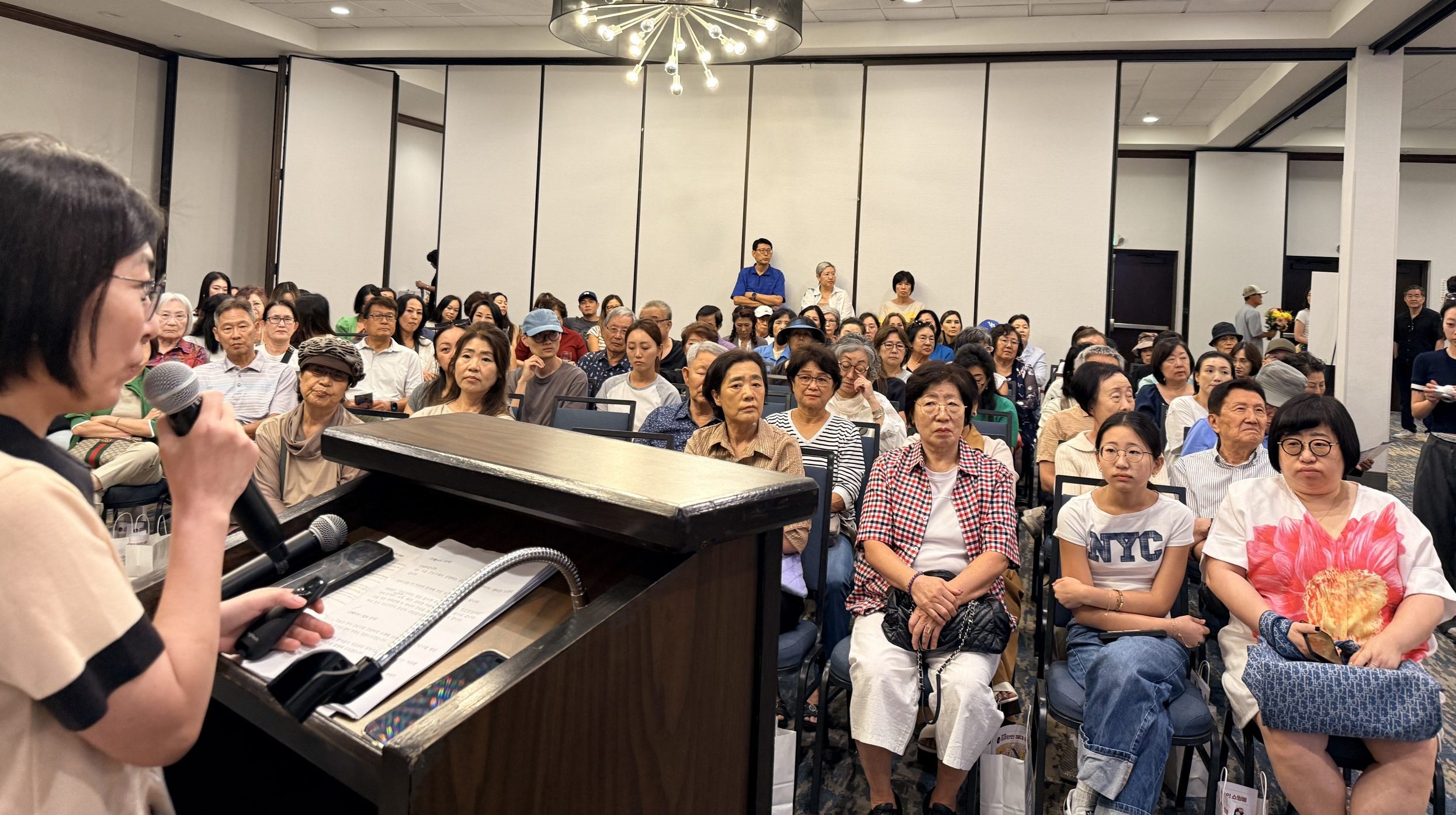
About 500 people, including Korean Americans and visitors of other ethnic backgrounds, attended the 2026 Medical Tourism Expo at the DoubleTree hotel in Buena Park on Sept. 19.
The event, organized by Gangnam District and the Gangnam Medical Tourism Association and hosted by Korea Daily, brought together eight medical institutions selected by Gangnam District.
Many attendees came with specific plans to visit Korea and sought detailed information about available tests, treatments and medical procedures before making the trip.
Daniel Kim, 62, attended with a friend and visited several booths to learn about everything from routine checkups to eye and skin care.
“As I get older, I’ve started paying more attention to my overall health,” Kim said. “I came because I wanted to find out in advance what kinds of tests and treatments are available before visiting hospitals in Korea.”
Another attendee said having eight leading Gangnam medical institutions in one place made it much easier to gather useful health information.
Getting Medical Advice Before Flying to Korea
Preventive screenings and age-related health concerns drew significant attention.
CHAUM introduced visitors to comprehensive health screenings, endoscopies and wellness services tailored by age and gender.
Min-hye Yang, head of global marketing at CHAUM, said many attendees wanted to ask questions face-to-face because detailed information about Korean medical services can be difficult to obtain in the U.S. by phone or online alone.
At Kwangdong Hospital, consultations covered health screenings, cerebral blood-flow testing and insomnia, among other concerns, through an approach combining Western and traditional Korean medicine.
About 30 people received consultations at the hospital’s booth, according to Hwa-jin Lee, head of its international medical team. Some even scheduled appointments in Korea to coincide with upcoming trips.
Patients Ask About Long-Ignored Health Problems
Middle-aged and senior attendees brought questions about joint and spinal pain, eye health and urinary incontinence.
Gangnam JS Hospital and Gangnam Nanoori Hospital provided consultations on degenerative arthritis, neck and back disc conditions and endoscopic spine procedures.
Chan-song Kyung, planning director at Gangnam JS Hospital, said many Korean Americans live with degenerative arthritis or spinal conditions without fully understanding them. He said the expo offered an opportunity to learn about diagnostic and treatment options available in Korea.
At First Eye Clinic, questions ranged from vision correction procedures for younger patients to cataracts and presbyopia among seniors. Jae-rim Shim of the clinic’s optometry team said many visitors were particularly interested in the differences between SMILE LASIK and LASEK.
PODO Women’s Clinic also fielded numerous questions about urinary incontinence. Director Ae-hwa Kim said some attendees sought consultations after hearing from acquaintances who had traveled to Korea for treatment.
K-Beauty Gets More Personalized
Skin concerns linked to Southern California’s sunny climate were another major topic.
Hyun-jung Kim, a director at DM Dermatology, said visitors frequently asked about hyperpigmentation, melasma and dark spots associated with prolonged sun exposure. Male attendees also sought advice about surgical and burn scars, lifting procedures and facial asymmetry associated with aging.
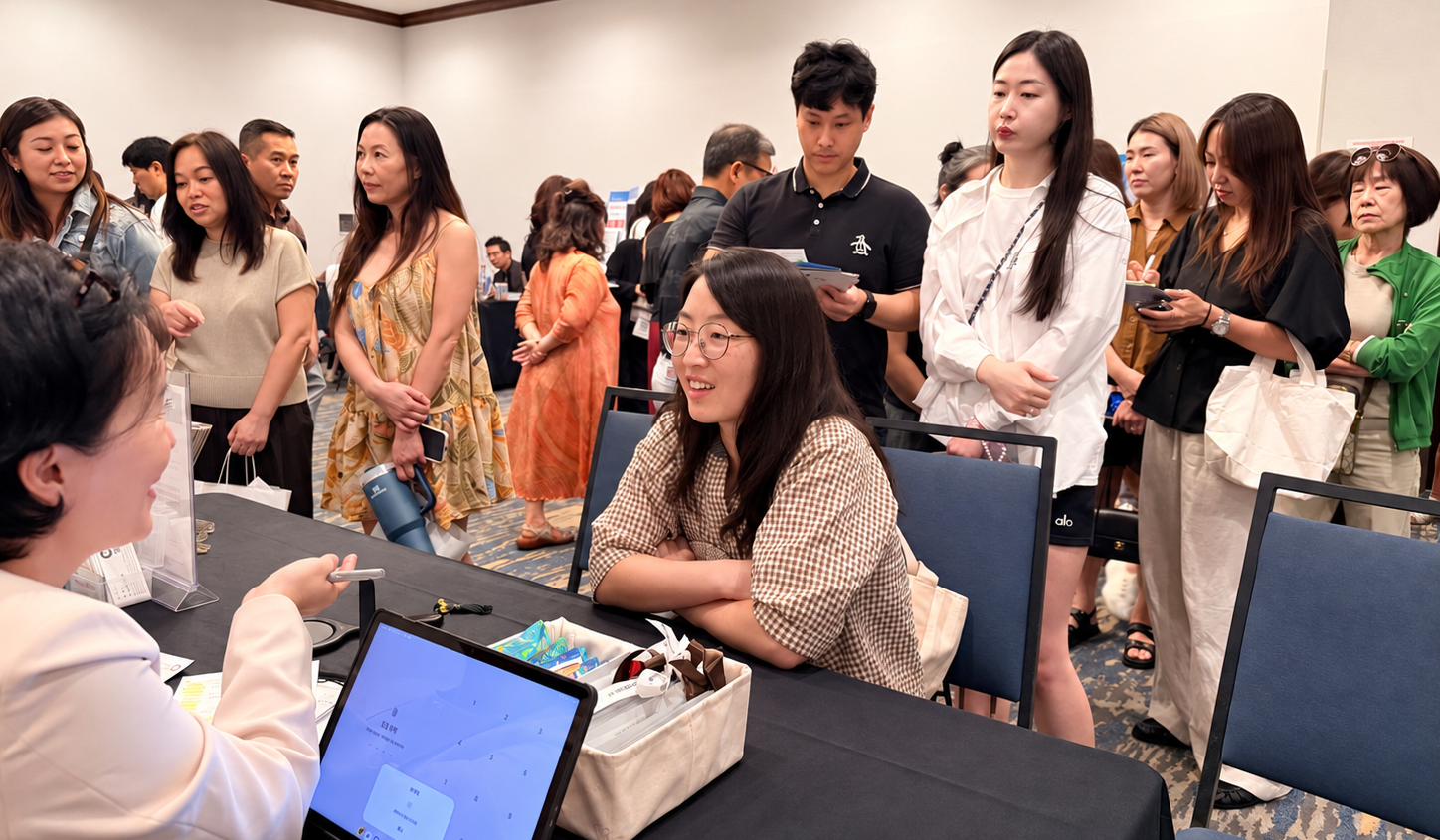
A steady line formed at the JK Plastic Surgery booth.
Sophia Jung, 51, who plans to visit Korea next year, waited for a consultation about double-eyelid surgery.
“As I’ve gotten older, I’ve had more concerns and questions about my eyes,” Jung said. “It was helpful to ask directly about things I had been wondering about and get easy-to-understand explanations before going to Korea.”
Yumin Park, a director at JK Plastic Surgery, provided consultations on procedures involving the eyes, nose and facial contouring, as well as breast and body procedures and anti-aging treatments.
“In the past, people came to the U.S. for surgeries or procedures, but these days, more people are traveling to Korea for medical tourism,” Park said, pointing to growing interest in K-beauty and Korea’s reputation for fast and highly detailed cosmetic care.
Interest Expands Beyond Korean Americans
The demand for Korea medical tourism was not limited to Korean Americans.
Ana Padilla, 39, attended with her daughter after having already visited Korea once and said she plans to return next year. After receiving anti-aging treatments during her previous trip, she visited a women’s health booth at the expo.
“I liked the detailed medical services I received, including anti-aging treatments, when I visited Korea last time,” Padilla said. “This time, I was interested in women’s health. I liked that the care was divided into specialized fields and that there were many treatment options to choose from.”
Hye-sun Kang, head of Gangnam District’s medical tourism team, said about 50,000 people traveled from the United States to Korea for medical tourism last year.
Kang said patients in the U.S. can face difficulties accessing physicians and obtaining detailed information about specialized care. The goal of the expo, she said, was to help Korean Americans and other U.S. residents better understand Gangnam’s medical services before traveling.
The questions heard throughout the Korea Daily-hosted expo reflected a broader shift in Korea medical tourism. For many prospective patients, the trip is no longer simply about getting a checkup. Increasingly, it is about finding specialized care tailored to their individual needs before they ever board the plane.