The Korean American Political History entered a historic new era 62 years after making its first entry into state government, evolving from pioneering local legislative victories into a powerful national presence in the U.S. Senate.The journey began in 1962 with the election of Alfred Song to the California State Assembly and reached a major national milestone in 1992 when Jay Kim became the first Korean American elected to the U.S. House of Representatives. By the 2020 elections, four Korean American representatives were serving simultaneously in Congress, and in 2024, Andy Kim made history by becoming the first Korean American elected to the U.S. Senate. Alongside these federal achievements, Korean American leaders have also earned seats as mayors, city council members, and school board trustees across the nation. Their political footprint has expanded far beyond California to states including Hawaii, Washington, Virginia, Pennsylvania, Georgia, and New York.
Pioneers in California and Federal Politics
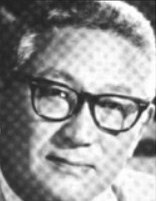
The first chapter of this political journey was written by Alfred Song, a lawyer born in Hawaii who was elected to the California State Assembly in 1962. Song became the first Korean American to enter the California legislature, later winning a seat in the California State Senate in 1966, where he served until 1978. Representing the 45th District, which included Monterey Park, Song proved that a Korean American candidate could win repeatedly in a predominantly non-Korean constituency at a time when the Korean community’s political influence was minimal.
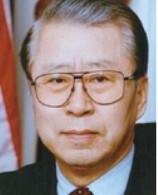
Federal political barriers were first broken by Jay Kim, a civil engineer and entrepreneur. Kim was elected to the Diamond Bar City Council in 1990, became mayor in 1991, and won a seat in the U.S. House of Representatives representing California’s 41st District in 1992. Serving three terms through 1999, Kim established a vital pathway for future candidates by building executive experience in local government before running for federal office.
Turning Points in Korean American Political History
A major turning point in Korean American Political History occurred during the 1992 Los Angeles Riots. Experiencing a profound sense of isolation and neglect during the unrest, the Korean American community recognized the urgent need for political empowerment. Community leaders initiated organized voter registration drives, political fundraising campaigns, and candidate development programs. As a result, civic interest expanded into policy areas impacting daily life, including education, public safety, taxation, housing, and transportation.
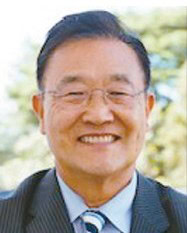
Former Irvine Mayor Sukhee Kang exemplifies this transformation. Spurred into civic action by the LA Riots, Kang was elected to the Irvine City Council in 2004 and became the first directly elected Korean American mayor of a major U.S. city in 2008. Similarly, California State Senator Steven Choi built his career incrementally, starting as an Irvine School Board member in 1998, moving to City Council in 2004, becoming Mayor in 2012, entering the State Assembly in 2016, and winning a State Senate seat in 2024.

Other prominent figures expanded their public service across various levels of government. Michelle Steel served on the California State Board of Equalization in 2006, became an Orange County Supervisor in 2014, and served two terms in the U.S. House of Representatives starting in 2020 before her appointment as U.S. Ambassador to South Korea.
gained 20 years of legislative experience as an aide to Congressman Ed Royce before winning seats in the California State Assembly in 2014 and the U.S. House in 2020, where she currently represents California’s 40th District as a three-term congresswoman. In 2015, David Ryu became the first Korean American elected to the Los Angeles City Council, while Fred Jung joined the Fullerton City Council in 2020 and was later appointed mayor, strengthening the community’s political foundation in northern Orange County.
National Expansion and Modern Senate Breakthrough
The geographic reach of Korean American politics rapidly broadened to other states. Paull Shin, who worked as a houseboy for U.S. troops during the Korean War, became the first Korean American elected to the Washington State House in 1992, later serving in the State Senate from 1999 to 2014 as Vice President Pro Tempore. In Hawaii, Sylvia Luke served 24 years in the State House before being elected Lieutenant Governor in 2022—becoming the first Korean-born politician to win a statewide executive office in the United States.
In the East and South, legislative breakthroughs continued. Mark Keam was elected to the Virginia House of Delegates in 2009, becoming the first Korean American in the state legislature. Cindy Ryu became mayor of Shoreline, Washington, in 2008—the nation’s first female Korean American mayor—before winning a seat in the Washington House of Representatives in 2010. Ron Kim was elected to the New York State Assembly in 2012, while Patty Kim moved from the Harrisburg City Council to the Pennsylvania House in 2012 and won a State Senate seat in 2024. In the South and Midwest, younger leaders emerged, including Sam Park, who became Georgia’s first openly gay Asian American state representative in 2016, and Daniel Pae, who was elected to the Oklahoma House at age 23 in 2018.
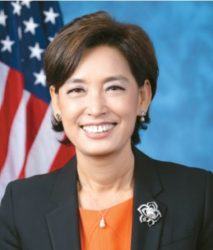
Following a 20-year vacancy in federal representation after Jay Kim left office, Andy Kim—a former national security advisor in the Obama administration—won a U.S. House seat in New Jersey in 2018. By 2020, Andy Kim, Young Kim, Michelle Steel, and Marilyn Strickland were elected to Congress, marking the arrival of four Korean American federal lawmakers. Strickland, born in Seoul to a Korean mother and African American father, previously served as Mayor of Tacoma and gained widespread attention by wearing a traditional Hanbok to her congressional swearing-in ceremony. Former California State Senator Dave Min also joined the U.S. House in 2025 following his 2024 election victory.
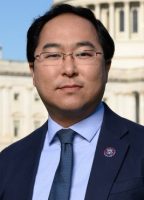
The ultimate milestone arrived in 2024 when Andy Kim was elected to represent New Jersey in the U.S. Senate—121 years after the first Korean immigrants arrived in the United States in 1903. Today, four Korean Americans serve in Congress: Senator Andy Kim alongside Representatives Young Kim, Dave Min, and Marilyn Strickland, providing bipartisan and bi-coastal representation at the highest levels of American governance.
By Eunyoung Lee