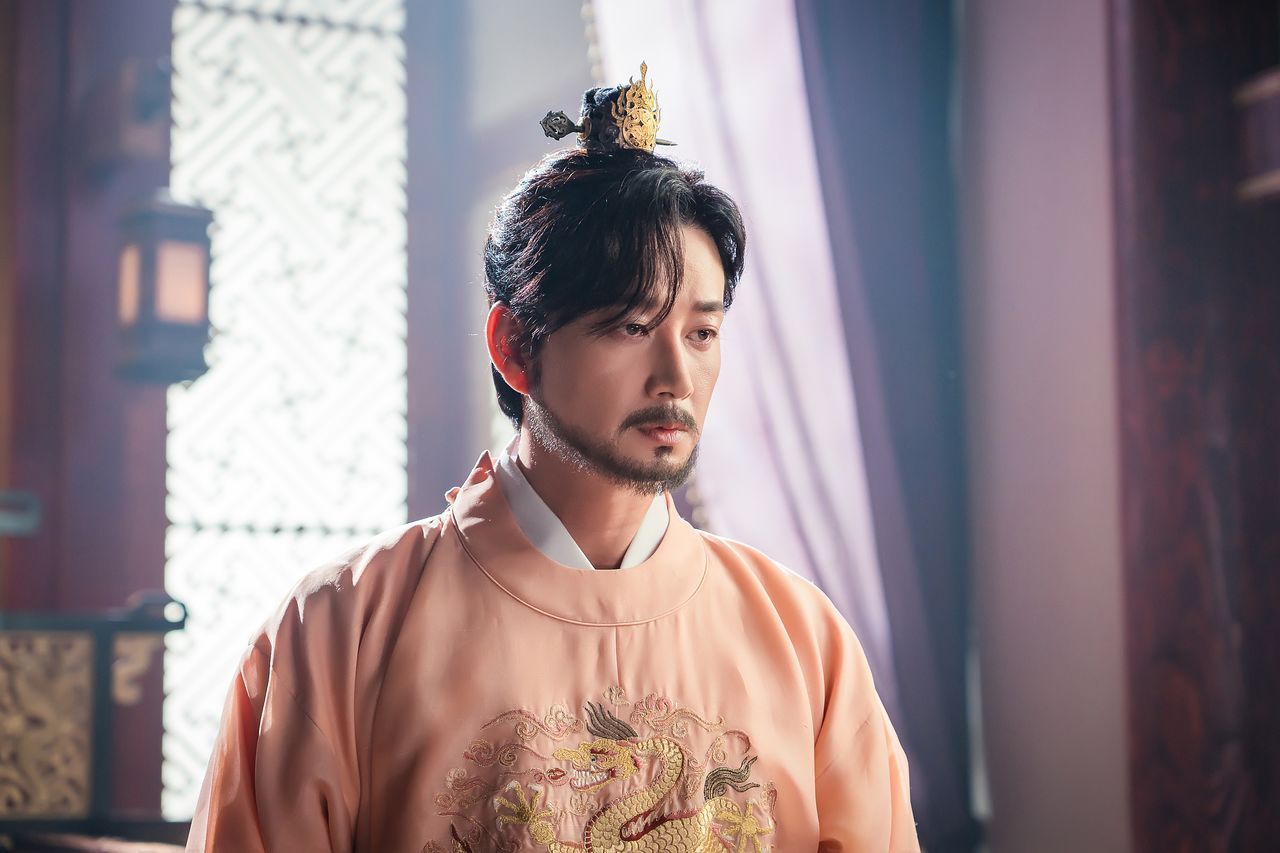
From traditional historical dramas rooted in historical facts to virtual kingdoms born of imagination, broadcasting stations and OTT platforms are stepping into a fierce competition featuring Korean historical dramas across different times and spaces.
KBS is launching its first traditional historical drama in three years since ‘Korea-Khitan War’ with ‘Munmu’. Premiering on the 14th, this project deals with the history of Silla surrounding the unification of the Three Kingdoms. Actors Lee Hyun-wook take on the role of Kim Beom-min, Kim Kang-woo as Kim Chunchu, and Park Sung-woong as Kim Yushin. As a blockbuster with a production budget of approximately 30 billion KRW, it plans to unfold the Silla-Tang War that broke out after the unification of the Three Kingdoms as its main narrative.
JTBC is introducing ‘Beads of God’, set in the Goryeo Dynasty, starting on the 5th of next month. Set in 1258, the late period of the Goryeo Mongol Invasions, it depicts the struggle of an escort unit protecting the national sacred object ‘Cintamani’ and the story of a princess who rescues them. Actors Ahn Bo-hyun, Lee Sung-min, Soo-hyun, and Yoon Kyun-sang star in the series.
In addition, ‘The Lie of 100 Days’ (tvN), which depicts the romance of a secret agent and youth against the backdrop of the Japanese colonial era, and ‘The Remmarried Empress’ (Disney+), which builds a romance fantasy with a virtual medieval European-style historical world, are also enjoying success. It is truly a glamorous variation of period pieces.
Back in the 1990s, traditional epic historical dramas reenacting historical events or figures, such as ‘Han Myung-hoe’, ‘Tears of the Dragon’, and ‘Heo Jun’, were mainstream. However, in the 2000s, fusion and faction historical dramas adding fiction and imagination, such as ‘Dae Jang Geum’ and ‘Jumong’, emerged, along with aspects combining other genres like romance and thriller or setting stories against virtual dynasties like ‘The Moon Embracing the Sun’. Afterward, with the arrival of global OTT platforms, the genre experiments of period dramas diversified once more, featuring globally resonant subjects such as zombies (‘Kingdom’), cooking (‘The Tyrant’s Chef’), and exorcism (‘Donggung’).
Park Ki-soo, a professor of Culture Contents at Hanyang University ERICA, stated, “In the past, the starting point of planning was ‘which historical figure to cover,’ but now ‘what story to create’ comes first, leading to the selection of the historical era and space appropriate for that story.”>
As the channels for K-content to meet global viewers diversify, the importance of historical accuracy is also being highlighted. Cases like ‘Joseon Exorcist’, whose broadcast was halted due to historical distortion controversies, and ‘The Queen’s Umbrella’ (referencing deleted scenes of ’21st Century Grand Prince’s Wife’) demonstrate this. Cho Kyu-heon, a professor of Japanese-Korean Cultural Contents at Sangmyung University, noted, “‘The Lie of 100 Days’, set during the Japanese colonial period, is gaining favorable responses from viewers in Japan due to its own completion quality, leading to movements to further understand Japan’s colonial rule process,” adding, “Considering such global influence, it is necessary to pay careful attention to historical accuracy.”>