“Calling the Korean War the ‘Forgotten War’ can sound as if we are saying, ‘We don’t care about the blood you shed or the sacrifices you made.’”
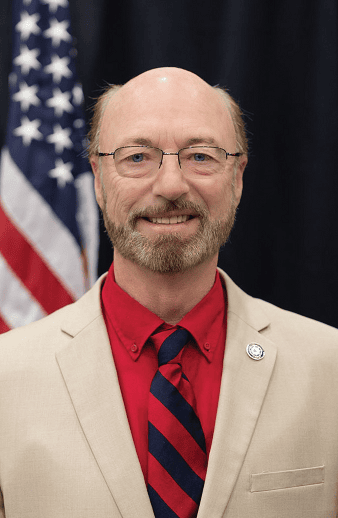
David Pickett, 62, is not a Korean War veteran. But he served with U.S. Forces Korea for a year beginning in 1989 and now serves as president of the Korean War Veterans Association, or KWVA.
In that role, he has become a bridge connecting the memories of aging Korean War veterans and their families with later generations of U.S. service members who served in Korea.
Today, the KWVA has about 5,000 members in 110 chapters nationwide. Of those, roughly 1,500 are veterans who actually served during the Korean War. Many of the remaining members served in South Korea after the 1953 armistice.
“If the association had insisted on limiting membership only to Korean War veterans, the organization itself would have naturally disappeared over time,” Pickett said. “We opened the doors so that those who served in Korea and stood watch there could help carry those memories forward.”
Teaching a war too often reduced to a footnote
Pickett said history education in schools is essential if the Korean War is to remain meaningful to younger generations.
“Today, the Korean War is often treated in schools almost like a footnote squeezed between World War II and the Vietnam War,” he said. “But what the United States and South Korea accomplished together was anything but insignificant.”
Through its “Tell America” program, the KWVA sends Korean War veterans and former U.S. Forces Korea personnel into schools to speak directly with students about the meaning of the war.
“There is a completely different weight to reading about a war in a textbook and hearing about it from someone who actually stood on that soil,” Pickett said. “Through the firsthand experiences of veterans, students come to understand Korea and the devastation of the war from a much deeper and very different perspective.”
Pickett himself was assigned to Camp Humphreys in 1989 after arriving through Osan Air Base. He worked as a mechanic on CH-47 Chinook helicopters.
The uneasy armistice between North and South Korea meant that tension remained a constant part of his year in the country.
“We had to maintain a high level of readiness throughout the year because there was always the possibility that war could break out again,” he recalled.
Pickett said the discipline and principles he learned while serving in Korea became some of the most important foundations of a military career that eventually spanned 32 years.
He later served in Iraq and Afghanistan.
Bringing the missing home
Pickett also urged South Korea and the United States to work more closely on recovering and identifying the remains of service members who never returned home from the Korean War.
“More than 8,000 American service members from the Korean War are still missing,” he said. “With the tremendous advances in science and technology, we must not stop trying to bring them home to their families as quickly as possible.”
For Pickett, that mission is part of the same responsibility as preserving the history of the war itself.
As the number of surviving Korean War veterans continues to decline, he believes the burden of remembrance must increasingly be carried by later generations — including those who served in Korea after the fighting ended.
His message at the conclusion of the interview was direct.
“Remembering the Korean War is not about remaining in the past,” Pickett said. “It is about clearly understanding the price that was paid for the freedom we enjoy and making sure the next generation preserves those noble values.”