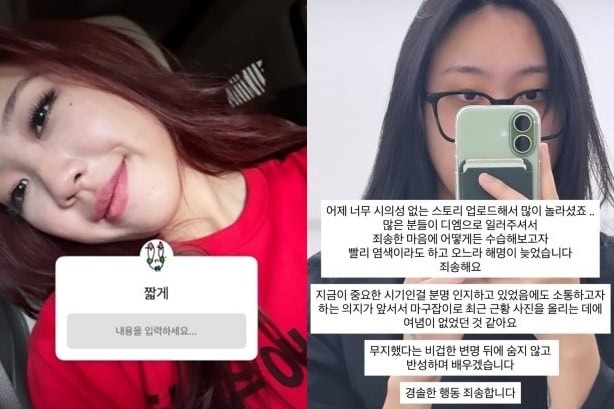
Imagine getting canceled over your hair color. Welcome to the high-stakes world of South Korean politics, where the latest K-pop election controversy features none other than chart-topping rapper Lee Young-ji. In a country where even a simple hand gesture can make you an overnight political activist, the “Not Sorry” artist found herself apologizing profusely for the ultimate election-season crime: wearing the wrong shade of red.
The Hair Color That Shook the Net
It all started on Saturday during South Korea’s early voting period. Lee Young-ji hopped on Instagram Stories to show off her freshly dyed, vibrant red hair while rocking a matching red top. To top it off, she set the post to the song “Red Red” by boy band Cortis. Under normal circumstances? A total fashion serve.
But during a Korean election? A massive political statement. In South Korea, red is the signature color of the conservative People Power Party (PPP). Netizens quickly swarmed the rapper, accusing her of subtly trying to sway voters toward the opposition party.
Realizing the internet was about to boil over, Lee quickly deleted the post and went into full damage control mode. By Sunday, she had completely redyed her hair back to jet black and posted a heartfelt apology. “People must have been quite surprised by the ill-timed Story,” she wrote, thanking fans for educating her on how the post could be perceived. Talk about a literal and metaphorical makeover in under 24 hours.
Red vs. Blue: The Ultimate Idol Minefield
Lee Young-ji is far from the first star to trigger a K-pop election controversy. South Korea’s political landscape is strictly divided into two colors: red for the conservative PPP and blue for the ruling Democratic Party. For K-pop stars, navigating this binary is like walking through a minefield blindfolded.
Just last year, aespa’s Karina faced intense backlash for wearing a black-and-red jacket that featured a prominent number “2”—a number directly linked to the PPP on election ballots. Meanwhile, the girl group Rescene recently made headlines for refusing to do their signature “Gyaru peace sign” (an upside-down V-sign) during a fan interaction. Why? Because flashing two fingers could be misinterpreted as endorsing candidate number two.
Even seasoned veterans aren’t safe. Indie singer Lee Seung-hwan—a well-known progressive supporter—baffled fans by posting a selfie in a bright red shirt after voting early, proving that sometimes a shirt is just a shirt, but timing is everything.
High Risks, Zero Rewards for Vocal Celebs
Legally speaking, Korean celebrities have every right to voice their political opinions. The law only bans public officials, civil servants, and non-citizens from campaigning. However, the unwritten rules of the K-pop industry tell a completely different story.
Taking a political stance, even accidentally, means risking the loss of thousands of fans, domestic boycotts, and a barrage of malicious comments from the opposing side. As the K-pop election controversy trends yet again, idols are learning the hard way that during election season, neutrality is the only safe fashion trend. When in doubt, wear gray—and maybe skip the peace signs altogether.