Confusion is growing as the federal government prepares to apply different entrance fees at major national parks, including Yosemite and Grand Canyon, based on visitors’ immigration status starting next year. Tourism operators say unclear enforcement standards are already disrupting planning.
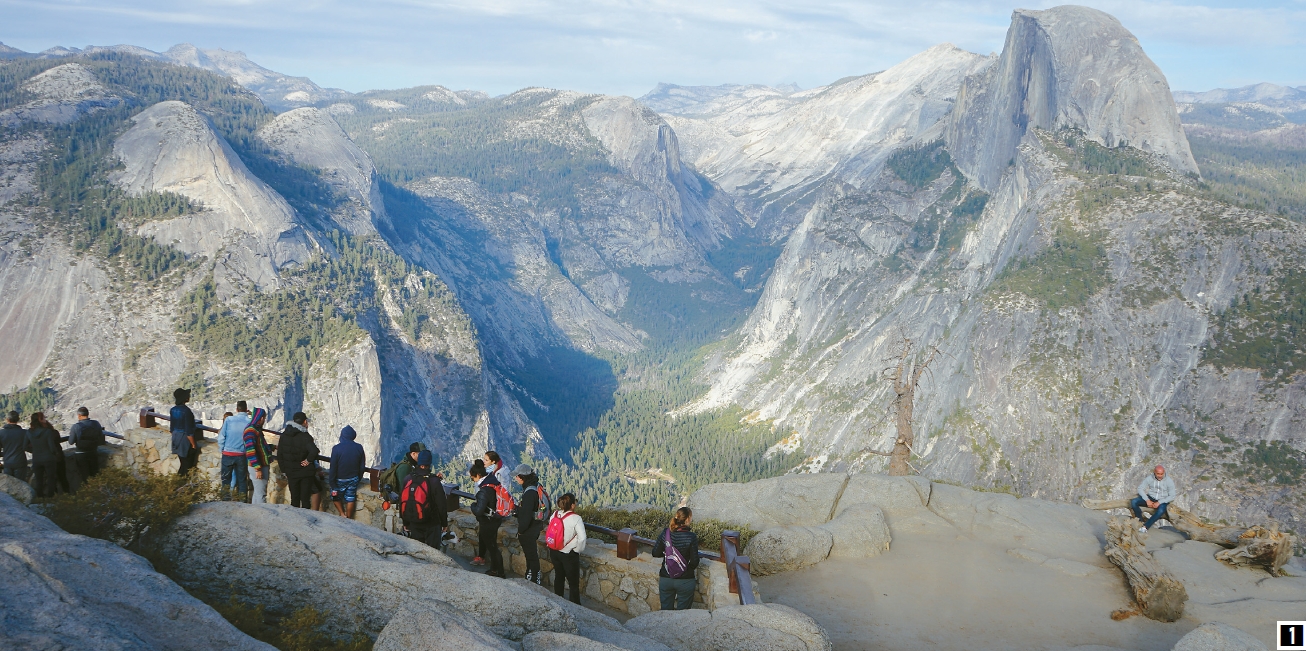
According to the U.S. Department of the Interior, foreign visitors who are not U.S. citizens or permanent residents must pay an additional $100 per person to enter national parks unless they hold an annual pass. Foreign nationals who purchase an annual pass will not be charged the extra fee on each visit.
If the policy is applied as written, international students or other non-immigrant visa holders visiting a park without an annual pass would pay more than $400 in entrance fees for a family of four.
A major source of confusion is the Interior Department’s use of the term “non-resident,” without providing a detailed definition. By contrast, the Internal Revenue Service (IRS) classifies student visa holders as “residents” for tax purposes if they have lived in the United States for more than five years. Under IRS standards, long-term students could qualify for an exemption, but the Interior Department has not clarified whether this interpretation applies.
The tourism industry says limited public information has compounded uncertainty. The National Park Service (NPS) stated that the $100 surcharge also applies to commercial tours, holders of Commercial Use Authorizations (CUA), and tour groups operated by park-designated vendors.
Youngim Shin, vice president of Samho Tour, which operates tour packages to Yosemite and Yellowstone, said, “Because sufficient information has not been released, three employees are spending the entire day monitoring national park websites and gathering information by phone and email.”
Taejoon Park, a director at Blue Tour (푸른투어), said a single tour bus carrying about 40 passengers would face an additional cost of $4,000. “This raises concerns that we may have to reduce four national park tour routes to two or even one,” Park said. He added, “There is no clear standard for how passengers’ visas will be checked or how such large groups will be classified for entrance fees.”
Foreign visitors will also face higher costs for annual passes. While U.S. citizens and permanent residents will continue to pay $80, foreign nationals will be charged $250, more than three times the existing price.
The Interior Department estimates the surcharge policy will generate more than $90 million annually.
The increase applies uniformly to all non-immigrant visa holders. The affected parks are Acadia, Bryce Canyon, Everglades, Glacier, Grand Canyon, Grand Teton, Rocky Mountain, Sequoia–Kings Canyon, Yellowstone, Yosemite, and Zion Canyon. Beginning next year, foreign visitors will also be excluded from free-admission days on federal holidays such as Independence Day and Veterans Day.
BY YOONSEO SONG [song.yoonseo@koreadaily.com]