On the 8th, about 10 women were waiting for their turn at a clinic in Seoul, a place well-known as a hotspot for obesity treatment prescriptions. The time it took from a patient being called into the examination room to coming back out was a mere 30 seconds to 1 minute. After finishing the consultation, patients paid at the front desk, picked up their obesity injection pens, and left the clinic without needing to visit a separate pharmacy.
One woman met outside the clinic said, "If you tell them the dosage and period you want, they just prescribe it. It’s easy to get a prescription and the price is affordable." This location is one of the top-ranking clinics nationwide in terms of obesity treatment supply volume.
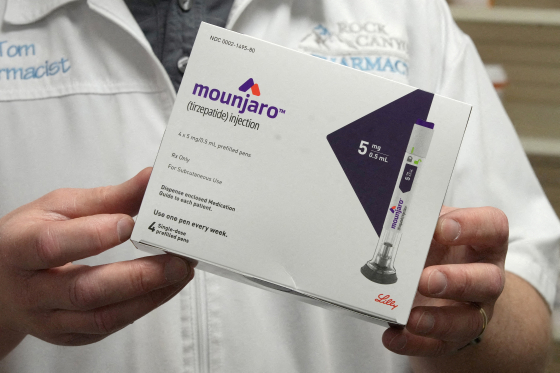
As the popularity of weight-loss injection drugs like Wegovy and Mounjaro soars, the supply of these medications is becoming heavily concentrated in certain primary care clinics. In particular, as cases of prescribing and selling obesity treatments directly at medical institutions rather than pharmacies increase, critics are pointing out whether this might violate the principles of the separation of prescribing and dispensing.
According to data submitted by Rep. Nam In-soon of the Democratic Party of Korea from the Health Insurance Review and Assessment Service on the 9th, 62% (1,920,373 units) of the total supply of Wegovy distributed domestically from its launch in October 2024 through July of this year went directly to medical institutions rather than pharmacies. Only 38% (1,179,849 units) was supplied to pharmacies.
Similarly, for Mounjaro, 56% (10,055,693 units) of the total supply was distributed to medical institutions from its launch in August of last year through July of this year, while pharmacy distribution accounted for 44% (7,951,428 units). Although the standard procedure for both products is to obtain a doctor’s prescription and purchase them at a pharmacy, the actual distribution volume was higher on the medical institution side.
Among medical institutions, the supply was heavily concentrated in neighborhood clinics. Clinic-level institutions accounted for 88.2% of Wegovy’s medical institution supply and 92.4% of Mounjaro’s. In contrast, tertiary general hospitals accounted for a mere 2.0% and 0.5%, respectively.
The concentration in specific clinics was even more striking. One metropolitan-area clinic famous as an obesity treatment hotspot received 219,944 units of Mounjaro from its launch through July of this year. This surpassed the combined total of 208,016 units supplied to 20 tertiary general hospitals and 154 general hospitals nationwide. It equates to about 344 times the average supply per clinic-level institution, or roughly 603 units supplied per day. This clinic also received 23,124 units of Wegovy, ranking second in clinic-level supply.
The top 10 clinics by supply volume accounted for 10.2% of all clinic-level Wegovy and 14.5% of Mounjaro. Six clinics made the top 10 list for both products, receiving 1,070,637 obesity treatments, which represents 9.7% of the total clinic-level supply. A clinic reporting pediatrics as its sole specialty ranked 5th for Wegovy and 4th for Mounjaro, while plastic surgery and dermatology clinics were also included in the upper ranks.
Rep. Nam pointed out that the practice of some clinics directly selling obesity treatments could undermine the principle of separating dispensing and prescribing. Self-injection drugs meant for patient self-administration should fundamentally be obtained via outpatient prescriptions, and in-house dispensing and sales are only exceptionally permitted in cases where medical staff directly administer the injection or need to instruct first-time users on how to use it, she explained.
The Ministry of Health and Welfare sent an official document in September of last year to local governments and the Korean Medical Association guiding them on the outpatient prescription principle for self-injection drugs. However, it was confirmed that neither the Ministry’s pharmaceutical policy division nor any related bodies have conducted a single factual survey or inspection since then.
Rep. Nam stated, "Illegal in-house dispensing and sales threaten patients’ health and safety and can undermine the principles of the separation of prescribing and dispensing. For patient safety, we must conduct fact-finding surveys and establish practical measures to block indiscriminate in-house prescriptions."