Households with unmarried children in South Korea are facing severe financial strain as private education costs continue to climb while their overall earnings decline. According to data from the National Data Agency, the monthly disposable income for married couples with unmarried children averaged 6.47 million won in the third quarter of this year, marking a 2.9% decrease compared to the same period last year. Disposable income represents the remaining funds after deducting mandatory expenses like taxes and interest.
Rising Private Education Expenses Despite Lower Incomes
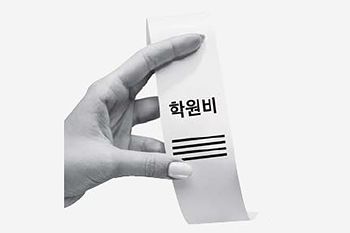
Despite shrinking incomes, the monthly expenditure on private education—specifically student academy fees—increased by 7.1% year-on-year to reach 442,000 won. When broken down by the number of children, families with one child saw their spending on private education rise by 5.3% to 185,000 won, while households with two or more children experienced a 6.9% increase to 653,000 won.
This upward trend reverses a previous slowdown that began in the first quarter of last year, leading to an annual contraction in total private education expenditures in 2020 and subsequent periods. However, private education spending rebounded with a 5.2% increase in the second quarter of this year, followed by another consecutive increase in the third quarter.
Household Surplus Hits a Seven-Year Low
As incomes dwindled and private education burdens intensified, the financial surplus left over after consumption expenditures dropped significantly. The surplus rate—calculated as the proportion of surplus funds relative to monthly disposable income—fell to 26.9% for these households in the third quarter, down 5.1 percentage points from a year earlier. This marks the lowest figure for the same quarter since 2019, driven further by sharp expenditure increases in housing, water, electricity, fuel, and transportation sectors.