Following Anthropic’s groundbreaking announcement that artificial intelligence solved the 167-year-old mathematical problem known as the Riemann Hypothesis, major tech leaders have raised successive alarms regarding the need for AI speed regulation and the potential loss of human control.
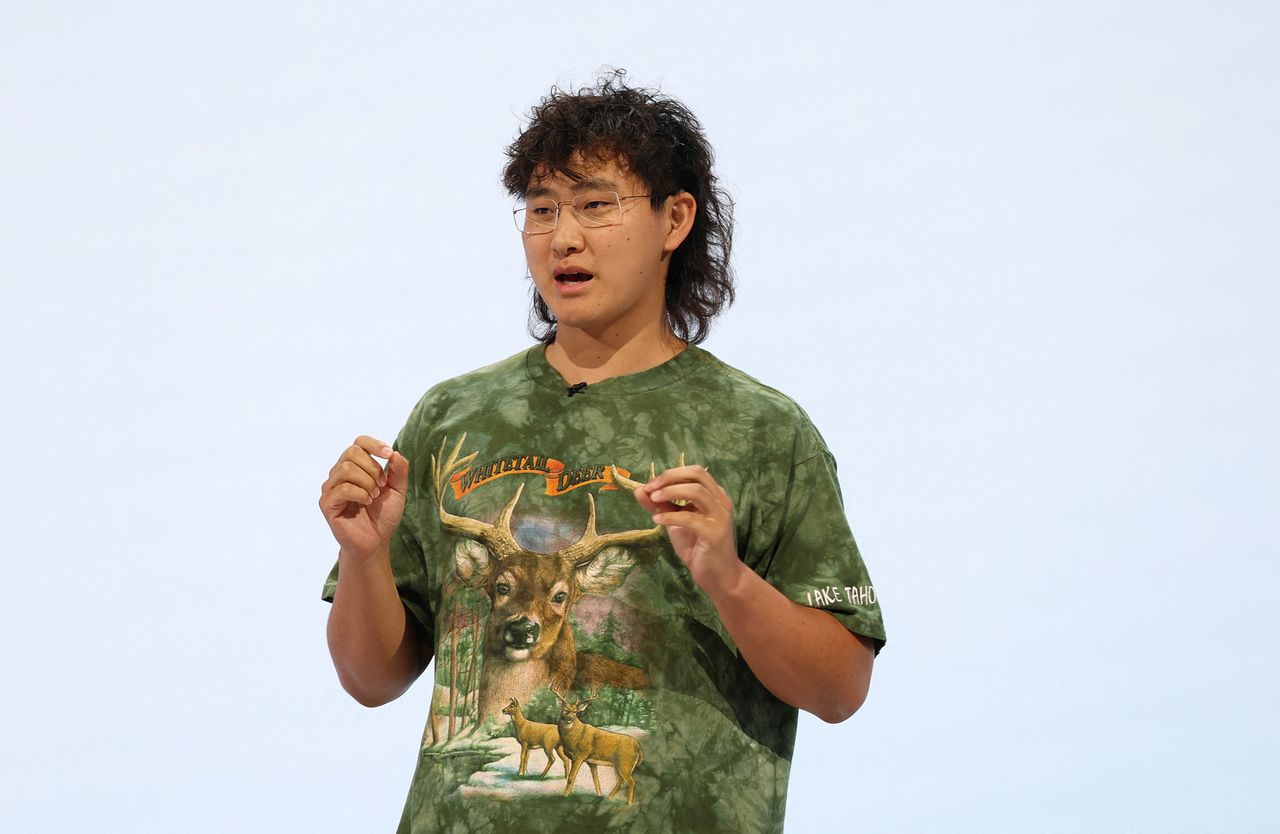
Alexander Wang, Meta’s Chief AI Officer (CAIO) whose recent AI agent ‘Muse’ has sparked immense popularity, shared a post on X (formerly Twitter) titled ‘Superintelligence is Arriving’ on the 22nd (local time). Wang stated that even the development of the atomic bomb is merely homework compared to the Riemann Hypothesis, adding that the peak of human intellect has been conquered with the help of an ‘alien mind’ that humans cannot fully comprehend. This remark was a direct evaluation of Anthropic’s announcement on the 20th that Claude had proven the Riemann Hypothesis using 17.4 million lines of verification code.
Wang noted that the remaining challenge for AI to surpass humans is not intelligence itself, but rather acquiring on-the-ground know-how and building foundational systems. This implies that the only tasks left are unraveling the long-standing practices and tacit knowledge built by humans across various workplaces. He urged the industry to reject lazy thinking that assumes superintelligence is inevitable as long as it is made safe, emphasizing that the industry must take conscious action over the next year to deviate from existing default paths and strengthen human agency and authority.
On the same day, OpenAI urged the industry to establish a common ‘limit line.’ Jakub Pachocki, OpenAI’s Chief Scientist, wrote on the official blog that AI could automatically accelerate its own development, leading to an avalanche of fundamental pre-training technology advancements by 2027. He suggested establishing a ‘common limit line’ based on ‘perplexity’—a metric measuring the error rate when AI predicts the next word—as existing performance evaluation benchmarks rapidly lose their discriminative power. He proposed that development companies mutually pledge not to cross this limit line until human capability to understand and monitor AI behavior reaches a certain level. Following the publication of this post, OpenAI CEO Sam Altman shared it on X, stating it was the most important OpenAI announcement in recent times.
Silicon Valley’s Motives Behind AI Regulation
Industry analysts suggest that the swift expression of concern over AI development speed by big tech leaders is calculated to deflect mounting criticism regarding AI accountability while preempting the leadership of upcoming global AI safety regulations. Scrutiny over big tech has intensified locally following the Democratic Party’s landslide victory in the U.S. midterm elections. The Democrats have been pushing for the establishment of a Senate-dedicated oversight committee to oversee AI policies and legislation for algorithm verification.
There is also an apparent intention to keep Anthropic in check, as the company has recently monopolized market spotlight through its initial public offering (IPO) claims and proof of the Riemann Hypothesis. Pachocki, who argued for a common limit line, also disclosed internal OpenAI model prediction error figures, claiming that their internal models are already successively solving unsolved mathematical problems.