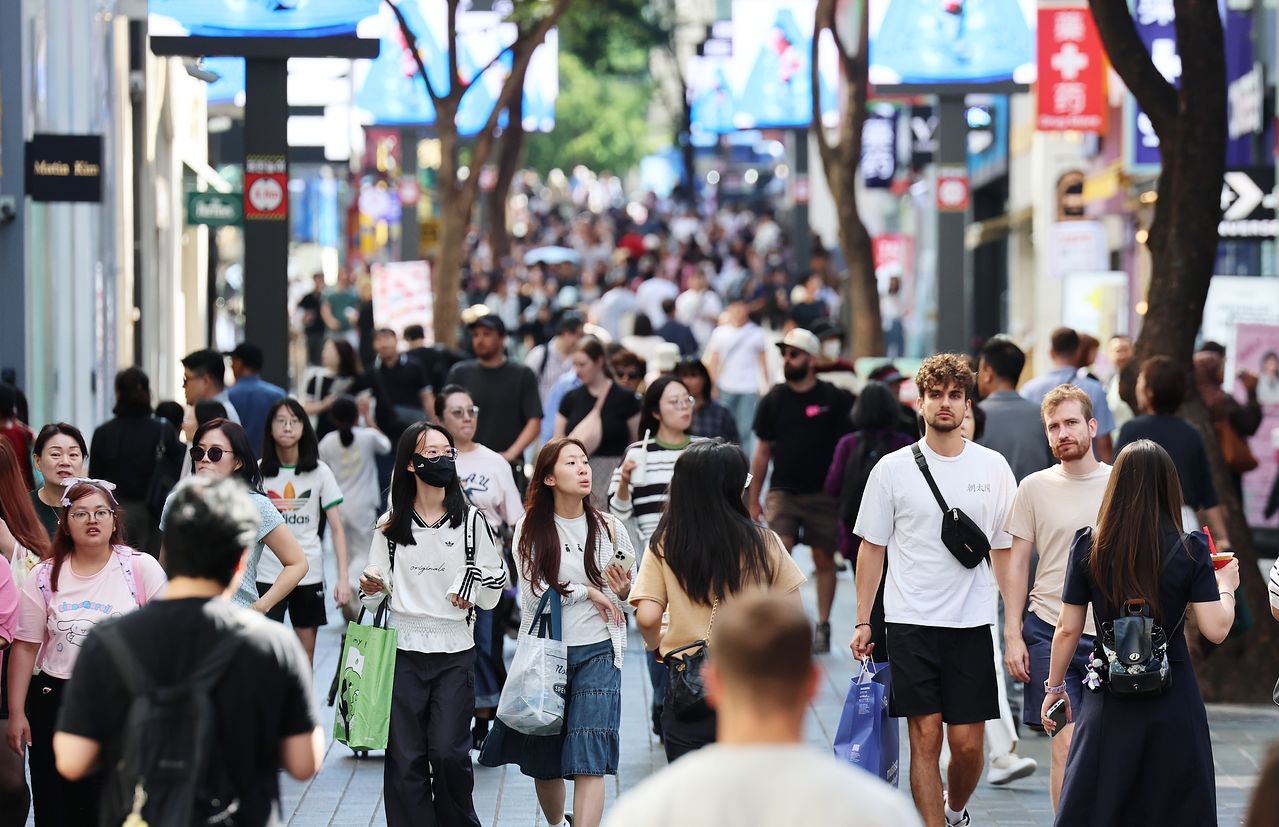
Seoul bullet travel is the latest trend captivating Japanese tourists, who are increasingly favoring short, high-intensity trips to South Korea to maximize their time spent on shopping, fine dining, and beauty treatments. Due to the short distance between Japan and South Korea, many visitors are choosing to visit more frequently for shorter stays, specifically targeting hubs like Myeong-dong and Dongdaemun for curated, all-in-one experiences.
The Shift in Travel Patterns: Short Stays, Frequent Visits
Data from the Seoul Tourism Organization reveals that while the average stay for Japanese tourists is approximately 3.5 days—shorter than that of Chinese (5.9 days) or Taiwanese (6.0 days) visitors—their revisit rate is significantly higher at 71%. This trend is particularly prominent among women in their 20s and 30s, who accounted for 34% of the 3.65 million Japanese arrivals last year.
Big data analysis from the Seoul Metropolitan Government indicates that during the first half of this year, 48% of Japanese tourists’ spending was directed toward medical and wellness services, followed by shopping (24.3%), dining (17.7%), and accommodation (9.2%).
The Rise of ‘Bullet Travel’ Experiences
Social media and travel communities are filled with reports of tightly packed itineraries. One visitor managed to explore Gwangjang Market and Changsin-dong, shop and dine in Dongdaemun, receive a professional 1-on-1 body scrub at a specialized spa at 6:00 AM, and even get semi-permanent eyebrow makeup in Myeong-dong before departing South Korea by 2:00 PM the following day.
Search interest metrics reflect this phenomenon: Google Trends shows a 1,050% surge in searches for ‘Seoul 1-person body scrub’ among Japanese users over the last five years, while queries related to ‘Myeong-dong eyebrow tattoos’ and ‘Dongdaemun shopping’ have jumped by approximately 650%.
Boosting Seoul’s Nighttime Economy
To capitalize on this demand, the Seoul Metropolitan Government plans to promote its nighttime economy by creating tourism corridors that integrate late-night shopping, dining, and early-morning wellness experiences. In November, the city will launch the ‘Seoul Night Super Pass,’ offering discounts on shopping and cultural experiences, as officials continue to expand late-night and early-morning tourism offerings tailored to these short-term visitors.