The number of Seoul foreign visitors surged by approximately 22% compared to last year, reaching an all-time high.
According to the Seoul Metropolitan Government on the 6th, the cumulative number of visitors from January to August reached 11.56 million, marking a 21.6% increase from the same period last year (9.51 million).
Record-Breaking Monthly Visitors and Top Nationalities
In August alone, 1.72 million people visited, which is 23.3% higher than the previous year (1.40 million). By nationality, tourists from China, Japan, and Taiwan accounted for 66.4% of all foreign visitors to Seoul in August. China led with 636,000 visitors (36.9%), followed by Japan with 322,000 (18.6%) and Taiwan with 188,000 (10.9%).
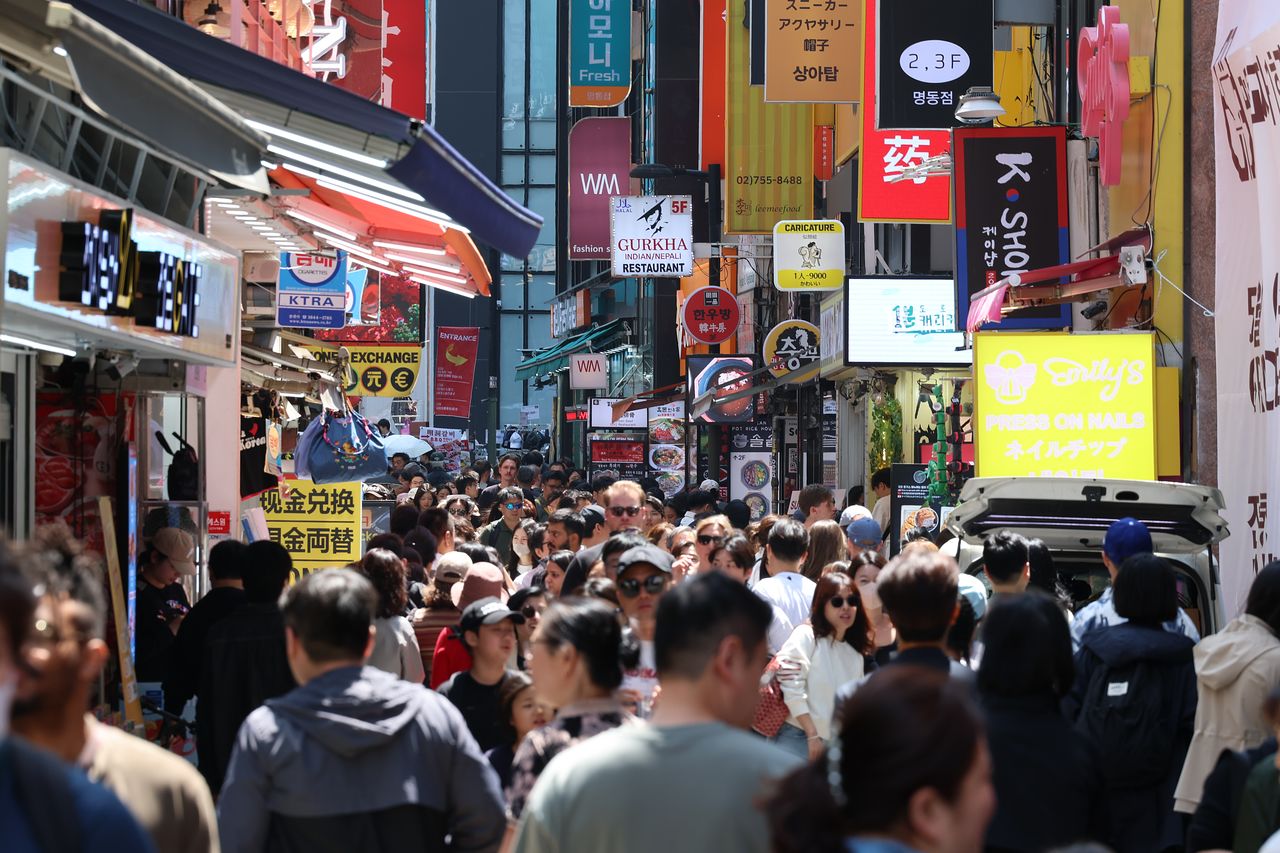
As of August this year, the most visited attractions in Seoul for foreign tourists were the Myeong-dong area, Timesquare, COEX/Bongeunsa, Dongdaemun Market, and Gwangjang Market, in that order.
Booming Tourism Spending and Card Consumption
With the increase in foreign tourists, credit card spending also jumped by nearly 60% compared to last year. From January to August, foreign tourist card spending recorded 7.7813 trillion won, a 59.9% increase from 4.8662 trillion won during the same period last year.
Based on last year’s data, the proportion of card spending by sector was led by shopping at 46.6%, followed by medical and wellness at 23.8%, food and beverage at 13.2%, and lodging at 10.4%. Spending at large shopping malls increased by 77.5% year-over-year, while medical tourism (64.2%) and general dining (59.5%) also drove the upward trend.
Spreading Economic Impact to Local Alleys and Traditional Markets
Spending locations expanded widely across various parts of Seoul, including alleyways and traditional markets. While card spending by foreigners in major tourist areas like Seongsu and Myeong-dong increased by 103.7% and 74.7% respectively, alleyways and traditional markets saw massive spikes, such as the Dosan Park area (240.1%), the Gyeongsu Elementary School area in Seongsu-dong (206.6%), and Gwangjang Market (127.4%).
Cho Sung-ho, Director-General of Seoul’s Tourism and Sports Bureau, stated, “Following the record-high foreign tourist arrivals in August, tourism spending is also rapidly increasing, amplifying the economic effects of Seoul tourism.” He added, “We will strengthen night-time content and local commercial district connections centered around Seoul-type night economies so that tourists can stay longer in Seoul and spread tourism consumption to every corner of the city.”