Pivot to Personal Care: Sidewalk Robots Take on Local Logistics
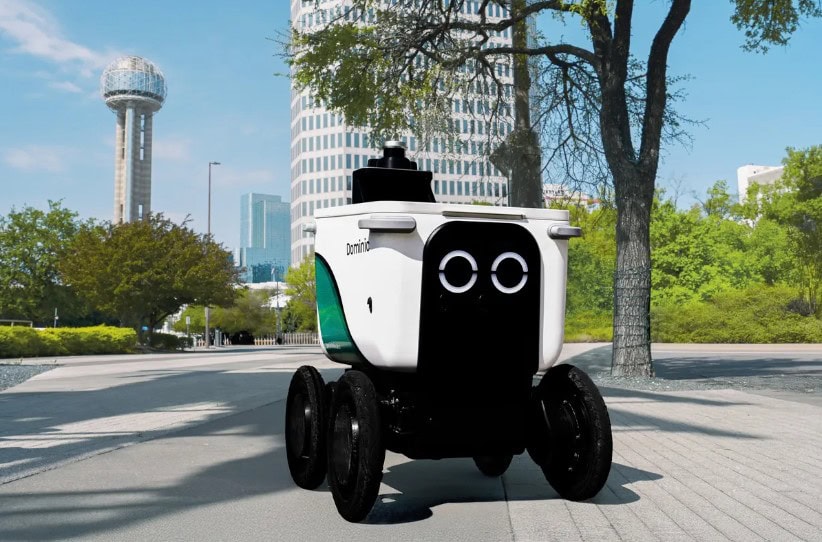
For years, residents across Los Angeles have grown accustomed to sharing the sidewalk with small, cooler-shaped autonomous rovers humming along to drop off burgers, boba, and burritos. Now, the tech infrastructure powering last-mile food delivery is about to start carrying your clean laundry.
Serve Robotics, a prominent leader in autonomous sidewalk logistics, has officially announced its very first commercial urban delivery partnership outside of the restaurant sector. Teaming up with NoScrubs, a rapidly growing digital on-demand garment care service, Serve is launching a localized pilot program to handle contactless laundry pickup and door-to-door delivery throughout select Los Angeles neighborhoods.
Maximizing Downtime: The Efficiency Economics of Laundry
The logic behind expanding into garment care comes down to a fundamental riddle in consumer logistics: how do you keep an autonomous fleet profitable during the gaps between breakfast, lunch, and dinner?
Prepared food delivery experiences severe operational spikes, leaving hundreds of robots largely idle during mid-morning and afternoon hours. Laundry delivery provides a predictable, steady counter-weight to those erratic cycles. Because clothing delivery windows don’t rely on strict, immediate thermal constraints like a hot pizza, the platform can seamlessly slot these errands into off-peak hours.
This dual-use framework allows Serve to activate a highly lucrative new revenue stream without spending a single dollar to build, deploy, or maintain a secondary, specialized fleet. The laundry runs will utilize the exact same physical rovers, navigation software packages, and remote operations teams that currently handle food apps.
How the Frictionless Doorstep Service Works
The operational rollout is designed to merge directly into the existing workflows of modern app-based consumers. The digital integration follows a simple, automated sequence:
-
Scheduling: Users book a convenient laundry processing window via the native NoScrubs mobile application.
-
Dispatch: The centralized routing engine cross-references active reservations against real-time fleet positions and internal storage cargo dimensions, automatically assigning a nearby available Serve rover to the task.
-
Secure Transit: The robot navigates to the customer’s residence, unlocks its secure cargo bay via an app-generated security token, collects the garments, and transports them to local processing hubs before returning the freshly laundered items back to the client’s doorstep.
Scaling Up: The Massive Value of Last-Mile Commerce
The strategic partnership positions both firms at the cutting edge of a rapidly expanding digital vertical. Driven by dense urban housing configurations, busy dual-income households, and a generational embrace of mobile app ecosystems, the broader online laundry services market is projected to skyrocket from $40 billion to an estimated $130 billion by 2030.
Currently, Serve Robotics manages a fleet of roughly 2,000 autonomous units across the United States, with a dedicated force of 500 robots deployed specifically across Los Angeles. Corporate leadership views this initial venture into garment care as merely a proof-of-concept for a much larger last-mile network expansion.
“We have spent years proving and hardening our operational model in some of the most population-dense, chaotic, and complex city environments in the nation,” stated Ali Kashani, CEO and Co-Founder of Serve Robotics. “The same reliable rovers that bring you dinner will soon be trusted to deliver your clean laundry, prescription refills, and everyday groceries. We are just scratched the surface of what this platform can do.”