Cracking the $25,000 Barrier: An EV Miracle Amidst Market Cool-Downs
In an automotive landscape where the average price of a new electric vehicle has steadily crept toward premium territory, a disruptive freshman automaker is pulling off what legacy manufacturers claimed was impossible.
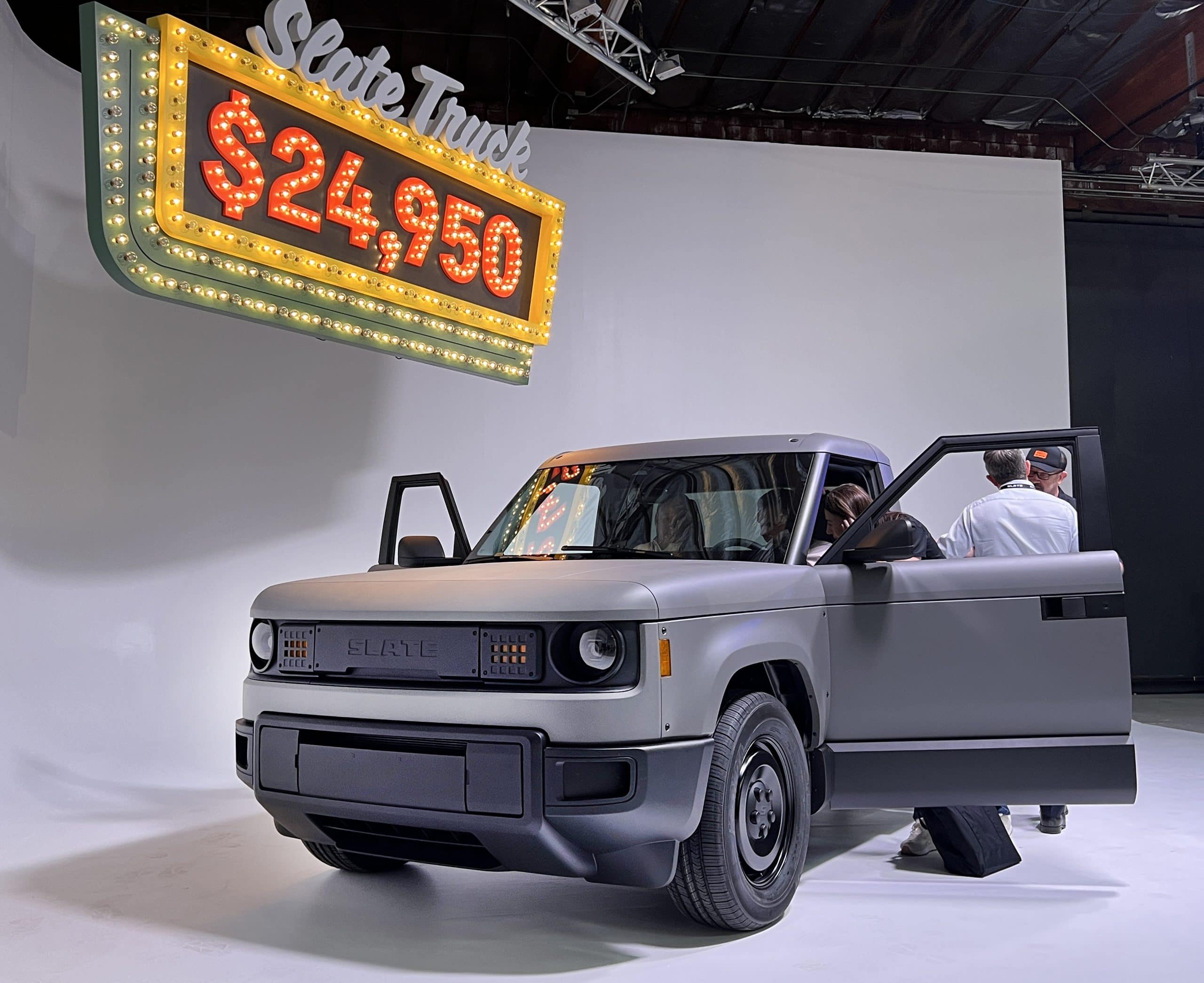
At an exclusive vehicle rollout held at Slate Auto’s Design Studio in Gardena, California, the atmosphere among industry analysts and content creators was marked by genuine shock. Despite recent headwinds facing the EV sector—namely the federal EV tax credit expirations and prolonged high interest rates—Slate Auto officially pulled the wrap off its first mass-production model, stamping it with a baseline retail price of just $24,950.
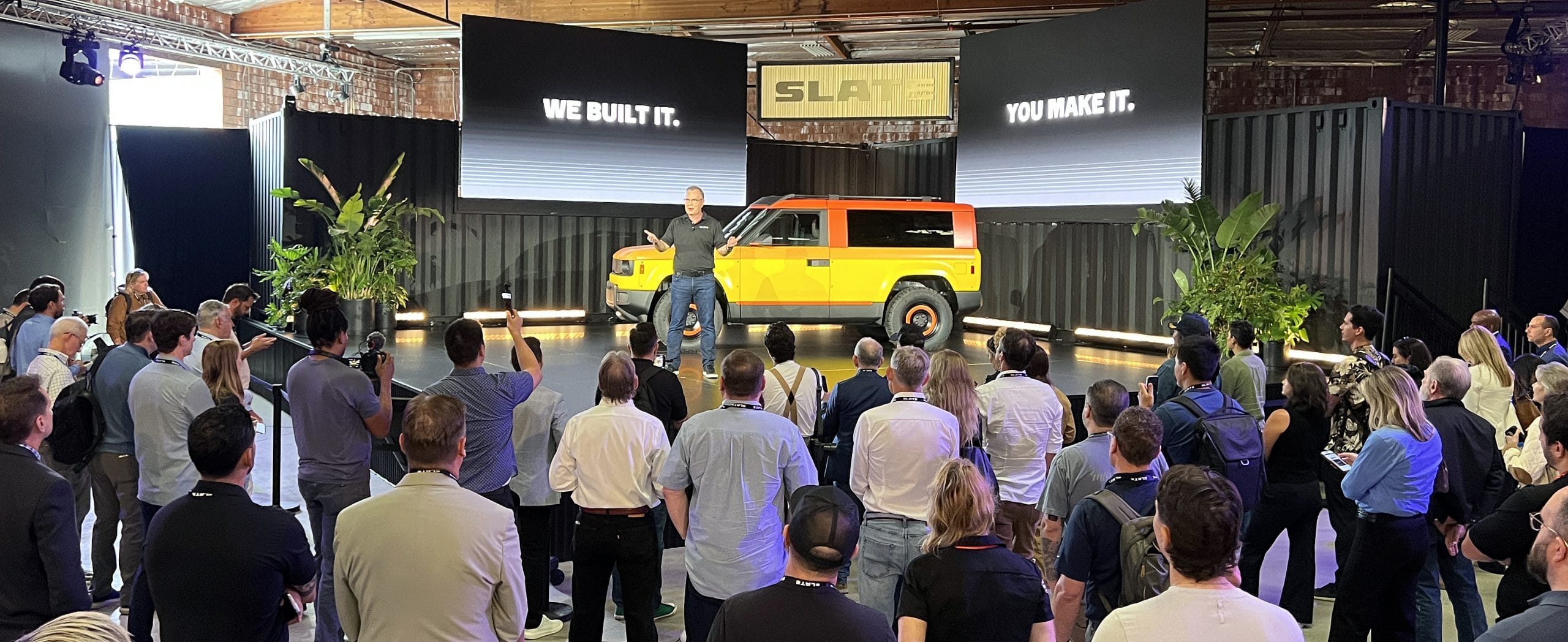
The buzz surrounding the company isn’t merely fueled by consumer desperation for affordable transportation. Slate Auto has enjoyed massive financial attention since it was revealed that Amazon founder Jeff Bezos heavily backed the venture’s early-stage corporate financing rounds.
The strategy appears to be paying off instantly. Along with finalizing the sub-$25k price tag, Slate officially opened its retail pre-order banks. Total lifetime registrations for the vehicle have already surged past 180,000 reservations, with over 10,000 orders locked in during the first hour of the morning launch alone.
Redefining the Budget Segment: Range and Monolithic Production
To truly understand how aggressive Slate’s pricing model is, one only has to look at the current bottom rungs of the consumer EV market:
-
Chevrolet Bolt EV: Starts at approximately $29,000.
-
Nissan Leaf: Baselines around $32,000.
-
Slate Auto Truck: Shatters both at $24,950.
Initially, corporate strategists targeted a sub-$20,000 price point by leaning heavily on the traditional $7,500 federal clean vehicle credit. When shifts in the regulatory policy environment eliminated that option, Slate didn’t raise its hands in defeat. Instead, they re-engineered internal cost structures to absorb the difference, delivering the $24,950 price point before any state or regional incentives are even applied.
Furthermore, Slate didn’t compromise on everyday usability. While early entry-level urban EVs frequently suffered from restrictive 150-mile ranges, Slate has optimized its structural battery pack to deliver an EPA-estimated 205 miles of range on a single charge.
“Our secret lies entirely in radical simplification—we manufacture exactly one structural platform paired with one singular baseline body construction,” a factory sales representative explained at the Gardena showcase. “Legacy legacy brands build hundreds of combinations of complex trims, localized option packages, and standalone mechanical add-ons that inflate manufacturing complexity. We build a highly optimized blank canvas, letting the consumer decide how to scale it after it leaves the factory.”
The Modular Revolution: Over 200 Custom Accessories
This “blank canvas” philosophy translates into an unprecedented degree of modularity. In its raw factory form, the vehicle is delivered as a streamlined, two-seat electric pickup truck designed for urban utility and light freight.
However, the architecture features built-in mechanical mounting points that allow owners to structurally alter the vehicle over its lifecycle. By bolting on a secondary row of seating and a modular hardtop enclosure, an owner can transition the utilitarian work truck into a rugged, family-ready SUV.
To support this post-purchase ecosystem, Slate simultaneously launched a catalog of over 200 official accessories, including modular roof racks, reinforced steel bumpers, auxiliary lighting setups, off-road custom grills, and weather-resistant interior seating covers.
Crucially, the company is keeping these parts highly affordable. One-third of the entire inventory retails for under $100, and nearly 80% of the catalog sits comfortably below $500. Owners can even order custom-cut vehicle wraps directly through the brand’s digital app to alter the truck’s color on demand.
Structural Design: Pure American Minimalism
From a pure design standpoint, the truck completely rejects the overly digital, soft-curved styling cues common in modern EV crossovers. The body panel lines are uncompromised, geometric, and functional.
“The aesthetic profile feels intensely American,” observed Karen, a professional automotive commercial photographer capturing the truck at the Gardena studio entrance. “By stripping away superficial exterior trim and maximizing straight lines, it achieves a very clean, industrial presence. The fact that an owner can completely disassemble and restyle the truck at a component level sets it entirely apart from any passenger vehicle on the road today.”
“Frankly, with the macroeconomic climate where it is, this vehicle could succeed on the merit of its price tag alone,” added digital automotive influencer Steve. “With new car transactional averages continuously rising year-over-year, delivering a highly functional utility EV under $25,000 is going to be an incredibly tough value proposition for consumers to ignore.”
While Slate Auto maintains its corporate design offices in Michigan, the physical production lines are currently being spun up at the company’s dedicated assembly facility in Indiana. Fleet logistics coordinators confirmed that tooling validation is moving along on schedule, with the first wave of consumer vehicle deliveries slated to begin before the end of the calendar year.