Soaring Labor Day travel costs, combined with growing concerns over airport immigration enforcement and unpredictable weather, are causing Korean-American residents in Southern California to cancel long-distance holiday trips in favor of short day trips and nearby getaways.
The National Weather Service (NWS) has issued forecasts predicting potential rainfall across parts of Southern California due to the influence of Tropical Storm Marie. At the same time, anxiety over air travel has escalated as U.S. Immigration and Customs Enforcement (ICE) operations inside major airports have expanded to cover domestic flights, leading many travelers to avoid flying altogether.
Suzy Choi, a 47-year-old resident of Los Angeles, recently decided to cancel a family vacation to Hawaii that had been in the planning stages for months.
“When adding up round-trip airfare for our family of four, hotel accommodations, rental car fees, and daily dining expenses, the total cost for a three-day trip was going to exceed $10,000, which posed a heavy burden,” Choi explained. “On top of that, navigating the airport felt nerve-wracking, and the weekend weather outlook was reported to be poor, so we decided to take a short day trip to a nearby location instead.”
Escalating Travel Expenses and Gas Prices Impact Holiday Budgets
According to data released by the American Automobile Association (AAA), domestic hotel room rates during the Labor Day holiday period—spanning September 3 through September 7—have increased by 9% compared to the same period last year, while international hotel costs jumped 12%. When coupled with elevated transportation expenses and dining costs, entire families are hesitating to take extended vacations. Furthermore, cruise packages are averaging around $2,700, leading an increasing number of vacationers to forgo long-distance trips in favor of short-distance and day-trip options.
Fuel costs continue to add to the financial burden. On September 2, AAA reported that the average price for regular-grade gasoline reached $4.12 per gallon nationally, $5.74 in California, and $5.78 in Los Angeles County, reflecting steep year-over-year increases of 93 cents, $1.13, and $1.14 per gallon, respectively.
Popular Regional Destinations and Cost-Saving Strategies
To navigate soaring Labor Day travel costs, local Korean-Americans are turning their attention to nearby Southern California travel destinations, such as San Diego, Palm Springs, Big Bear, Santa Barbara, and Joshua Tree. The prevailing mood shows travelers planning frugal vacation strategies, such as going on day trips without staying overnight or sharing campsite and vacation rental home costs among multiple families.
Kyu-sung Jung, 47, of Fullerton, shared his experience: “When I tried to reserve a campsite for the Labor Day weekend, I found that even locations that weren’t very popular last year were completely fully booked. Because campsite fees are relatively inexpensive, it seems the number of people seeking nature has increased.”
Steve Cho, Director at US Tour & Travel, noted a distinct change in customer patterns: “Ahead of Labor Day last year, inquiries were concentrated on places like Las Vegas or San Francisco, but this year, a noticeable number of customers are shortening their travel itineraries due to cost burdens. Day-trip destinations such as Oak Glen Apple Village and Ojai Valley, as well as places reachable by car like Redwood National Park and Crater Lake, are enjoying high popularity.”
Severe Traffic Congestion Expected Across Major Highways
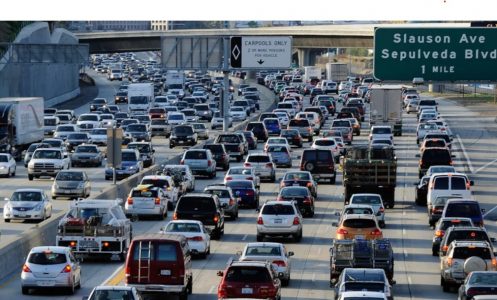
With local travel demand concentrated in nearby regions, major highways are expected to experience extreme traffic congestion. Transportation analytics firm INRIX highlighted noon to 8:00 PM on Thursday the 4th, 1:00 PM to 5:00 PM on Friday the 5th, and 2:00 PM to 5:00 PM on Sunday the 7th as the main bottleneck time frames, recommending that drivers avoid traveling during these hours. In particular, travel time is expected to increase significantly on Thursday and Friday as holiday departure traffic overlaps with regular workplace evening commute vehicles.
By Eunyoung Lee