
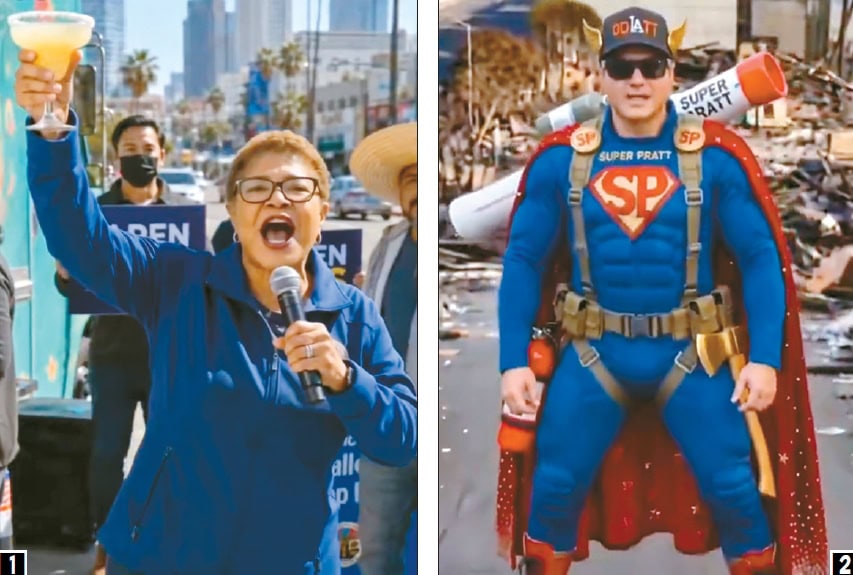
Social media has become a major tool for candidates to deliver their messages and communicate with voters in this year’s midterm elections.
Candidates are using platforms such as Instagram not only to present their image and policy proposals in a more approachable way, but also to attack their opponents. Because voters can directly comment on posts and respond in real time, social media is also increasingly seen as another gauge of public sentiment.
Among candidates in the Los Angeles mayoral race, Republican candidate and television personality Spencer Pratt has the largest Instagram following. As of May 28, Pratt had more than 1.7 million followers on the platform.
Pratt has actively used that name recognition to promote his campaign online. His posts range from videos in which he speaks directly to the camera about his policy ideas to campaign videos produced in a dramatic, scripted style. His campaign launch video, posted May 18, had drawn more than 9 million views.
The post attracted supportive comments, but also criticism from users who questioned the lack of details in his homelessness policy.
Other candidates are also using social media as a key campaign tool. Los Angeles Mayor Karen Bass, who is seeking reelection, has about 51,200 Instagram followers, while Los Angeles City Councilmember Nithya Raman has about 49,400.
Bass also operates the official Los Angeles mayoral account, which has more than 300,000 followers. However, campaign-related posts cannot be published on the official government account.
Candidates use social media in different ways, but the importance of online platforms is growing. Bass posted eight times on Instagram on May 27 alone, while other candidates have continued to promote their policies and public activities through social media.
As a result, social media has become one of the major campaign tools for candidates seeking to communicate with voters and spread their messages.
“It matters how candidates connect with voters online,” Sara Sadhwani, a political science professor at Pomona College, recently told the Los Angeles Times.
Social media is also being used not only to promote policy, but to challenge rival candidates. In particular, candidates in the California governor’s race have used posts to criticize their opponents and shape campaign narratives.
Republican candidate Steve Hilton publicly criticized fellow Republican Chad Bianco, the Riverside County sheriff, in February by posting a video of Bianco kneeling in front of Black Lives Matter protesters in 2020.
Democratic candidate Tom Steyer, a billionaire environmental activist, has also used social media to distinguish himself from former U.S. Health and Human Services Secretary Xavier Becerra, posting content comparing the two candidates.
Political observers say social media’s advantage is that it allows candidates to spread messages quickly at relatively low cost. As election campaigns become increasingly digital, online platforms are expected to play an even larger role in shaping voter perceptions and campaign momentum.