Once seen as a reliable path to a six-figure income, the trucking industry—especially among Korean-American truckers and small-business owners—is reeling under the weight of tariff-driven trade disruptions.
With container traffic through the ports of Los Angeles, Long Beach, and Seattle falling sharply, the economic fallout has hit independent truckers and mom-and-pop freight companies with full force.
Taeseok Yoo, a 53-year-old truck driver in the Seattle area, recently lost his job when his employer shut down operations after weeks of inactivity. “There was no work coming in for weeks, and we were just waiting around,” Yoo said. Then the closure came swiftly, putting around 100 workers—including drivers and office staff—out of work overnight.
This isn’t an isolated case. Industry-wide, the story is the same: steep tariffs imposed by the Donald Trump administration, particularly those targeting imports from China, have slashed freight volume and destabilized the entire logistics sector. At CNJ Trucking in Gardena, CEO Ted Kim explained that the company’s average weekly driving hours have plummeted from 48 to 35. Drivers who once earned $10,000 a month are now lucky to make half that.
Worse yet, Kim said, his staff was cut from 10 to just 3. “We’re not just losing income—we’re losing livelihoods,” he said. Across the Korean-American trucking community, similar layoffs and wage cuts are becoming the new normal.
A representative from Hyundai Shipping USA highlighted another growing issue: a price war that is driving smaller firms into the ground. As shipping orders decline due to tariff-related uncertainty, some Korean-American trucking companies are undercutting rates by 30 to 40 percent just to stay afloat. But the cost of labor and living in Southern California make such strategies unsustainable.
The consequences ripple far beyond the immediate trucking workforce. According to the Washington Post, container traffic at the Port of Los Angeles fell by one-third as of May, compared to the same period last year.
In the greater Los Angeles area—where one in nine residents works in logistics, freight, or warehousing—even a 1% drop in freight volume could threaten up to 4,000 jobs, according to Los Angeles Times analysis.
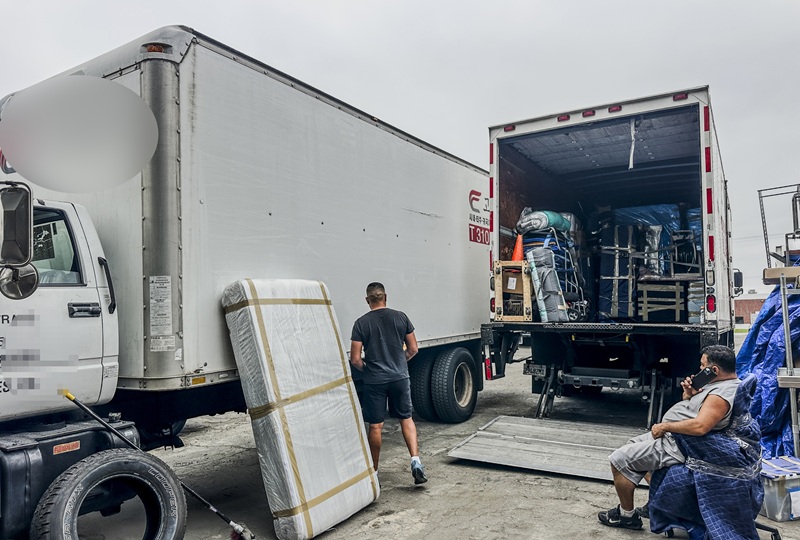
Some trucking companies are trying to adapt by pivoting to alternative services. Justin Jin, CEO of Moving24, said his company is now handling residential moves alongside traditional freight deliveries.
“There are barely any inquiry calls right now because of the unclear tariff situation,” Jin said. “We can’t just let our trucks sit idle.” But he also noted the challenge: “With labor and cost of living so high, it’s hard to cut prices.”
The economic strain is not just a story of numbers—it’s a human story, unfolding daily in truck yards, empty warehouses, and family homes where drivers once carried the confidence of financial security.
Unless tariff policy stabilizes and global trade resumes its former pace, the road ahead for small trucking firms—especially those in immigrant communities—will remain steep, uncertain, and unforgiving. The six-figure trucker may become not just a rare success story, but a relic of a pre-trade war economy.
By Mooyoung Lee [lee.mooyoung@koreadaily.com]