The Checkout Shock: Why Your Grocery Bill Isn’t Shrinking Despite Political Promises
During the election trail, the promise was clear: “We will bring down food costs.” Yet, months into the current administration, consumers staring at their receipts are asking a collective question: Where exactly is the discount?
Despite President Donald Trump’s campaign pledges to slash US grocery prices, the reality at the checkout lane tells a wildly different story. For those living in major metropolitan areas like Los Angeles, New York, and San Francisco, shopping for dinner still feels like a luxury sport.
A recent analysis by NBC News, using data from market research firm NIQ, reveals that while egg prices have finally cracked under pressure and cooled down, the cost of beef, juice, and bread is still climbing up the inflation ladder.
## Highs and Lows: The National Price Breakdown
To be fair, there is some good news in the dairy aisle. If you love omelets, you’re in luck.
The Egg Exception: A dozen eggs averaged $3.89 nationally this week, down a refreshing $1.73 since Trump took office. Compared to the bird-flu-induced horror show of March last year—when a dozen eggs peaked at a jaw-dropping $6.58—supply chains have finally healed.
Unfortunately, you can’t live on eggs alone. The rest of the grocery basket is still burning a hole in American pockets:
-
Beef (1 lb): Hit a national average of $6.96, surging by $1.12 since the inauguration—one of the steepest hikes in the study.
-
Orange Juice (32 oz): Squeezed budgets further by rising $0.76 to $4.52.
-
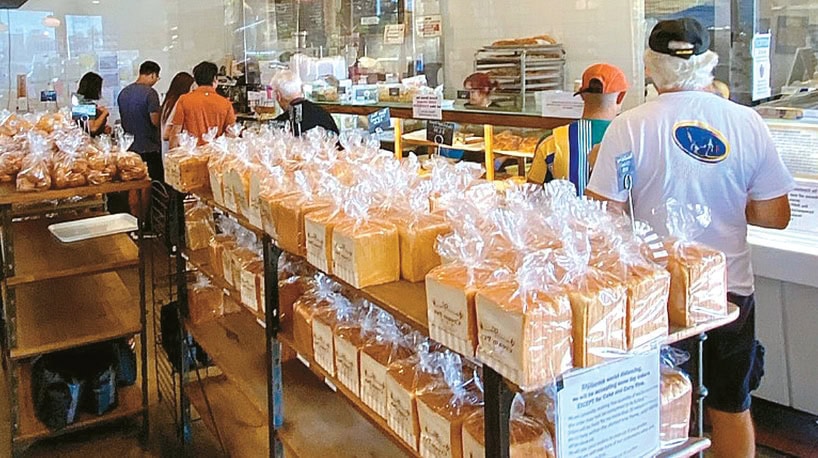
White Bread (1 loaf): Crept up another $0.14 to $3.15.
## The Big City Tax: Coast-to-Coast Sticker Shock
If you think the national averages look rough, look away now if you live in California or New York. Major cities are currently wrestling with US grocery prices that make national averages look like a bargain.
| Item (Avg) | National | Los Angeles | San Francisco | New York |
| Eggs (12ct) | $3.89 | $4.82 (+24%) | $6.43 | – |
| Beef (1 lb) | $6.96 | $8.10 | $9.17 | $7.41 |
| Bread (1 loaf) | $3.15 | $3.78 | – | – |
| Orange Juice | $4.52 | $3.66 | – | $5.29 (+$1.27) |
The California Premium
Southern California residents are feeling the squeeze daily. While LA’s $4.82 eggs are better than last year’s $9 nightmare, they still outpace the nation. San Diego isn’t faring any better, with eggs at $5.08, bacon at $8.67, and chicken breast flying high at $5.85.
Meanwhile, San Francisco takes the crown for the most expensive grocery cart in the nation. With bacon crossing the $10.40 mark and beef teasing $9.17, SF residents might need a tech salary just to make a sandwich.
The East Coast Squeeze
Over in New York, breakfast is getting a lot more expensive. Upstate or downtown, orange juice prices saw the biggest spike in the country, jumping $1.27 to sit at $5.29 a bottle.
Why Aren’t Prices Dropping?
So, why are US grocery prices refusing to cooperate with political narratives? According to agricultural and economic experts, it boils down to two unyielding forces: supply dynamics and local overhead.
While egg production recovered quickly after the avian flu subsided, cattle farming is a much slower process. High feed costs, prolonged droughts, and cattle shortages mean beef and processed meats will remain expensive for the foreseeable future.
Furthermore, states like California face structural premiums. Higher local labor wages, stricter environmental regulations, soaring logistics costs, and notoriously high gas prices are all quietly factored into the price of that loaf of bread or carton of milk before it even hits the shelf.
Until global fuel costs and supply strains ease up, consumers should keep their coupon apps close and their expectations managed—no matter what the headlines out of Washington promise.