The US Midterm Elections are taking place on November 3 (local time), determining the power landscape for the final two years of Donald Trump’s administration. While Democrats are widely expected to reclaim the House of Representatives, the Senate majority hangs on fiercely contested battleground states. The ultimate question is whether hidden “Shy Trump” voters will rescue the Republican Party or if alienated “Angry Trump” core supporters will turn their backs on the GOP.
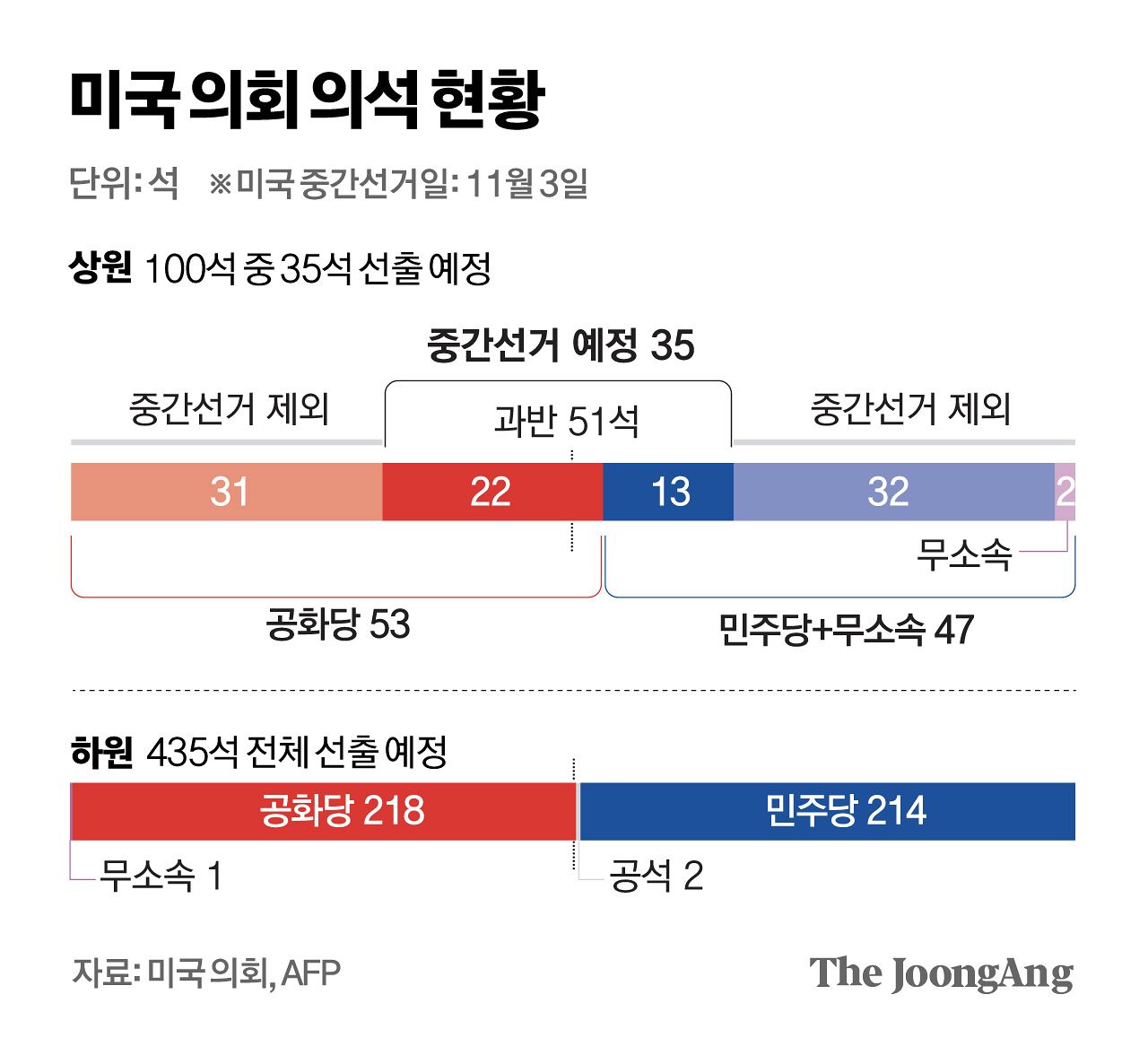
Midterm elections are held midway through a four-year presidential term. Currently, Republicans hold majorities in both the House and the Senate. This election features all 435 House seats (two-year terms), 35 of the 100 Senate seats (six-year terms), and 39 governorships. Voting polls closed sequentially starting at 6 PM Eastern Time, with final results potentially taking several days due to mail-in ballots and possible recounts in tight races.
According to an analysis released on November 2 by election forecasting firm Decision Desk HQ (DDHQ), Democrats held an 84% probability of capturing the House and a 65% chance of taking the Senate. The firm projected Democrats to win 241 of 435 House seats and 52 of 100 Senate seats, with a 63% probability of controlling both chambers simultaneously.
Similar trends are appearing in polling data. A final US Senate election poll released November 1 by The New York Times and Siena College showed Democratic candidates leading Republican opponents across all seven key Senate battlegrounds.
Battleground States and the Trump Voter Factor
In Michigan, Democratic candidate Abdul El-Sayed led Republican Mike Rogers 53% to 42%. In the traditionally Republican stronghold of Texas, Democratic candidate James Talarico led Ken Paxton 50% to 43%. Other battlegrounds like Maine, Kansas, Ohio, Alaska, and Iowa also favored Democrats, though Alaska and Iowa remained razor-thin with margins of just 2% and 1%, respectively.
With Republicans currently holding 53 seats and Democrats 47, a net gain of four seats would give Democrats control of the Senate. However, analysts note that conservative voters missed by traditional polls could serve as a late-stage wild card.
Nate Cohn, senior political analyst at NYT, noted on November 2 that Trump supporters are relatively less responsive to polls, suggesting Republican support may be underestimated. This phenomenon, known as “Shy Trump” voters, echoes the 2016 presidential election when polls missed hidden Trump support, leading to a surprise victory.
The Rise of Angry Trump Voters
On the flip side of Shy Trump voters lies the “Angry Trump” demographic. Charlie Cook, founder of the nonpartisan Cook Political Report, suggested last October that loyal Republican base voters who would normally never vote Democratic could emerge as a critical swing group. Frustrations over rising household living costs driven by tariff policies and aggressive immigration enforcement have fueled discontent among these loyalists. Depending on whether these voters tolerate their grievances to support the GOP or stay home, the election outcome could shift drastically.
Meanwhile, internal fractures emerged within the Democratic camp ahead of the vote. In Michigan, incumbent Democratic Representative Haley Stevens endorsed Republican candidate Mike Rogers after losing to El-Sayed in the August Democratic primary.
During a final campaign rally near the Lincoln Memorial in Washington, D.C., Trump targeted El-Sayed, who could become America’s first Muslim senator. Trump urged Republican base consolidation by contrasting differing political visions.
Implications for Foreign Policy and Trade
If Democrats recapture the House, they will gain powerful leverage through budget control and investigative authority. Capturing the Senate would further stall key administration appointments. Observers note that even if Democrats control Congress, President Trump maintains executive order and veto powers, making swift rollbacks of tariff, immigration, and foreign policies difficult.
For South Korea, shifts in US congressional power could directly impact trade issues like tariffs and semiconductors, alongside security concerns including US Forces Korea, wartime operational control, and North Korea policy. As the election results unfold, South Korea’s diplomatic negotiating environment is poised for significant changes.