The Race for the Driverless Future Just Shifted into Overdrive
The US robotaxi market is reaching a critical tipping point as autonomous vehicle heavyweights stake their claims across the country. Alphabet’s Waymo has officially expanded its commercial, driverless ride-hailing services into San Diego, Tampa, and Denver, bringing its total operational presence to 14 U.S. cities. Simultaneously, Amazon-backed Zoox announced plans to begin human-supervised testing of its custom, toaster-shaped autonomous vehicles in Houston and San Diego, widening its total footprint to 12 U.S. markets.
Waymo Leads as Goldman Sachs Projects a $19B Boom
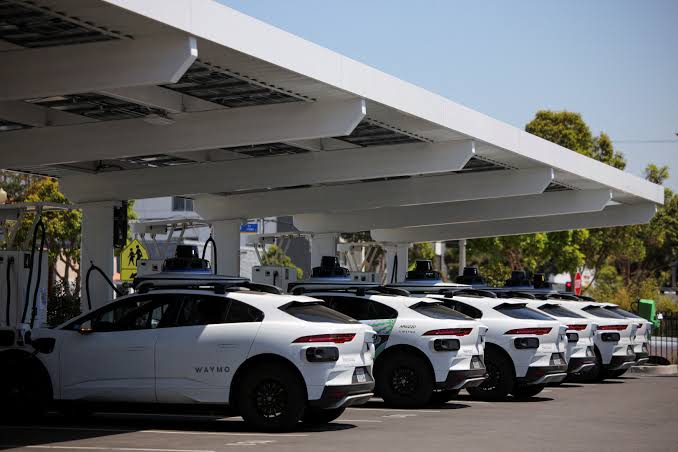
Waymo continues to hold a commanding lead in the US robotaxi market, currently serving over 500,000 paid autonomous rides per week with an eye toward hitting 1 million weekly rides by the end of 2026. The company’s expanding fleet relies heavily on its roomier, sixth-generation “Ojai” vehicle—built on a Zeekr minivan chassis equipped with sliding doors, three interior screens, and deep Gemini AI integration.
The timing of these strategic expansions aligns with aggressive industry projections. According to data from Goldman Sachs Research, the U.S. driverless ride-hailing sector is expected to expand rapidly from an estimated $3 billion in 2027 to $19 billion by 2030, before reaching a massive $48 billion valuation by 2035. Adding fuel to the fire, industry watcher expectations are at an all-time high ahead of Tesla’s highly anticipated reveal of its Cybercab and commercial Robotaxi platform.
Navigating Roadblocks, Weather, and Labor Concerns
Despite the rapid momentum of the US robotaxi market, significant hurdles remain before driverless cars completely replace human drivers. Zoox still trails Waymo significantly, currently running its only paid public service in Las Vegas, while maintaining a limited, free testing service in San Francisco.
Furthermore, both companies face fierce headwinds from labor unions concerned about transportation job losses, as well as safety advocates demanding standardized crash and mileage data. Tech challenges also persist—severe weather, road construction, unexpected traffic gridlock, and power outages continue to test autonomous systems, occasionally forcing emergency responders to manually intervene.
As autonomous fleets scale from dozens to hundreds of vehicles per city, the battle between Waymo, Zoox, and Tesla will decide not just who owns the street corner, but who controls the multi-billion-dollar future of urban mobility.