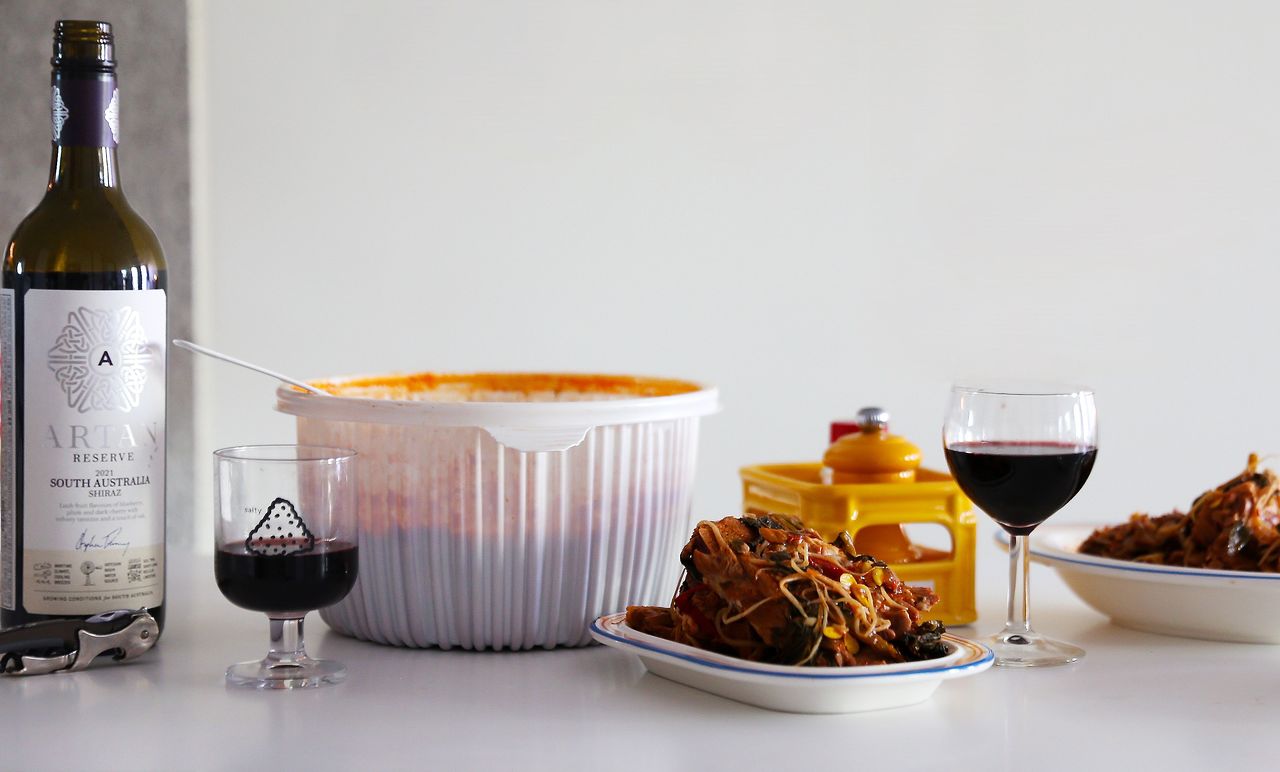
Placing a wine glass next to a bubbling pot of wine pairing feels inherently awkward at first. Picture a broth tangled with perilla seed powder and red pepper flakes, paired with garlic- and black pepper-infused pork backbone. Is there really room for wine where soju typically sits? I thought so too at first, but a single bottle of Australian red wine bought from a convenience store shattered that old prejudice.
At age twenty-four, during my language study abroad in Australia, I experienced my first-ever food pairing at a staff dinner hosted by the restaurant owner. The owner brought out a wine to enjoy alongside tteokbokki and stir-fried pork. That day, I endlessly repeated a bite of tteokbokki followed by a sip of sparkling wine. I learned much later that describing this harmonious meal as pairing was a real culinary term.
My experiments continued after returning to Korea. Whenever I traveled with fellow wine lovers, I would pack three or four bottles of wine in my backpack. One day, I pulled out an Australian red wine called ‘Yellow Tail Shiraz’ in front of a pot of gamjatang. Yellow Tail Shiraz is a representative low-cost red wine sold for around $10 at convenience stores.
As I chewed on the seasoned pork bone meat soaked in rich sauce, I let a sip of wine flow in. The red pepper powder suddenly tasted spicier, the garlic sweeter, and the black pepper more vibrant. The meat became as tender as a tenderloin steak. A bite of meat, a sip of wine—I found myself repeating the same action without even realizing it. If anyone asks me what true pairing is, I want to show them this exact scene.
In truth, Yellow Tail Shiraz is not a wine to rave about. Its vanilla and pepper notes feel somewhat artificial, and the sweet-and-sour taste cuts off immediately without lingering. Yet, when it met the gamjatang, it worked a magic trick that made even the perilla seed powder clinging to the broth taste delicious.