On October 29, South Korean President Yoon Suk Yeol expressed deep concerns during a call with Ukrainian President Volodymyr Zelensky. Yoon noted that beyond North Korea potentially acquiring sensitive military technology from Russia, the combat experience gained by North Korean troops in Ukraine could pose a significant security threat to South Korea if disseminated among North Korea’s 1-million-strong military forces.
In a swiftly organized call, Yoon highlighted North Korea’s unprecedented move of deploying special forces to support Russia, calling it a “dangerous and unprecedented” action that exacerbates tensions.
He assured Zelensky that South Korea “will not overlook this military alliance between Russia and North Korea, which directly threatens our national security.” Yoon added that South Korea will “closely monitor battlefield developments and implement phased responses accordingly.”
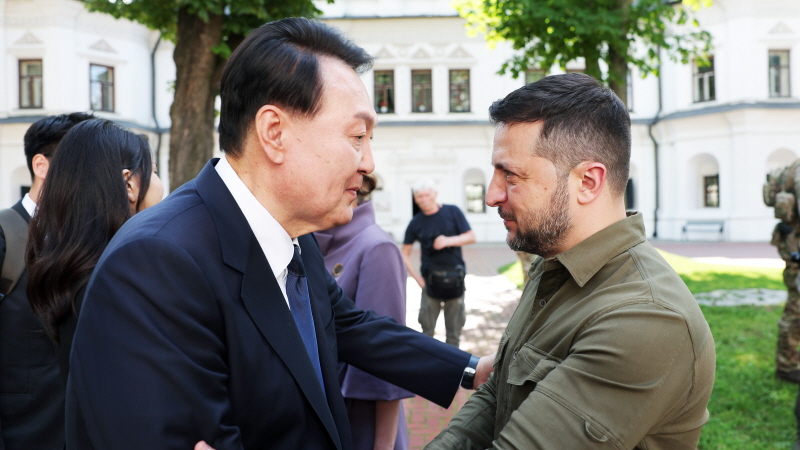
President Zelensky responded by sharing intelligence, noting that North Korean troops’ deployment to the Ukrainian frontlines was imminent and would potentially alter the war’s dynamics. He proposed expanding information sharing with South Korea, to which Yoon agreed, underscoring the importance of ongoing coordination with NATO, the European Union, and South Korean representatives in Kyiv to counter this growing military collaboration.
Following the call, Zelensky posted on X (formerly Twitter), stating, “We discussed North Korea’s involvement in Russia’s invasion of Ukraine. The conclusion is clear—this war is becoming internationalized, extending beyond two countries.”
He shared that 3,000 North Korean soldiers were reportedly stationed near a Russian training ground close to active combat zones, with projections indicating the force could rise to 12,000. Zelensky also requested South Korea’s involvement in the G7 Vilnius Declaration, which outlines long-term military and economic support for Ukraine.
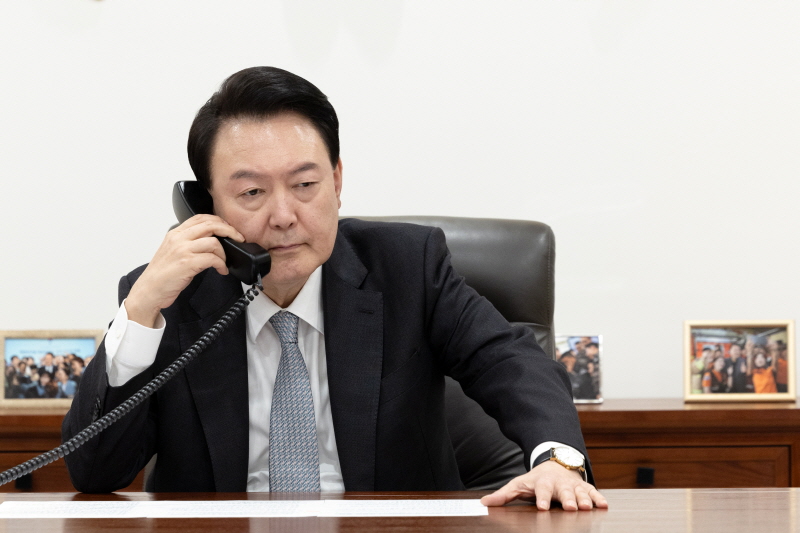
The South Korean presidential office reported that both leaders “strongly condemned the illegal military collaboration between North Korea and Russia, agreeing to initiate ‘strategic consultations’ on a joint response.” Zelensky is expected to send an envoy to Seoul soon to facilitate these discussions.
The “strategic consultations” will focus on coordinated, phased measures based on evolving battlefield conditions. Zelensky added on X that they had agreed to intensify contact at all levels, especially among top leaders, to devise strategic responses to these rising tensions.
Notably, lethal weapon support for Ukraine was absent from the call’s official report. Instead, South Korea confirmed its continued commitment to non-lethal support, focusing on security, humanitarian aid, and reconstruction as part of the “Ukraine Peace Solidarity Initiative.”
A senior South Korean official stated that South Korea does not yet see conditions suitable for discussing lethal weapon aid.
Kim Jae-cheon, an international studies professor at Sogang University, remarked, “South Korea and Ukraine’s interests may not align completely. Any decision on lethal aid should carefully consider the broader security landscape, especially on the Korean Peninsula.”
Earlier in the day, President Yoon presided over a Cabinet meeting, where he described the Russia-North Korea military alliance as a “serious security threat to both South Korea and the international community.” He urged officials to “prepare thoroughly for all possibilities and prioritize risk management.”
Ahead of the call, Democratic Party spokesman Yun Jong-gun criticized President Yoon’s approach, suggesting that “the Yoon administration is inviting war risk on the Korean Peninsula by publicizing support for Ukraine and denouncing North Korea’s troop deployment to Russia.”
BY YUJIN SEO, YOUNGNAM KIM [kim.youngnam@koreadaily.com]