LA homeless population policy is facing renewed debate after a private survey claimed that more than half of homeless people in Los Angeles came from outside the city. Critics, however, say the survey’s methodology and sample size raise questions about how broadly the findings can be applied.
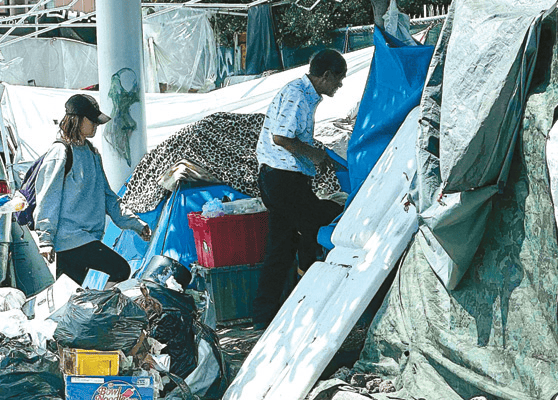
Conservative activist Christopher F. Rufo recently said he surveyed about 200 homeless people in Hollywood, Venice and Skid Row and found that 64% came from outside the city of Los Angeles.
According to Rufo, 53% of those surveyed were from outside Los Angeles County, while about 40% came from other states. He argued that LA’s welfare and support programs are attracting homeless individuals from outside the region.
The findings overlap with some previous research. The Los Angeles Homeless Services Authority, or LAHSA, reported in a 2020 survey that about one-third of unsheltered homeless people had become homeless outside Los Angeles County. A 2024 report by the RAND Corporation also found that 41% of homeless people surveyed in Hollywood, Venice, and Skid Row had last lived outside LA County.
The debate has also extended to how homelessness data is released. Rufo claimed that LAHSA has not publicly released “previous location” data since 2021 and that RAND moved similar figures from the main body of its annual report to an appendix.
LAHSA said there was statistical uncertainty in how respondents interpreted the question, while RAND said the change was due to report simplification and cost concerns.
Some observers say the figures challenge the dominant policy approach that has treated homelessness largely as a housing shortage issue. They argue that expanding housing alone may not be enough and that policymakers must also consider migration, drug addiction, mental illness, and public safety.
Homeless service organizations, however, point to high housing costs and a lack of mental health and addiction treatment as the core drivers of homelessness. Advocates also caution against generalizing the issue of homeless migration based on limited data.