
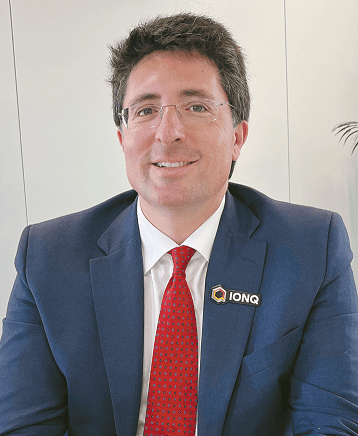
In an exclusive interview with The Korea Daily at the Reagan National Economic Forum on May 29, Niccolo de Masi, CEO of quantum computing company IonQ, said quantum computing will become a core technology that determines the future of artificial intelligence, national security, drug discovery, semiconductors, and energy.
“We think that quantum technologies, from computing to sensing to networking, are all inflecting right now,” de Masi said. He added that quantum technology as a whole is rapidly moving toward commercialization, not only in computing but also in sensing, networking, and security.
De Masi pointed to IonQ’s technological track record as a key source of its competitiveness.
“Our founders built the world’s first quantum logic gates in 1995,” he said. “Just last month, we published the world’s first shovel-ready blueprint for how we’re going to build our fully fault-tolerant quantum computers.”
“Nobody else in the world has either of these technical bookends,” he added. “First quantum logic gate, first shovel-ready, full fault-tolerant blueprint.”
De Masi described IonQ as a company that has created the market both technically and commercially.
“IonQ has been the pioneer. We have been the market maker, both technically and commercially,” he said. “We are the largest quantum company in history by every measure — patents, PhDs, employees, revenue, balance sheet, market cap.”
He said the nature of questions from governments and companies has changed. A few years ago, he said, they asked, “What is quantum computing?” Now, the questions have shifted to “What should our quantum strategy be?”
De Masi said, “We are making quantum happen sooner by spending more and more money on R&D and by aggressively commercializing not just computing, but our entire quantum platform.” He noted that many customers are already purchasing more than one IonQ solution, including quantum computing, networking, security, and sensing.
Asked about the perception that quantum computing is commercializing more slowly than AI, de Masi said quantum is simply at an earlier point on the same curve.
“AI is a rebranding of what we used to call classical machine learning,” he said. “Classical machine learning has been working since the 1960s; you can argue it’s been worked on for 60 years.”
He compared the current stage of quantum computing to the years before ChatGPT became a mainstream turning point.
“I think if you looked at ChatGPT-1, you would have said that it is a curiosity. If you looked at ChatGPT-2, you would have said that’s a hobby. But when ChatGPT-3 came along, everybody all of a sudden went, ‘Oh, well, we have moved into a different era,’” he said.
De Masi predicted that quantum computing would change the structure of AI itself.
“In the medium and long term, AI will be about classical West Coast correlation-engine GPUs plus probabilistic quantum algorithms that produce deterministic outcomes working together,” he said. He said users may access quantum computers through classical devices such as phones or through the cloud, creating hybrid workflows that combine conventional computing and quantum algorithms.
One of the points he emphasized most was “Q-Day,” the moment when quantum computers become powerful enough to break today’s encryption systems.
“I have said since last June that Q-Day was going to come by the end of this administration,” de Masi said. “IonQ believes that we will be able to run Shor’s algorithm in that period of time.”
He said China is also targeting 2029 and added that what was once seen as an aggressive timeline is now gaining broader acceptance.
“Last summer, people said that I was being aggressive in stating that Q-Day would happen in 2028 or 2029. Now, Google agrees. Governments agree. Everyone sees that I was right,” he said.

De Masi also emphasized that quantum technology is closely tied to national security.
“Defense really is about resilience for nations,” he said. “At the end of the day, the economy is the weighing machine that allows countries to fight.”
He stressed that IonQ is not a weapons manufacturer, but said its technology could transform the foundation of national competitiveness.
“IonQ doesn’t make bullets,” he said. “But we are an integral part of driving economic growth. We are an integral part of solving all of the problems that every aspect of applied science needs, from drug design, computational chemistry, and computational engineering to building the semiconductor chips of the future and building the energy of the future.”
He said quantum sensing technology is already being used in defense-related areas.
“Our quantum platform is in every warfighting domain, from submarines to satellites and ships and land and drones,” he said. “We’re doing all of that, so it’s a broad-based approach to economic resilience, economic growth, and, of course, kinetic capabilities.”
De Masi also expressed optimism about cooperation with South Korea. Hyundai Motor was one of IonQ’s early investors, and he said there is significant room for cooperation in the automotive, battery, and semiconductor sectors.
“We did early work with them on batteries and materials, and we’re very proud of that,” he said. “I think we’re just getting started and just scratching the surface of what we can do, not just in South Korea, but in the automotive sector and the semiconductor sector.”
De Masi cited South Korea’s strength as a country that invests early in technology platforms.
“South Korea is an amazing country. You have always invested in infrastructure and technologies around the corner,” he said. “I used to be in the mobile phone business, and we were always envious of the fact that fiber and 4G and 3G all happened in Korea first.”
He said South Korea’s early investments in infrastructure could translate into future advantages in quantum technology.
“Just like broadband has done amazing things for research, economic growth, and collaboration, our partnership with KISTI and South Korea overall, we are very confident, is going to lead to incredible advances in every aspect of applied science,” he said.
He also spoke about Jungsang Kim, a Duke University professor and IonQ co-founder.
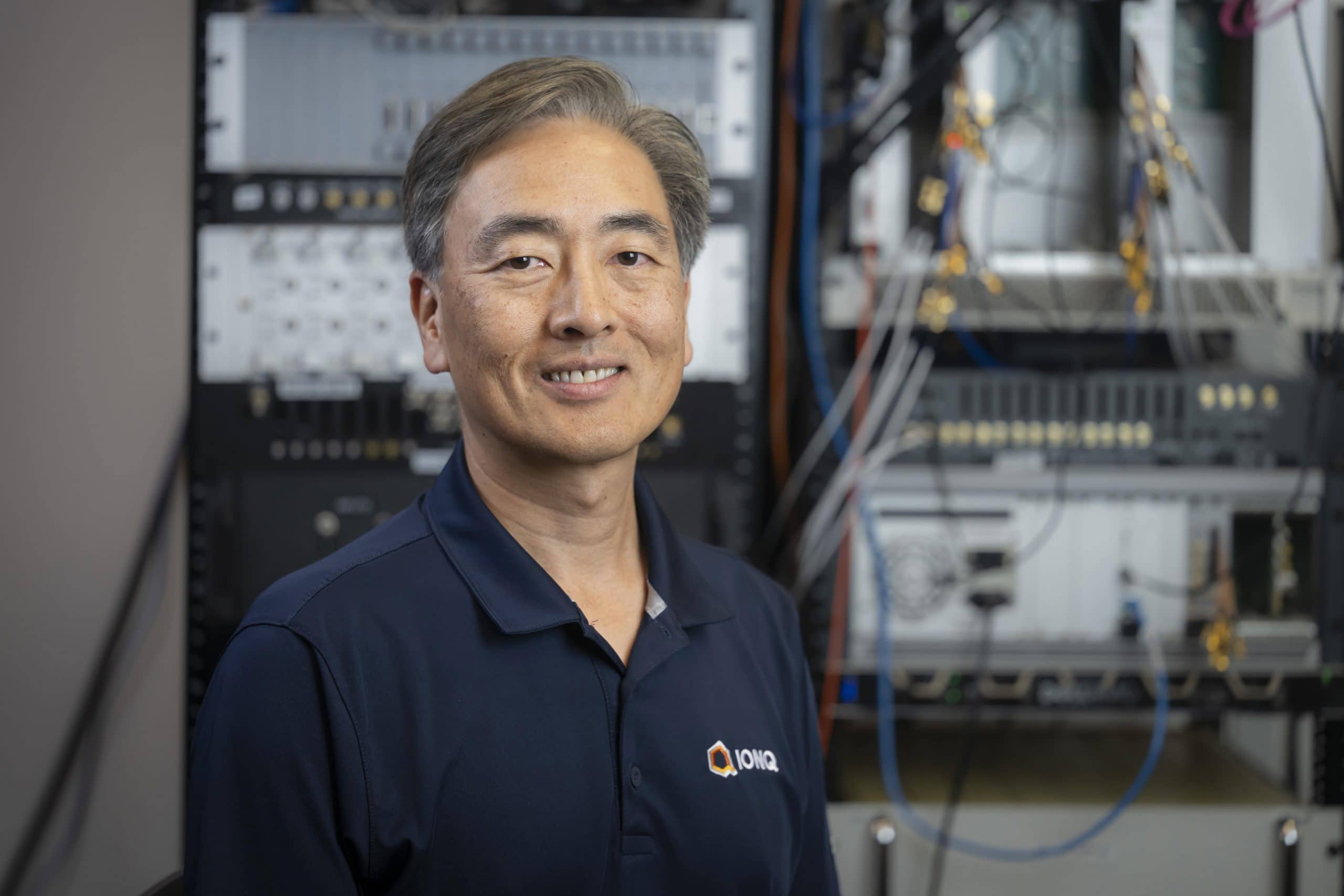
While Chris Monroe was the scientist who built the first quantum logic gate, de Masi said Kim has played a crucial role in advancing the engineering and technology behind IonQ’s quantum platform.
“Jungsang has been very instrumental in driving engineering progress, physics engineering progress, and high technology progress of that initial quantum logic gate with Chris for decades,” he said.
He described Kim as “a tremendously smart individual” and “a very humble man, very determined man, very hard worker.”
“He will work 16 hours a day in the lab and then still get on the plane and go somewhere else,” de Masi said. “So very dedicated to the mission. It’s obviously been a lifelong mission for both him and Chris.”
De Masi expressed confidence in IonQ’s future growth.
“It has taken us five years to go from a $2 billion market cap to about $26 billion today,” he said. “I think the next five years will see the same type of growth, if not more.”
He added that IonQ’s market value has already grown about tenfold since its IPO and said he believes the company could grow tenfold again, and eventually even more, if quantum adoption accelerates.
“There will be a day, just like we have a 10-times bigger market cap today than when we IPO’d, when we’re 10 times bigger again,” he said. “And I hope a day when we’re 100 times bigger again.”
De Masi said, “Quantum has been worked on for decades, but we’re still just getting started.”
The quantum computing industry is only at the starting line.