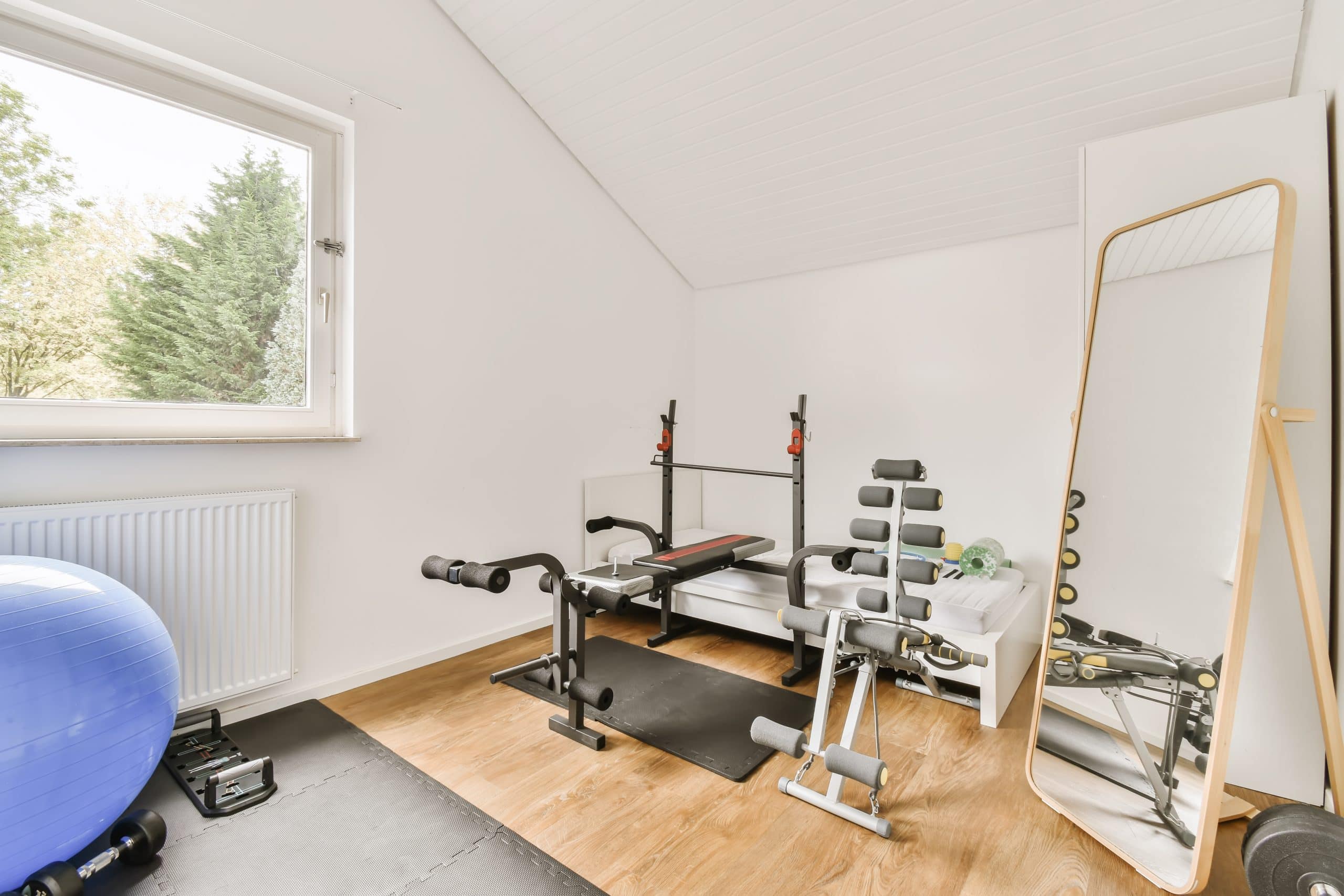
 Exercise machines and fit ball located near mirror and window in sunlit home gym in daytime
Home setup pays off over time, while gym memberships require ongoing monthly costs
Experts say frequency of use and workout quality should guide the decision
As inflation and rising living costs continue to squeeze household budgets, more consumers are evaluating fitness expenses as a long-term investment. A new analysis suggests that building a home gym may be more economical than maintaining a traditional gym membership over time.
According to a recent analysis by Realtor.com, home gyms require a significant upfront investment but can generate substantial long-term savings, while commercial gyms provide a structured fitness environment at the cost of recurring monthly fees.
The report estimates that setting up a home gym typically costs between $2,000 and more than $13,000, with the average investment totaling around $7,000. Although the initial expense can be considerable, the cost per workout declines steadily over time. Compared with an average gym membership costing about $150 per month, homeowners can often recover their investment within several years.
The financial advantage becomes even greater for households with multiple users. Because family members can share the equipment, the cost per person decreases significantly, making a home gym more affordable than multiple gym memberships over the long term.
However, home gyms also involve ongoing expenses. Equipment maintenance, repairs, upgrades, electricity costs and the opportunity cost of dedicating living space to exercise should all be considered when calculating the total investment.
Traditional gyms, meanwhile, require continuous monthly payments. Premium fitness clubs often charge $200 to $400 per month, making long-term membership considerably more expensive for regular users.
Beyond cost, lifestyle plays a major role in determining which option offers the greatest value.
Home gyms eliminate commuting time and allow users to exercise whenever it fits their schedule, making them especially attractive for remote workers and families with children. The added convenience can help people maintain more consistent workout routines.
Commercial gyms, on the other hand, provide access to professional trainers, specialized equipment, group fitness classes and social interaction that can improve motivation and accountability. For individuals who struggle to stay disciplined while exercising alone, a gym may ultimately deliver better results despite the higher cost.
The report also found that installing a home gym generally has little impact on a property’s appraised value. Most appraisers continue to treat the space as a standard room rather than assigning additional value. However, in certain luxury homes, a professionally designed fitness room may enhance a property’s appeal to prospective buyers.
Experts say the most important factor is how frequently the equipment or membership is actually used. A home gym becomes a better investment the more consistently it is used, while the value of a gym membership depends on regular attendance.
As Americans increasingly view fitness as a long-term financial investment rather than simply another monthly expense, choosing between a home gym and a commercial fitness center ultimately comes down to personal habits, lifestyle and commitment to exercise.