Shifting the Battlefield: Targeting Used Car Buyers, Not Luxury EV Drivers
When assessing the competitive landscape of the modern electric vehicle sector, most automotive executives fixate on out-specifying their rivals with larger battery packs, faster charging curves, and massive digital screens. Peter Faricy, the chief executive officer of Slate Auto, is throwing that entire playbook out the window.
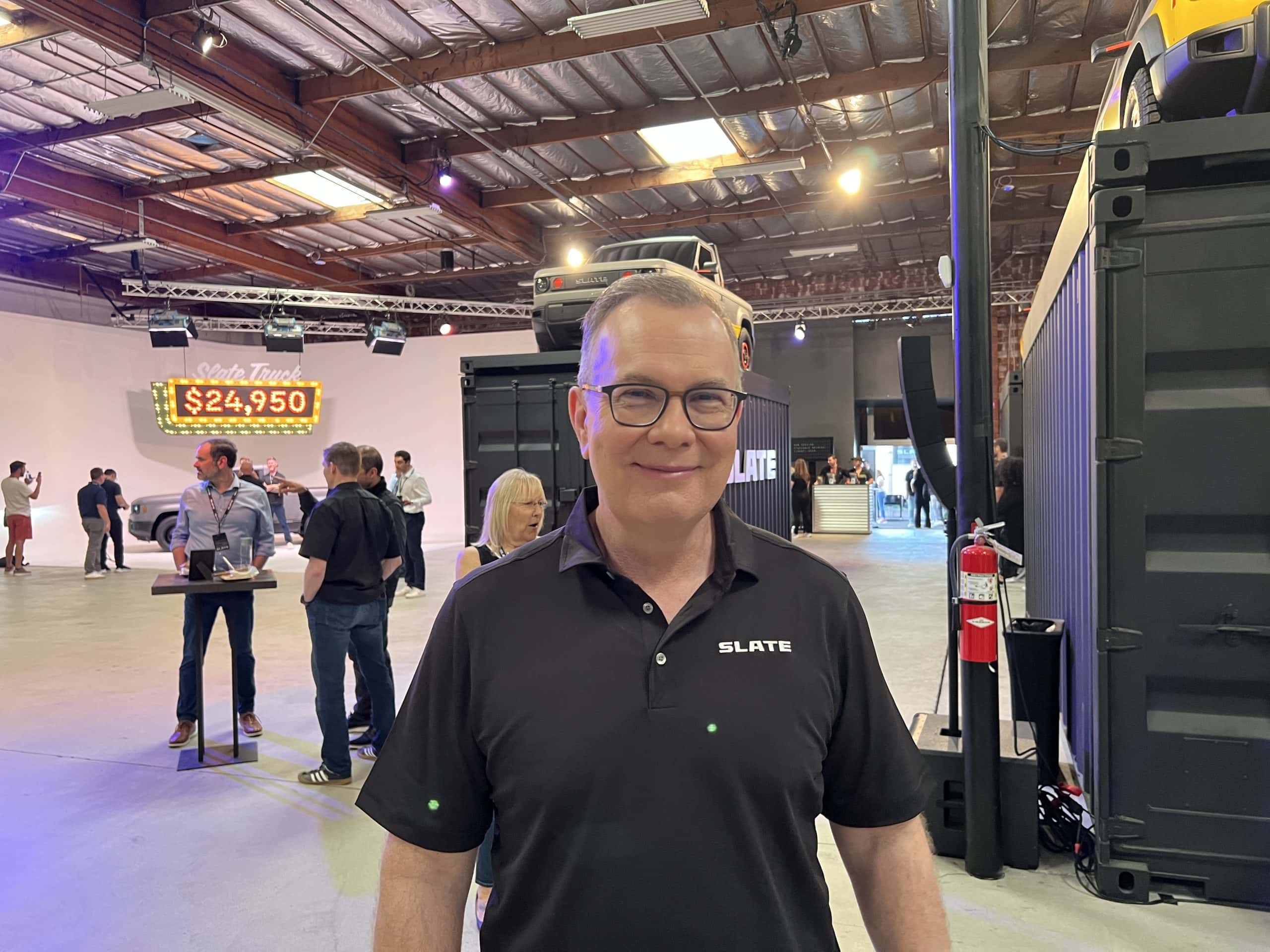
Speaking candidly at the company’s recent vehicle unveiling at its Gardena design studio, Faricy made it abundantly clear that Slate Auto is operating in a completely different conceptual lane.
“Our mission is fundamentally focused on providing a viable, high-quality choice to an entire demographic of people who, until this moment, have been entirely priced out of buying a brand-new vehicle,” said Faricy.
According to Faricy, Slate’s core corporate strategy relies on absolute price transparency paired with extensive individual customization. The company’s primary objective is to lower the barrier of entry into clean transportation, inviting consumers who have felt alienated by the tech-heavy, premium nature of the first wave of electrification.
The 55 Million Transaction Reality: Why the Sub-$25K Price Matters
To contextualize Slate Auto’s aggressive positioning, Faricy points directly to the underlying economic realities of the domestic automotive sector.
Every single year, the market handles roughly 55 million transactional vehicle sales. Out of that massive pool, only about 15 million sales represent brand-new vehicles. The remaining 40 million transactions are accounted for by the volatile used car market.
Historically, electric options have carried an average transactional price tag hovering around $50,000. This steep premium meant that clean energy adoption was effectively a luxury restricted exclusively to affluent, new-car buyers.
By aggressively locking in a baseline retail price of $24,950, Slate Auto isn’t just undercutting alternative new EVs—it is dropping underneath the average transactional cost of a typical used vehicle, which currently baselines around $29,000.
“We are altering the fundamental math for everyday working families,” Faricy explained. “Consumers who historically believed their household budgets restricted them to high-mileage pre-owned cars can now walk away with a zero-mile, zero-emissions utility vehicle. They can choose factory-fresh dependability over the hidden maintenance risks of an aging combustion car, without spending a single dollar more.”
This structural shift introduces a major crossroad for modern buyers:
-
The Traditional Approach: Spending roughly $29,000 on a high-mileage, out-of-warranty pre-owned vehicle, which carries a higher risk of legacy mechanical wear and sudden out-of-pocket repair bills.
-
The Slate Auto Approach: Spending $24,950 on a factory-fresh, fully electric pickup platform that includes zero-mile components, modern active safety suites, and extensive factory warranties.
Addressing the 205-Mile Range: A Different Market Vision
While industry observers continue to push for mainstream range capacities to breach the 300-mile frontier, Slate is intentionally standing its ground with an official 205-mile range from its single 63 kWh usable LFP battery architecture. When pressed on whether a 205-mile capacity might alienate long-distance highway travelers, Faricy maintained a pragmatic, customer-first perspective.
“A 205-mile range will be more than sufficient for a huge cross-section of daily commuters, tradespeople, and urban utility fleets,” Faricy noted. “Undoubtedly, there will always be buyers who require longer cross-country capabilities, but our target demographic prioritizes upfront affordability and operational value over excess capacity they rarely use. We are intentionally segmenting our market away from the performance-centric premium tier to capture the utility-driven value tier.”
Lowering Consumer Friction with a Comprehensive Factory Warranty
Beyond the ultra-low entry price, Slate is attempting to fully dismantle the consumer anxiety associated with entering an unproven automotive startup ecosystem. To foster long-term confidence, Faricy announced a highly competitive factory coverage program that directly challenges legacy manufacturers.
Every vehicle leaving the assembly line will come backed by a 10-year or 110,000-mile structural battery warranty, providing deep long-term protection for the vehicle’s most expensive component. Additionally, Slate is wrapping the vehicle in a 4-year or 50,000-mile comprehensive bumper-to-bumper warranty to eliminate early ownership maintenance headaches.
On top of safety guarantees, the vehicle is being structurally engineered to target a maximum five-star crash rating from the National Highway Traffic Safety Administration (NHTSA) alongside a Top Safety Pick designation from the Insurance Institute for Highway Safety (IIHS).