As Korean food is growing rapidly in popularity, more restaurants are now looking to enter neighborhoods and cities that are outside of their own community. Expanding its roots beyond Los Angeles Koreatown, such restaurants can now be found in areas including West L.A., Arcadia, Torrance and Fullerton.
▶ Popularity in peripheral areas of Southern California
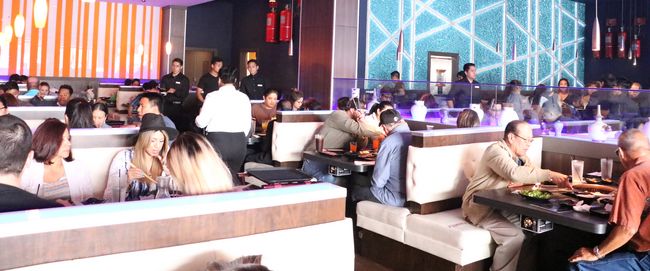
One of the biggest Korean restaurants in the L.A. County is the BBQ franchise Genwa. Located on the corner of Miracle Mile and La Brea, Genwa is especially popular among non-Koreans who are attracted by the restaurant’s multitude of side dishes (banchan), which come in 23 different kinds per table.
“There was something stimulating about cooking your own raw meat on the grill for the general American public,” said one Genwa employee. “There’s nothing like it in American dining culture. It’s the same with side dishes. I think those things have really piqued people’s interest.”
Gen BBQ, the official name of the franchise, operates 12 restaurants in Southern California alone, including Tustin, Huntington Beach, Torrance and Northridge. Each of the restaurants, on average, is relatively large at about 5,000 square feet, but it has been common to see customers waiting in line to be seated around dinnertime every night.
“Back then, it was only possible to eat Korean food in Koreatown,” said Jin-hee Lee, Gen BBQ’s marketing director. “That is no longer the case as Korean food is now available to other areas around the city.”
All That Barbecue, the all-you-can-eat Korean restaurant located inside of Santa Anita’s Westfield mall is another popular spot for non-Koreans, as it also operates side by side with Mixabowl, which serves Korean-style salad dishes. In the Sawtelle district of West L.A., there are four Korean restaurants, which are frequently visited by Japanese and Chinese Americans as well as others.
▶ Even traditional restaurants are serving Korean food now
Korean food is not only being distributed to the public by Korean restaurants. Even non-Korean restaurants are now serving Korean food as part of their miscellaneous menus. For example, Veggie Grill offers an entrée named “Seoul Bowl,” named after South Korea’s capital city.
On brown rice, customers can select their own toppings to complete the American version of Korea’s famous bibimbap. Elsewhere, French restaurant Republique is offering kimchi fried rice, while Cheesecake Factory has Korean BBQ Spicy Chicken Sandwich on the menu.
Even Wolfgang Puck, one of L.A.’s premium restaurants, recently introduced Korean steak salad, which comes with freshly made kimchi and steak.
“Korean food serves a special purpose for consumers who look for a fresh taste,” said one Republique employee. A traditional hamburger with kimchi and other Korean tastes is really appealing to people in Los Angeles. There is a distinct taste to Kimchi and gochujang.”
▶ Why is Korean food so popular?
The popularity of Korean food reached a new height via social media. As social media played a role in actively spreading the word, consumers began to seek Korean food on a regular basis. That eventually led to other mainstream media to shed light on Korean food.
“The potential for Korean food is even greater if restaurants can expand beyond just Korean barbecue to provide a more diversity within the realm of Korean food,” said an anonymous source in the culinary industry. “Korean food in the U.S. can be an even bigger hit if the restaurants continue to target the younger generation.”
Meanwhile, the rate of general L.A. consumers who say they have tried Korean food has risen to 83.9 percent in comparison to last year’s 61.8 percent, according to a survey conducted by the Hansik Foundation. In L.A., the respondents of the survey who dined at Korean restaurants gave Korean food a rating of 8.3 out of 10.
By Sung Yeon Lee