As concerns over slowing growth in artificial intelligence (AI) reemerge in the IT industry and stock market, humanoid robots are rapidly rising as a fresh demand hub for the memory semiconductor sector. This trend stems from forecasts that as humanoid intelligence advances, a single robot will require hundreds of gigabytes of memory and storage space. Following high-bandwidth memory (HBM) for AI data centers, low-power and high-capacity DRAM for robots are expected to become lucrative revenue drivers for Samsung Electronics and SK Hynix.
According to market researcher Counterpoint Research on the 11th, the global DRAM market size for humanoid brains is projected to surge approximately 20-fold over five years, growing from 8,300 terabits (Tbit) this year to 172,000 terabits by 2030.
Humanoid Robots Fuel Massive Demand for Low-Power DRAM
Humanoid brains serve as computing units that process information gathered from cameras, LiDAR (light detection and ranging sensors), and tactile sensors in real time to execute physical actions. Counterpoint Research analyzed that robots require a dramatic increase in self-processed storage and computing capacities, which in turn rapidly accelerates memory requirements. The DRAM capacity embedded in a single robot is projected to expand from 19 gigabytes (GB) this year to 39 gigabytes by 2030.
The memory industry shares a similar outlook. Sanjay Mehrotra, CEO of Micron, predicted during his June-August earnings announcement on the 30th of last month (local time) that physical AI, including humanoids, will serve as a major growth engine for the memory industry by the late 2020s. He noted that humanoid robots will require memory capacities exceeding 200GB and terabyte (TB)-level storage—much like autonomous vehicles—and added that the company has begun supplying next-generation low-power DRAM ‘LPDDR (Low Power DDR) 6’ samples to customers to capture this market. Because battery-powered humanoids are sensitive to power consumption, analysts expect that low-power DRAM and high-capacity NAND flash memory will be utilized predominantly over the HBM used in data center servers.
Domestic memory companies are also accelerating the development of humanoid-optimized DRAM. Recognizing the expanding on-device AI market—where devices like robots, autonomous vehicles, and smartphones directly process AI computations without cloud reliance—they are focusing on technologies that minimize power consumption while optimizing performance.
Next-Generation LPDDR6 and Storage Solutions
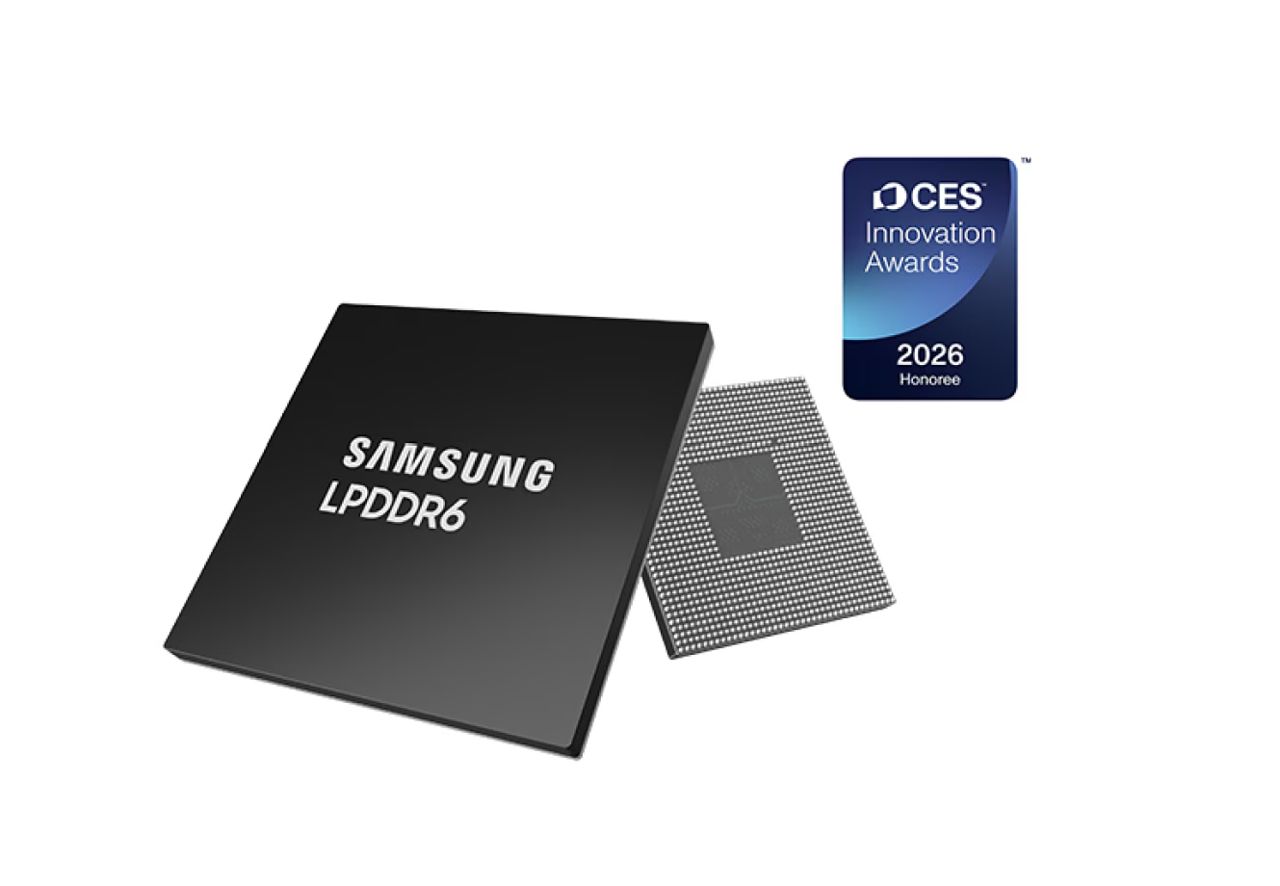
Samsung Electronics and SK Hynix showcased next-generation low-power DRAM by side-by-side exhibiting LPDDR6 at the Consumer Electronics Show (CES) 2026 earlier this year. LPDDR6 introduced by Samsung was recognized as the industry’s first developed next-generation mobile DRAM, winning a CES Innovation Award.
Samsung is also pushing initiatives to expand automotive-developed storage devices into humanoids. By adapting detachable automotive solid-state drives (SSDs) for physical AI applications, the company is showcasing innovative hardware solutions. A Samsung representative explained that the goal is to establish detachable SSDs as the standard solution for robot platforms within five years.
Meanwhile, SK Hynix is partnering with NVIDIA to develop low-power memory designated for the ‘Jetson Thor’ robotic computing platform. The Jetson Thor platform is known to house 128GB of LPDDR5X.
Lee Soo-rim, an analyst at DS Investment & Securities, forecasted that because total robot deployment volume directly correlates with memory demand alongside an ongoing increase in LPDDR per-device capacity, faster growth in the humanoid industry could allow the memory sector to evolve into a structural growth industry free from traditional cyclical downturns.