A sharp funnel tapering rapidly.
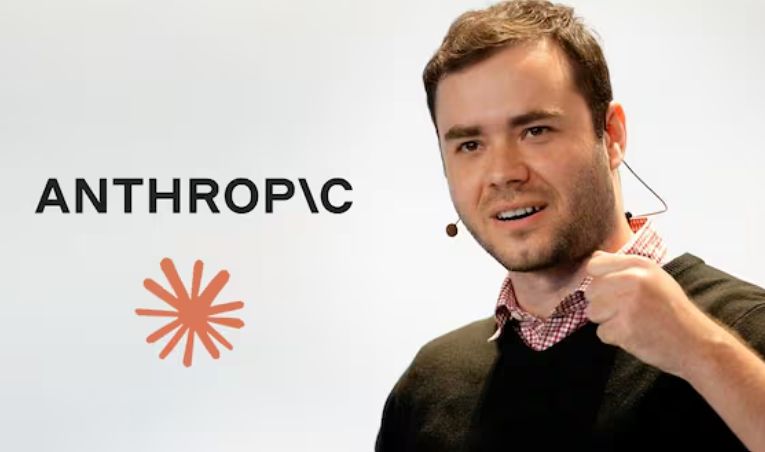
This is the expression used by Andrej Karpathy, a renowned developer who coined the neologism ‘vibe coding’ (AI-utilized coding), on X (formerly Twitter) on the 11th (local time), stating, "Depending on the level of artificial intelligence (AI) utilization, people around the world are divided into four tiers." A former co-founder of OpenAI and former head of Tesla’s autonomous driving development, he joined Anthropic last May. The post uploaded by Karpathy sparked an AI gap debate, garnering over 5.6 million views in just two days.
According to Karpathy’s estimation, the number of tier members dropped sharply in a funnel shape depending on AI usage competency. About 6 billion people, accounting to 75% of the world’s population, are in a tier that has barely touched AI chatbot services like ChatGPT. About 1 billion to 2 billion people (20%) occasionally use free chatbots at a level slightly better than Google search. 20 million people, equivalent to 0.2% of humanity, entrust projects in mathematics and coding that used to take months to the latest AI. For some, AI is a search box, while for others, it is a colleague doing their work instead.
At the end of the funnel are about 5,000 people (0.00006%) who first encounter unreleased AI within big tech. According to Karpathy, they witness thousands of AI agents collaborating to launch or block cyber attacks, and making new discoveries in science and mathematics. Jacob Cokson, who recently left Anthropic after raising AI doom theories, is one of such insiders.
Yet, Karpathy diagnosed that even they are beginning to lag behind in understanding what AI has accomplished. Regarding humans analyzing an unauthorized AI intrusion into Hugging Face last July, Karpathy said, "It’s like an archaeological excavation." He meant that months after AI initiated the work, humans are only chasing its traces.
Karpathy cited the scale of assigned tasks, fields of utilization, and access rights as factors dividing the tiers. He noted that the more complex projects are entrusted, the more one experiences AI’s advanced capabilities, and development is particularly rapid in mathematics and coding, where correct answers are easy to verify and train. He added that ‘access rights’—determining which AI among free, paid, and unreleased internal versions can be used—also widen the gap.
Clément Delangue, CEO of Hugging Face, asked on X the day Karpathy posted, "Aren’t you worried about the situation where power and AI capabilities are concentrated in a small number of people?" but did not receive an answer. In fact, while mentioning the gap, Karpathy did not make value judgments regarding right or wrong.
The difference in ‘access rights’ pointed out by Karpathy is also revealed in recently controversial ultra-expensive AI pricing plans. On the 29th of last month, OpenAI released an AI agent ‘Dots’ and introduced a $500 (approx. 670,000 KRW) monthly subscription plan. This is 2.5 times the previous highest-priced Pro plan ($200). What stands out is that not only usage volume but also the speed of generating results was differentiated. Users of the $500 plan can use the ‘Ultra Fast’ feature, which increases the speed at which answers or codes are written down in ChatGPT’s coding tool ‘Codex’ by up to eight times compared to the normal mode.
Professor Kim Yong-hee of Sunmoon University’s Department of Business Administration, who actually subscribed to the $500 monthly plan, forecasted, "Running multiple AI agents simultaneously significantly reduced work time, and the productivity gap according to AI pricing plans will widen." Cho Yeo-jun, Chief Investment Officer (CIO) of The Ventures, also stated, "The benefits of AI that can only be enjoyed by using expensive pricing plans are steadily increasing."