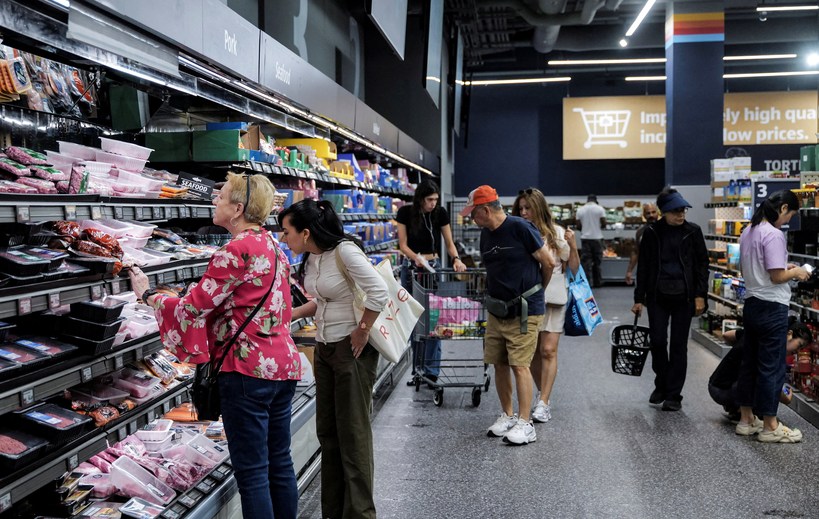
As prolonged high inflation continues, nearly half of Americans are finding it difficult to cover essential living expenses such as food and housing.
According to a recent survey by the Pew Research Center, close to half of all respondents reported struggling to pay for basic living necessities. The gap was particularly wide across different income levels.
About 75% of low-income adults stated they had difficulty affording groceries, housing, medical care, or routine transportation over the past year. In contrast, only 13% of high-income earners reported the same struggles.
Low-income households also showed extreme vulnerability in financial emergency preparedness. Roughly half reported failing to pay certain bills on time each month, while 77% stated they lacked enough money to cover three months of living expenses in the event of a sudden emergency.
Financial hardship was disproportionately concentrated among Black and Hispanic adults, women, younger demographics, and individuals without a college degree.
However, spending contractions driven by rising living costs were not limited to low-income earners. A notable 51% of high-income adults also reported cutting back on discretionary spending, including dining out and entertainment, over the past year.
Juliana Horowitz, associate director of research at the Pew Research Center, explained that financial difficulties continue to be significantly more severe among households with relatively lower family incomes.
American perceptions of economic inequality are also shifting. In a separate survey, about a quarter of respondents who believe economic inequality is excessively large stated that the economic system needs a complete overhaul, compared to just 14% who gave the same response in 2019.
Partisan divides on the issue were also significant. Democratic supporters were nearly twice as likely as Republican supporters to view economic inequality as excessively large.
The survey results indicate that rising prices are going beyond mere consumer sentiment deterioration, heavily squeezing American household basic living expenses and emergency funds. The report also highlights that persistent inflation and high gasoline prices driven by geopolitical conflicts are amplifying cost-of-living pressures, turning economic issues into a major focal point ahead of the midterm elections.